Future-Proofing Your Business: The Role of ISO Certification
Future-Proofing Your Business: The Role of ISO Certification helps businesses improve quality, trust, compliance, and growth.
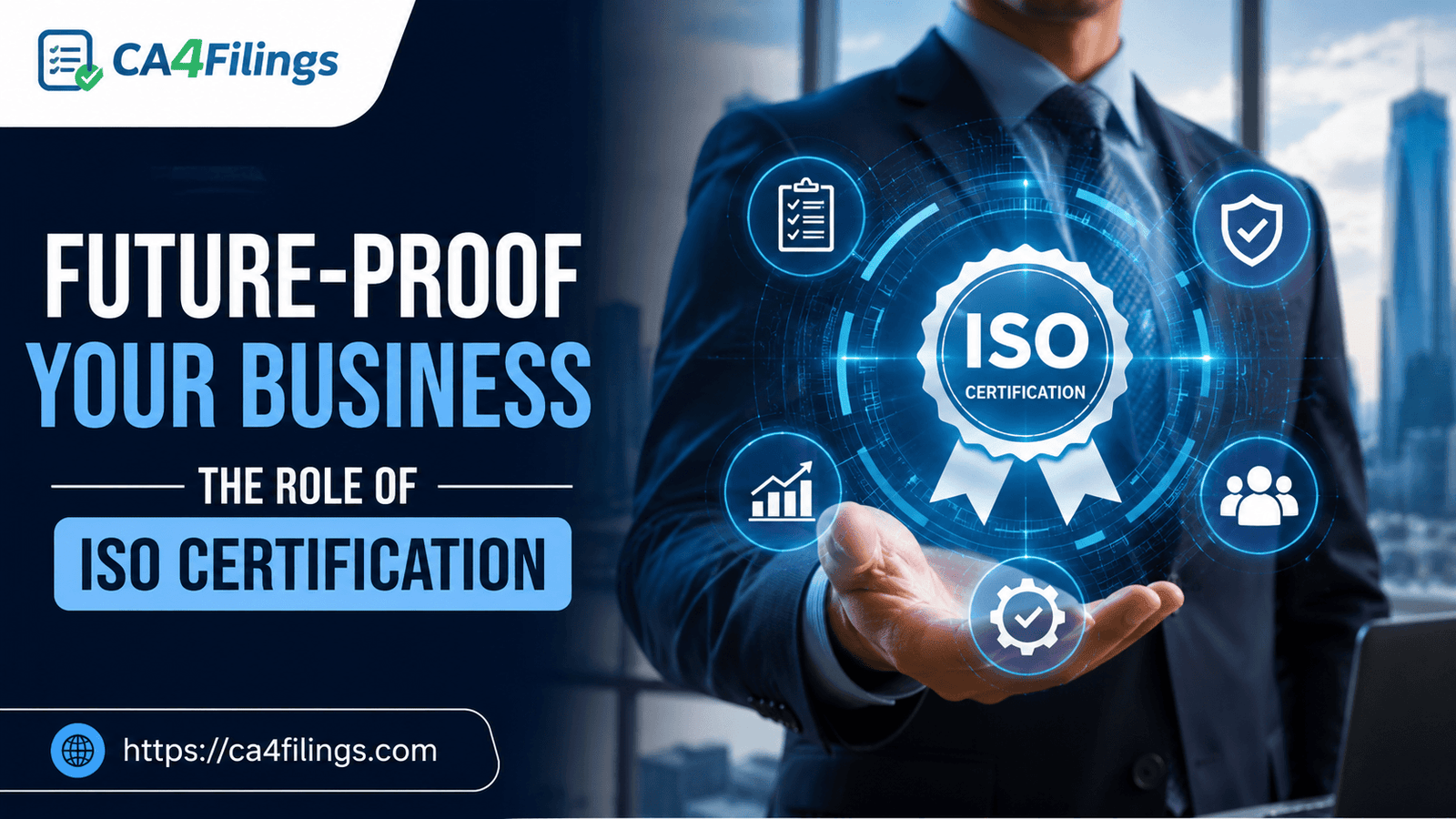
In today’s competitive business environment, companies cannot rely only on good products or services to survive. Customers expect quality, consistency, safety, and professionalism from every business they deal with. Whether you are running a startup, manufacturing unit, IT company, consultancy firm, or export business, building long-term credibility is essential. That is exactly where Future-Proofing Your Business: The Role of ISO Certification becomes highly relevant.
At CA4Filings, we often advise businesses that sustainable growth is not just about increasing revenue. It is also about creating systems that help businesses adapt to changing market conditions, customer expectations, and regulatory requirements. One of the smartest ways to achieve this is by obtaining ISO Certification, which demonstrates your commitment to quality and operational excellence.
Businesses that ignore structured processes often struggle with customer complaints, inconsistent service quality, and compliance risks. On the other hand, companies with internationally recognized certifications are better prepared for growth, expansion, and global opportunities.
Understanding Future-Proofing Your Business: The Role of ISO Certification
When we talk about Future-Proofing Your Business: The Role of ISO Certification, we are referring to building a strong operational foundation that supports long-term success.
ISO stands for the International Organization for Standardization. It develops globally accepted standards that help businesses improve their management systems, product quality, data security, environmental practices, and customer satisfaction.
ISO certification acts as proof that your business follows internationally accepted standards and best practices.
Some of the most popular ISO certifications include:
- ISO 9001 – Quality Management System
- ISO 14001 – Environmental Management System
- ISO 27001 – Information Security Management
- ISO 22000 – Food Safety Management
- ISO 45001 – Occupational Health & Safety
These certifications are useful for businesses of all sizes, from small startups to large corporations.
Why ISO Certification Matters for Modern Businesses
Builds Customer Trust
Customers today are more aware and selective than ever before. They prefer businesses that follow proper systems and maintain quality standards.
A company with ISO certification creates a strong impression because it shows:
- Commitment to quality
- Professional management practices
- Customer-focused operations
- Consistency in service delivery
For example, if two suppliers offer similar pricing, many clients will choose the ISO-certified business because it appears more reliable and organized.
Improves Operational Efficiency
One of the biggest advantages of Future-Proofing Your Business: The Role of ISO Certification is process improvement.
ISO standards encourage businesses to:
- Document workflows
- Reduce errors
- Minimize wastage
- Improve employee accountability
- Create efficient systems
This directly improves productivity and reduces unnecessary operational costs.
For instance, a manufacturing company implementing ISO 9001 often notices lower rejection rates and better production efficiency within a few months.
Helps in Winning Tenders and Contracts
Many government tenders, corporate contracts, and international projects require ISO certification as an eligibility condition.
Without certification, businesses may lose valuable opportunities even if they offer competitive pricing.
ISO certification increases your business credibility and improves your chances of securing:
- Government projects
- International export deals
- Corporate partnerships
- Vendor approvals
This is especially important for MSMEs looking to expand their market reach.
Future-Proofing Your Business: The Role of ISO Certification in Risk Management
Every business faces risks such as operational failures, compliance issues, customer dissatisfaction, and cybersecurity threats.
ISO certification helps businesses identify and manage these risks systematically.
Better Compliance Management
Businesses in India often struggle with changing regulations and compliance requirements. ISO frameworks encourage businesses to maintain proper documentation and monitoring systems.
This reduces the risk of:
- Legal penalties
- Regulatory violations
- Non-compliance issues
- Operational disruptions
Stronger Data and Information Security
In the digital era, protecting customer and business data is critical. ISO 27001 helps organizations create secure systems to manage sensitive information.
This is particularly important for:
- IT companies
- Financial consultants
- E-commerce businesses
- Healthcare organizations
A data breach can damage reputation and customer trust. ISO standards help businesses stay prepared against such risks.
Competitive Advantage Through ISO Certification
Enhances Brand Reputation
A certified business naturally gains more trust in the market. ISO certification acts like a quality assurance badge that differentiates your company from competitors.
Businesses with ISO certification are often perceived as:
- More professional
- Better organized
- Reliable partners
- Customer-centric companies
This branding advantage becomes highly valuable in competitive industries.
Supports International Expansion
If you are planning to export products or enter global markets, ISO certification becomes extremely important.
International buyers often prefer working with ISO-certified suppliers because they follow recognized standards.
This makes Future-Proofing Your Business: The Role of ISO Certification an important strategy for businesses aiming for global growth.
How ISO Certification Improves Internal Business Culture
Many business owners think ISO certification is only for external branding. However, it also creates a positive internal impact.
Employee Accountability
Clearly defined processes help employees understand their responsibilities better. This reduces confusion and improves teamwork.
Continuous Improvement Mindset
ISO standards encourage regular monitoring, audits, and improvements.
Businesses become more proactive instead of reactive. Over time, this creates a culture focused on efficiency and quality improvement.
Better Customer Satisfaction
When processes improve internally, customer experience also improves automatically.
Customers receive:
- Timely delivery
- Consistent quality
- Faster issue resolution
- Better communication
Satisfied customers are more likely to become repeat clients and refer others.
Steps to Obtain ISO Certification
Businesses often assume ISO certification is a complicated process. In reality, with proper guidance, it becomes much easier.
Step 1: Identify the Right ISO Standard
Choose the certification that matches your business activities and industry requirements.
Step 2: Conduct Gap Analysis
Analyze existing business processes and identify areas needing improvement.
Step 3: Implement Required Processes
Create and document systems according to ISO requirements.
Step 4: Internal Audit
Conduct internal checks to ensure compliance before the final audit.
Step 5: Certification Audit
An accredited certification body reviews your systems and grants certification after successful verification.
At CA4Filings, we assist businesses throughout this process to ensure smooth and hassle-free certification.
Common Myths About ISO Certification
“ISO Certification Is Only for Large Companies”
This is completely false. Small and medium businesses benefit significantly from ISO implementation.
“It Is Too Expensive”
The long-term benefits of improved efficiency, customer trust, and business opportunities usually outweigh the certification cost.
“ISO Certification Is Just Documentation”
Documentation is only one part of the process. The real purpose is improving business systems and operational performance.
FAQs
Is ISO certification mandatory in India?
No, ISO certification is generally voluntary. However, certain industries, tenders, and clients may require it.
How long does ISO certification take?
The timeline depends on business size and readiness. For many businesses, the process can take a few weeks to a few months.
Which ISO certification is best for small businesses?
ISO 9001 is one of the most popular certifications for small businesses because it focuses on quality management and customer satisfaction.
Does ISO certification expire?
Yes, ISO certification usually requires periodic surveillance audits and renewal after a specific period.
Can startups apply for ISO certification?
Absolutely. Startups can benefit greatly from structured processes and improved credibility from the beginning.
As businesses face increasing competition, changing regulations, and evolving customer expectations, building a future-ready organization has become essential. This is why Future-Proofing Your Business: The Role of ISO Certification is no longer just an optional strategy—it is a smart business investment.
ISO certification helps businesses improve operational efficiency, strengthen customer trust, manage risks, and unlock new growth opportunities. Whether you are a startup, MSME, or established enterprise, adopting international standards can significantly improve your long-term success.
At CA4Filings, we help businesses simplify the ISO certification process with expert guidance, practical solutions, and end-to-end support. If you are planning to strengthen your business credibility and prepare for sustainable growth, connect with CA4Filings today and take the next step toward building a stronger future-ready business.
Latest Updates
ca4filings.com Services






















-registration.png)