Step-by-Step Checklist: Documents You Need Before Your First ITR Return
Planning your first ITR return? Get organized with our comprehensive document checklist. Ensure a hassle-free experience with expert tips from CA4Filings.
Filing your taxes for the first time can feel like standing at the edge of a cliff. You know you have to jump—it’s a legal necessity—but the paperwork involved often feels overwhelming. At CA4Filings, we help hundreds of taxpayers every season navigate this process, and we always tell our clients the same thing: half the battle is won just by getting your files in order. Whether you are a salaried individual or a budding entrepreneur, staying prepared is the secret to a smooth Income Tax Return Filing experience. If you are preparing to file your first itr return, you have come to the right place.
Getting your paperwork sorted early isn't just about avoiding a last-minute panic; it is about ensuring you don't miss out on eligible deductions or get caught in an unnecessary scrutiny notice. Let’s break down the essential document checklist you need to keep handy before you start the process.
Why Preparation Matters for Your First ITR Return
When you sit down to file your itr return, the Income Tax Department doesn’t just want to know how much you earned; they want to see the trail of your financial activity. Your income tax records serve as the backbone of your declaration. If you fail to include a bank account or forget a source of income, the system might flag your return, leading to delays or penalties.
Think of your tax filing documents as the story of your financial year. By having everything ready, you ensure that the information you punch into the portal is accurate, consistent, and reflective of your actual bank statements.
The Essential Document Checklist
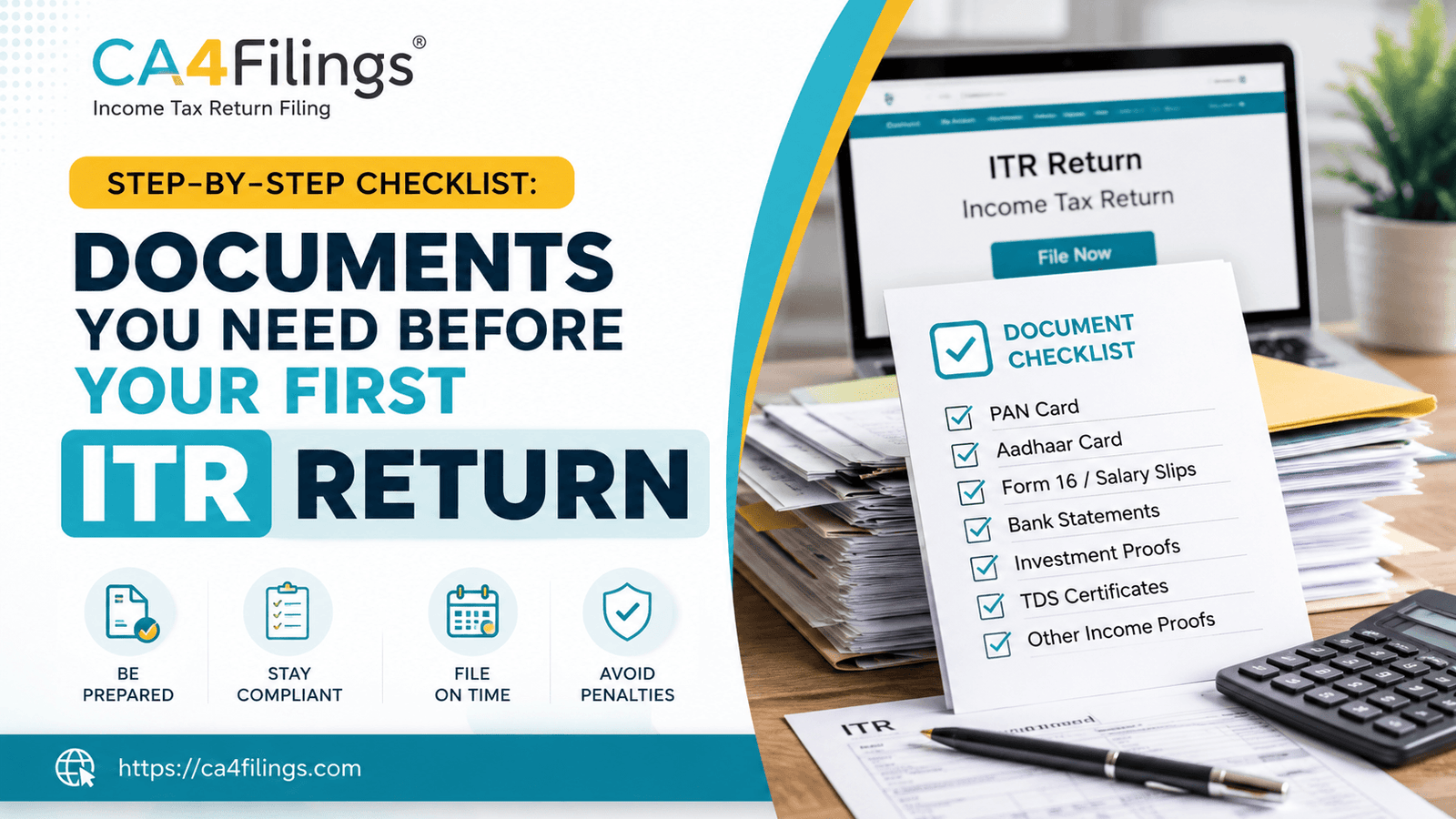
To make your life easier, we have categorized these documents into sections. Here is what you need to gather before you start.
1. Personal and Identification Documents
Before anything else, ensure your digital identity is verified.
PAN Card: Your Permanent Account Number is mandatory.
Aadhaar Card: It is no longer optional. Ensure your pan card link with Aadhaar is active, as you cannot proceed with filing if these two are not linked.
Bank Account Details: You will need the IFSC code and the account number of all active bank accounts. Even if you don't use an account frequently, the tax department requires you to disclose all of them.
2. Salary-Related Documents (For Employees)
If you are a salaried professional, your employer does the heavy lifting for you, but you must verify it.
Form 16: This is the most crucial document. It contains details of your salary and the taxes already deducted by your employer. If you haven't received it yet, you can typically perform a form 16 download from your company’s employee portal.
Salary Slips: Keep your monthly pay slips handy to cross-verify the components mentioned in your Form 16.
3. Investment and Deduction Proofs
This is where you save money. To reduce your tax liability, you must document your investments.
Section 80C Investments: Receipts for LIC premiums, PPF contributions, ELSS mutual funds, and tuition fees for children.
Health Insurance: Premiums paid for yourself, your spouse, and your parents under Section 80D.
Home Loan Statement: If you are paying an EMI, the interest certificate from your bank is vital to claim the interest deduction.
4. Other Income Documents
Many first-timers forget that "income" isn't just a monthly salary.
Bank Interest Certificates: Interest earned on your savings accounts and fixed deposits.
Rental Income: Details of any property you have let out, including municipal taxes paid and rent received.
Capital Gains: If you have sold shares, mutual funds, or property, keep your contract notes and sale deeds ready to calculate your gains accurately.
Step-by-Step Approach to Organizing Your Data
Now that you have the documents, follow this process to streamline your itr return filing:
Gather and Sort: Create a physical or digital folder specifically for this year’s tax filing documents.
Verify with AIS/TIS: Log into the Income Tax portal and check your Annual Information Statement (AIS) and Taxpayer Information Summary (TIS). These documents show what the department already knows about your financial transactions.
Cross-Check: Compare your personal records (Form 16, interest certificates) with the data shown in your AIS. If there is a mismatch, address it now.
Calculate: Once everything matches, calculate your total gross income and deductions to get a clear picture of your tax liability.
Frequently Asked Questions (FAQs)
What happens if I forget to report a small income source in my itr return?
Even a small error can trigger a mismatch. If the tax department finds income that doesn't match your records, you may receive a notice. It is always better to report everything correctly the first time.
Is it mandatory to disclose all my bank accounts?
Yes. The law requires you to disclose every active bank account held in India. You can choose one as the 'primary' account for refund purposes, but all must be listed.
How do I check if my pan card link is complete?
You can visit the official Income Tax e-filing portal and use the "Link Aadhaar Status" feature. You will need your PAN and Aadhaar numbers to check the status.
Can I file my itr return without Form 16?
Yes, you can, but it is much harder. You would need your salary slips and your own calculation of tax deductions. We strongly recommend waiting for your Form 16 or getting a clear breakdown from your employer.
Let CA4Filings Handle the Complexity
Filing your first itr return is a milestone, but you don’t have to do it alone. At CA4Filings, we take the guesswork out of the process, ensuring your taxes are filed accurately and on time. We don't just fill out forms; we provide the expert oversight needed to protect your financial interests.
Ready to get started? Reach out to our team at CA4Filings today, and let’s get your taxes filed with confidence.
Latest Updates
ca4filings.com Services
























-registration.png)