Everything You Need to Know About ITR 1 Sahaj Form
Confused about the ITR 1 form? CA4Filings explains eligibility, documents, and how to file your itr 1 correctly for the current assessment year.
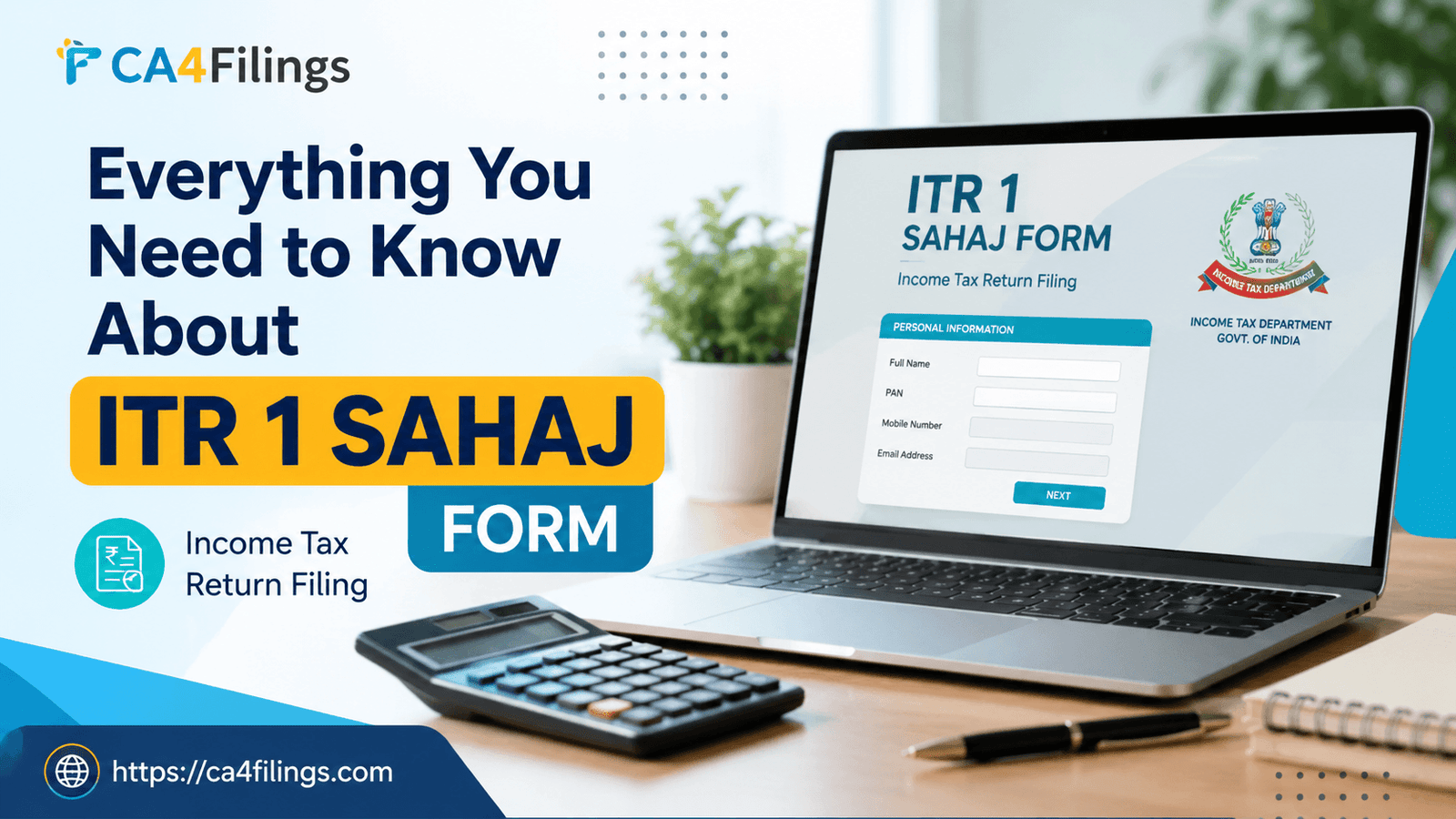
For many taxpayers in India, tax season can feel like a maze of complex paperwork and confusing jargon. However, if your income profile is straightforward, the tax department has simplified things significantly with the itr 1 form, often called "Sahaj." At CA4Filings, we understand that navigating these requirements can be daunting, which is why we’ve helped countless individuals streamline their Income Tax Return Filing process with ease.
If you are a salaried individual or a pensioner, understanding the nuances of the itr 1 form is your first step toward a stress-free filing experience. Let’s break down everything you need to know to ensure you stay compliant and save time.
What Exactly is the ITR 1 Form?
Think of the itr 1 Sahaj as the "entry-level" tax form designed specifically for simplicity. The term "Sahaj" literally translates to "easy" or "simple," and it lives up to its name by being a single-page form that covers the most common income sources for the average Indian taxpayer.
It is primarily meant for resident individuals whose financial life isn't overly complicated. If you don't have business income, complex investments, or foreign assets, this is likely the form you will be using.
Who is Eligible for ITR 1?
To file your taxes using the itr 1 form, you must meet specific criteria defined by the Income Tax Department. Before you dive into the filing process, verify if you fit these parameters:
Residential Status: You must be a Resident Individual (other than a "Not Ordinarily Resident"). Non-Residents (NRIs) and RNORs cannot use this form.
Income Limit: Your total income for the financial year must not exceed ₹50 lakh.
Source of Income:
Salaried Tax Return: Income from salary or pension.
House Property: Income from up to two house properties.
Other Sources: Income from family pension, interest from savings accounts, or fixed deposits.
Agricultural Income: Your net agricultural income must be within the agricultural income limit of ₹5,000.
Capital Gains: You can report Long-Term Capital Gains (LTCG) under Section 112A, but only up to ₹1.25 lakh.
When Should You Avoid Filing ITR 1?
At CA4Filings, we often see clients mistakenly choose the itr 1 form when their financial situation actually requires a different category. You cannot use Sahaj if:
You are a director in a company.
You have invested in unlisted equity shares at any point during the year.
You have any assets located outside India or signing authority in foreign accounts.
You have income from business or profession.
You need to report Short-Term Capital Gains (STCG) or LTCG exceeding the specified limits.
You have brought-forward losses or need to carry forward losses.
If you fall into any of these categories, you’ll likely need to file using ITR-2 or higher, depending on the complexity of your income.
The Importance of Accurate Data Collection
Before you start filling out your itr 1, gather the following documents to ensure your filing is error-free:
Form 16: Your employer’s TDS certificate is the backbone of your salaried tax return.
Form 26AS & AIS: These documents provide a consolidated statement of taxes deducted and financial transactions, respectively. Always cross-check these with your own records.
Bank Statements: Keep these handy to verify interest income from savings accounts and FDs.
Proof of Exempt Income: While some income is tax-free, it still needs to be reported. Keep track of any exempt income like dividends or agricultural income to avoid future scrutiny.
How to File Your Return Successfully
The e-filing portal has made the itr 1 filing process much more accessible. Here is the typical workflow:
Step 1: Pre-validation
Log in to the income tax portal and ensure your Aadhaar is linked to your PAN. Your residential status and contact details must be updated.
Step 2: Verify Pre-filled Data
The beauty of the current system is that much of your information is pre-filled from your AIS. Carefully verify this data against your own documents. If you notice a mismatch, reach out to your employer or bank to rectify the source data.
Step 3: Choose Your Tax Regime
For the current assessment year, the New Tax Regime is the default. Evaluate whether the Old Tax Regime (which allows for various deductions like 80C, 80D, and HRA) would result in a lower tax liability for you.
Step 4: Submission and E-Verification
Once you have entered all details, calculate your tax payable or refund due. Submit the form and ensure you complete the e-verification process via Aadhaar OTP, as your return is not considered valid until verified.
Frequently Asked Questions
Is the agricultural income limit the same for all forms?
No. For itr 1, the limit is strictly ₹5,000. If your agricultural income is higher, you must use ITR-2.
Can I file ITR 1 if I have two house properties?
Yes! As of the recent updates, you can report income from up to two house properties in the itr 1 form, making it much more flexible for homeowners.
What is the deadline for filing?
For taxpayers who do not require an audit, the due date for filing your itr 1 is typically July 31st of the assessment year. Always try to file early to avoid last-minute portal glitches.
Does exempt income need to be reported?
Yes. Even if it isn't taxable, you are required to disclose exempt income in the designated schedules of your return to maintain transparency with the tax authorities.
Filing your itr 1 is more than just a bureaucratic obligation; it’s an opportunity to ensure your tax planning is on track for the year. While the "Sahaj" form is designed to be user-friendly, even minor errors in reporting your salaried tax return can lead to notices from the Income Tax Department.
If you ever feel overwhelmed or uncertain about your eligibility, our team at CA4Filings is here to provide the expert guidance you need. Don't leave your compliance to chance—let us handle the technicalities so you can focus on what matters most. Contact CA4Filings today and let’s get your taxes sorted correctly and on time!
Latest Updates
ca4filings.com Services


























-registration.png)