Your Annual Tax Calendar: Never Miss a GST Return Filing Date
Stay compliant with our expert guide to the annual tax calendar. Learn how to manage your gst return filing deadlines and avoid penalties with CA4Filings.
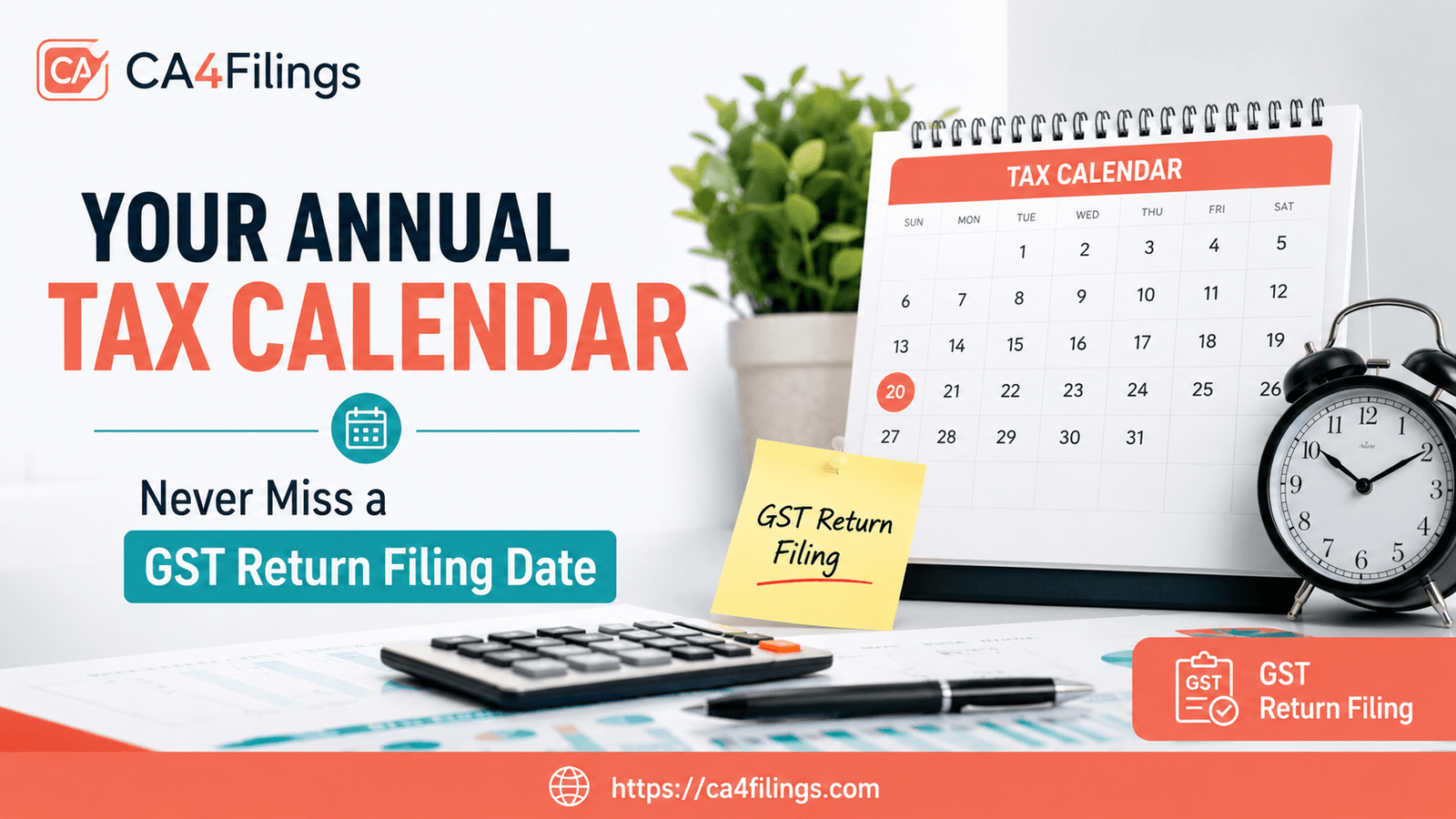
Running a business in India is an exciting journey, but let’s be honest—the regulatory landscape can feel like a maze. As a Chartered Accountant, I talk to entrepreneurs every day who are losing sleep over compliance. The truth is, missing a deadline doesn't just invite a penalty; it disrupts your entire cash flow and input tax credit claims. Whether you are managing your own books or looking for professional GST Return Filing support, staying ahead of the gst return filing cycle is non-negotiable for business health.
At CA4Filings, we believe that tax compliance shouldn't be a fire-fighting exercise. It should be a predictable, streamlined part of your monthly operations. In this guide, I’ll break down the annual calendar to ensure your business remains on the right side of the law.
Understanding the GST Return Filing Landscape
GST in India is destination-based, which makes the compliance structure robust but complex. The gst return filing process depends largely on your turnover and the specific category your business falls into. For most regular taxpayers, filing is a monthly commitment, while others have opted for more flexible arrangements.
To stay compliant, you need to treat your calendar as a sacred document. Here is how you can categorize your obligations:
Regular Taxpayers: Filing GSTR-1 (outward supplies) and GSTR-3B (summary of tax liability) every month.
Small Businesses: Those under the QRMP scheme.
Annual Filers: Those required to file the annual reconciliation statement.
Decoding the Monthly Return Calendar
For the vast majority of small and medium enterprises, the monthly return calendar is the heartbeat of compliance. If you are a regular taxpayer, your deadline for GSTR-1 is the 11th of the following month, and for GSTR-3B, it typically falls between the 20th and 24th, depending on your state and turnover.
Pro tip: Do not wait for the final day. Our team at CA4Filings always advises clients to complete their entries by the 10th. Why? Because the portal often faces heavy traffic on deadline days, and you don’t want a server error to trigger a late fee.
Making the Most of QRMP Scheme Dates
If your aggregate turnover is up to ₹5 crore, you might have opted for the Quarterly Return Monthly Payment (QRMP) scheme. It’s a great relief, but it comes with its own set of challenges. Under this scheme, you file GSTR-1 and GSTR-3B quarterly. However, you must still pay your tax liability monthly using the PMT-06 challan.
The qrmp scheme dates are often misunderstood. While the return filing is quarterly, the tax payment is a monthly responsibility. If you miss the payment window, interest starts accruing immediately, even if your return filing date is weeks away. Always mark your calendar for the 25th of each month for tax payments to ensure you stay compliant.
The Importance of the GSTR 9 Deadline
While monthly filings are about operational compliance, the gstr 9 deadline is about annual reconciliation. This is where the government checks if the data you reported monthly matches your annual financial statements.
Think of the annual return as your tax report card. It is a consolidation of all the monthly or quarterly returns you filed during the financial year. As a CA, I cannot stress this enough: if there are discrepancies between your books and your filed returns, the annual filing is your last chance to address them. Missing this deadline can lead to significant scrutiny and compounding penalties.
Keeping a Watch on the Late Fee Meter
The late fee meter in GST is unforgiving. For every day of delay, you incur a specific penalty that adds up faster than most business owners realize. Beyond the monetary cost, late filing affects your compliance rating on the GST portal. A poor rating can lead to a block on your e-way bill generation, effectively bringing your logistics to a standstill.
To avoid this, we recommend setting up automated tax alerts within your accounting software. Furthermore, keeping a close eye on the official gst notification tracker provided by the CBIC is essential, as the government occasionally extends dates or changes filing procedures due to technical glitches or holidays.
Frequently Asked Questions
What happens if I miss the gst return filing deadline?
You will be liable to pay a late fee under Section 47 of the CGST Act. Additionally, if you are a regular taxpayer, you may face difficulties in filing subsequent returns and your customers may not be able to claim Input Tax Credit (ITC) on the supplies you provided.
Is it mandatory to use a gst notification tracker?
While not mandatory, it is highly recommended. GST rules and due dates can shift. Having a reliable source for updates ensures you are never caught off guard by sudden changes in filing protocols.
Can I file my returns after the gstr 9 deadline?
Yes, you can file late, but you will be charged a late fee as prescribed by the GST authorities. It is always better to file on time to avoid unnecessary financial strain and legal headaches.
How does the QRMP scheme help my business?
The QRMP scheme reduces your filing frequency from 12 times a year to 4, significantly lowering your compliance burden. However, you must remain disciplined about your monthly tax payments to avoid interest.
Take Control of Your Compliance Today
Navigating the tax landscape doesn't have to be a solo endeavor. At CA4Filings, we take pride in acting as an extension of your business team. We don't just file returns; we provide the oversight, alerts, and strategic planning you need to focus on what you do best—growing your business.
Latest Updates
ca4filings.com Services
























-registration.png)