Understanding the Revised Interest Calculation Formula in GSTR 3B
Struggling with interest on late GST payments? Learn how the revised interest calculation formula for gstr 3 b works and avoid common compliance pitfalls.
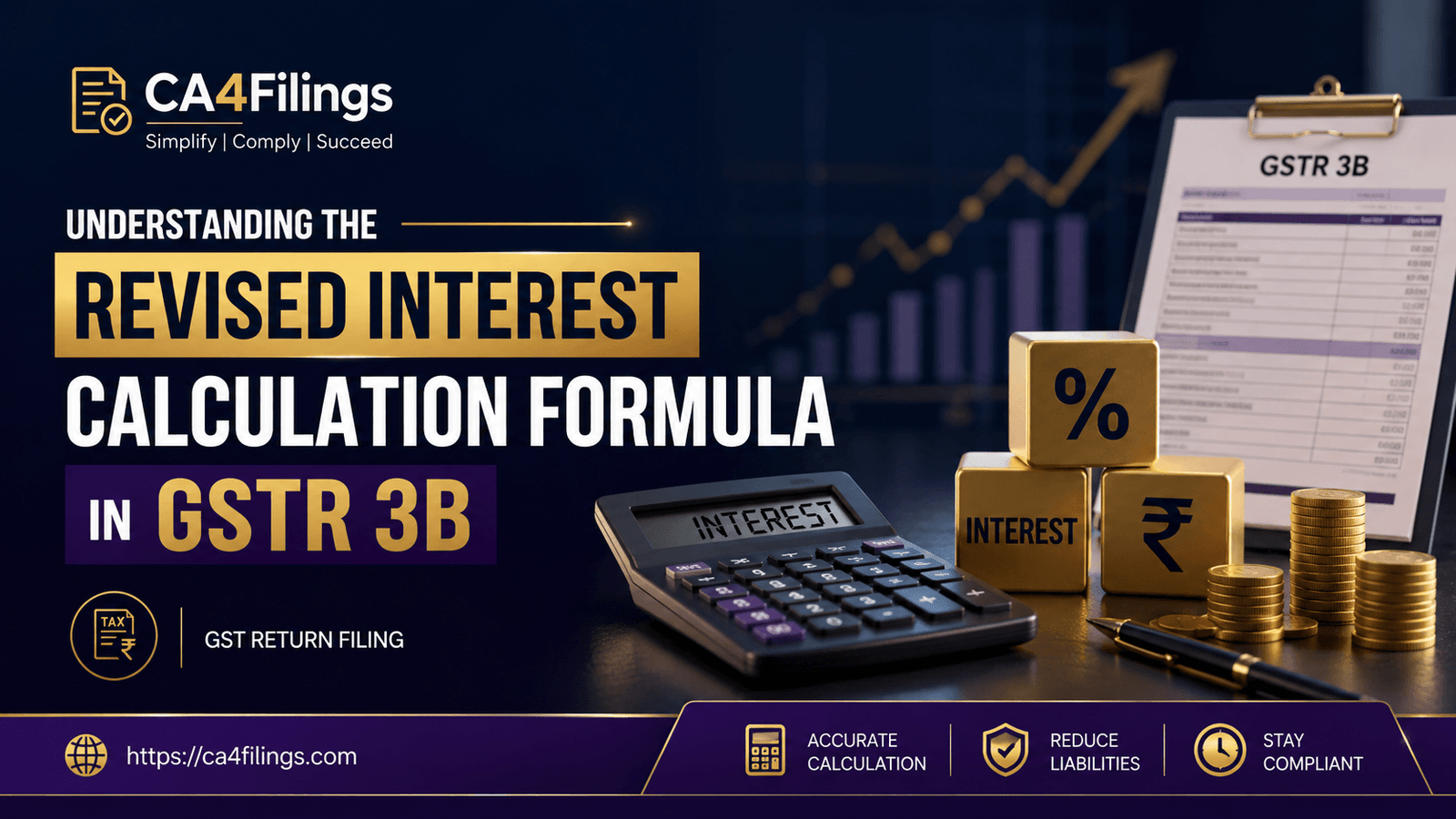
Managing tax compliance can feel like a maze, especially when the rules regarding interest change. As a business owner, you likely know that the gstr 3 b is the backbone of your monthly GST compliance. Keeping your books in order and ensuring timely GST Return Filing is essential to avoid unwanted notices from the tax department. Recently, the government clarified the rules surrounding how interest is calculated on late payments, specifically targeting the dreaded "net cash liability" concept. At CA4Filings, we often see clients getting confused about when interest kicks in, so let’s break down the revised calculation method in simple terms.
Why Interest on gstr 3 b Matters
In the past, there was a lot of debate regarding whether interest was payable on the gross tax liability (which includes the amount paid via Input Tax Credit) or only on the net cash liability. The government finally settled this through a retrospective amendment under Section 50 of the CGST Act.
Now, it is legally clear that you are only liable to pay section 50 interest on the portion of tax that is paid through the electronic cash ledger. This was a massive relief for the trading and manufacturing community. However, this does not mean you have a free pass to delay your filings. A delay penalty is still a real threat, and interest continues to accumulate for every day of delay beyond the due date.
Understanding the "Cash Shortfall Interest" Concept
To understand the revised interest calculation for gstr 3 b, you must differentiate between your input tax credit (ITC) and cash payments.
ITC Component: If you have sufficient balance in your electronic credit ledger, you are essentially using "pre-paid" tax credit. Since this money was already available with the government, you are not charged interest on this portion.
Cash Component: This is where the cash shortfall interest applies. If your tax liability exceeds your available ITC, you must pay the balance via the electronic cash ledger. If this payment is made after the statutory due date, the interest clock starts ticking.
How the Automatic Portal Calculation Works
The GST portal has now streamlined the process with automatic portal calculation. When you log in to file your gstr 3 b, the system identifies the date of filing and the actual date of payment. If the payment is delayed, the system calculates interest on the net cash liability automatically.
While this makes life easier, do not blindly trust the system. As a CA, I always advise our clients at CA4Filings to perform a manual reconciliation. The portal might not always account for specific transitions or manual entries correctly, and it is your responsibility to verify the accuracy before hitting "submit."
The Impact of GST Late Fee vs. Interest
Many business owners often confuse interest with the gst late fee. It is crucial to understand that they are two different monsters:
Interest: This is compensatory in nature. It is charged at 18% per annum for the actual number of days you delayed the payment of tax.
Late Fee: This is punitive. It is a fixed amount charged for not filing your gstr 3 b return by the due date, regardless of whether you have a tax liability or not.
You could have zero tax liability and still be hit with a late fee for a delayed filing. Conversely, if you have a tax liability but file the return on time (but pay the cash component late), you will face interest charges.
Practical Steps to Avoid Excessive Interest
If you want to keep your compliance costs low and stay out of the scrutiny net, follow these professional tips:
Maintain Cash Flow Projections: Don't wait until the last day of the month to calculate your tax liability. Estimate your gstr 3 b liability by the 15th of the month.
Pre-fund Your Ledger: If you know you have a tax liability, move the funds to your electronic cash ledger a couple of days before the due date. This ensures the payment is registered before the deadline.
Don't Ignore Notices: If you receive an automated interest demand, verify it immediately. Sometimes, technical glitches in the automatic portal calculation can result in incorrect figures.
Frequently Asked Questions
Is interest charged on the gross tax amount or net tax?
Per the amendment to Section 50, interest is charged only on the tax paid through the electronic cash ledger (net tax liability), not the amount paid using ITC.
What is the current rate of interest for late payment?
The interest rate for delayed GST payment is 18% per annum.
Can the GST portal calculate interest incorrectly?
Yes. While the automatic portal calculation is generally reliable, errors can occur due to data entry gaps or system synchronization issues. Always audit your liability calculation.
Does the late fee increase if I delay payment further?
The gst late fee is a fixed amount per day of delay (subject to a maximum cap). However, the interest on tax liability will keep accumulating the longer you delay the payment.
Navigating the nuances of gstr 3 b filing can be overwhelming, especially with the tightening of automated enforcement. Understanding that you only pay interest on cash shortfalls is a great start, but consistent, timely compliance remains the best way to protect your business capital.
Don’t let tax complexities hold your business back. If you are struggling with your monthly filings or want to ensure your tax calculations are bulletproof, the experts at CA4Filings are here to help. Reach out to us today to streamline your compliance and focus on what you do best—growing your business!
Latest Updates
ca4filings.com Services

























-registration.png)