The Importance of Regular Updates on GST Return Filing Regulations
Discover The Importance of Regular Updates on GST Return Filing Regulations to avoid penalties, maximize ITC, and ensure flawless financial compliance.
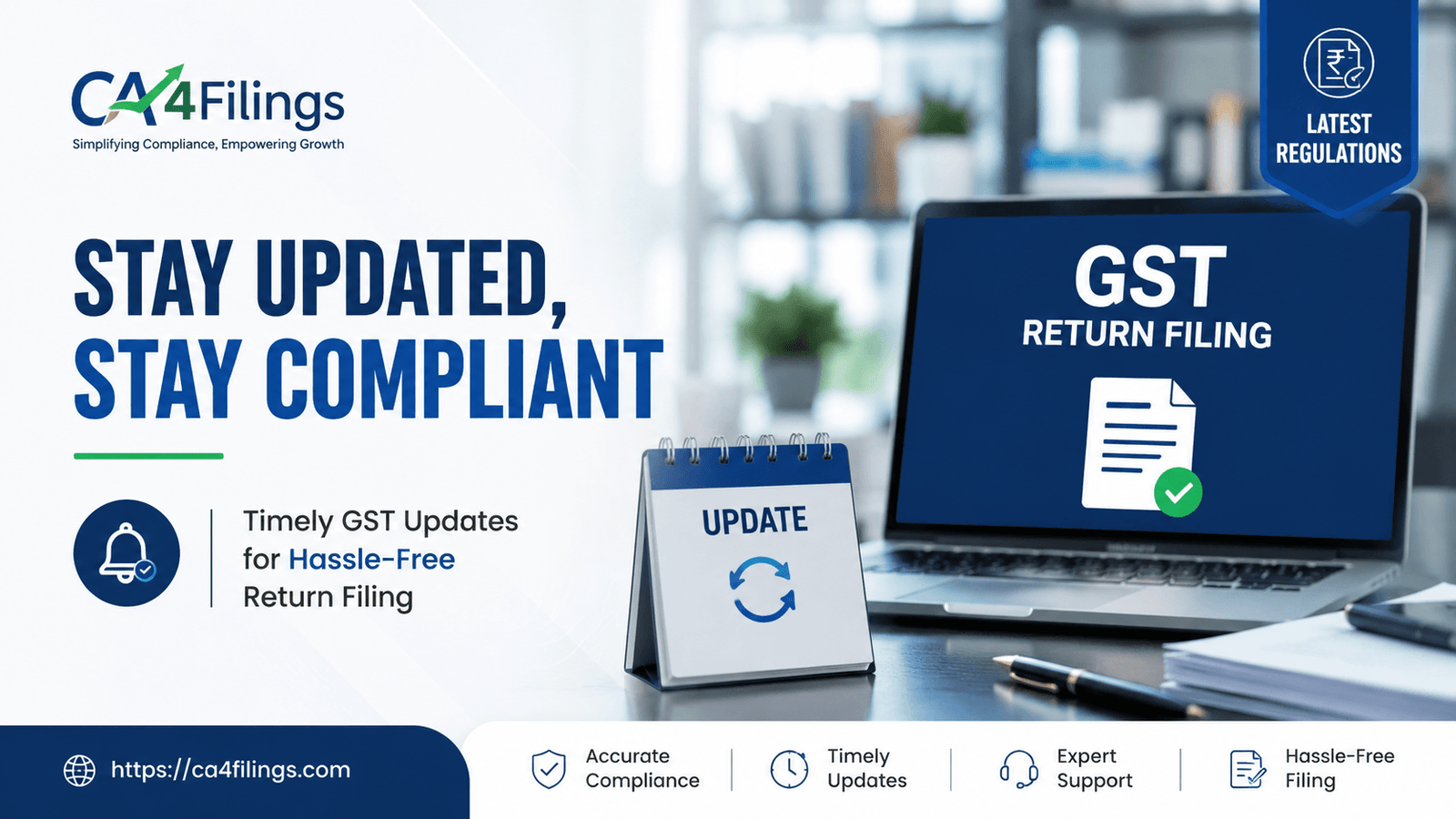
Imagine running a bustling retail business or a fast-growing tech startup in India. You are focusing on sales, managing your team, and keeping your customers happy. Then, out of nowhere, you receive a legal notice from the tax department because a specific rule regarding Input Tax Credit (ITC) changed two months ago, and you missed it. As practicing Chartered Accountants, we see this happen to honest business owners all the time. The Indian indirect tax landscape changes rapidly. Understanding The Importance of Regular Updates on GST Return Filing Regulations is no longer just a choice for entrepreneurs—it is a core business necessity.
Navigating the web of compliance can feel overwhelming, but staying informed prevents costly disruptions. At CA4Filings, we understand how overwhelming it can get to keep up with frequent notifications, circulars, and portal updates. Missing a minor tweak in tax laws can lead to blocked credits, suspended registrations, or heavy financial strains. If you want to keep your business running smoothly without legal headaches, professional GST Return Filing assistance ensures your business remains perfectly aligned with every single statutory modification without losing sleep.
Let’s dive deep into why keeping your fingers on the pulse of changing tax regulations is the best growth strategy for your enterprise.
The Dynamic Nature of Indian Tax Laws
Since its rollout in 2017, Goods and Services Tax (GST) has been a work in progress. The GST Council meets regularly to fix loopholes, simplify processes, and curb tax evasion. Consequently, updates on GST regulations are rolled out frequently through central notifications.
What was applicable last financial year might be completely obsolete today. For example, we have transitioned through various models of matching purchase invoices—from the old GSTR-2A to the strict legal mandate of GSTR-2B. If a business owner does not track these shifts, they continue filing GST returns based on outdated assumptions, paving the way for systemic errors in their accounting books.
Why Staying Updated on GST Return Filing Regulations Matters
Remaining oblivious to regulatory changes creates a compounding compliance debt. Here is a detailed look at The Importance of Regular Updates on GST Return Filing Regulations and how it impacts your daily business operations.
1. Avoiding Heavy GST Penalties and Legal Notices
The most immediate consequence of ignoring regular updates on GST is financial damage. The tax department automates its scrutiny processes. Automated systems immediately flag late filings, mismatches between GSTR-1 and GSTR-3B, or short payments of tax.
Late Fees: Standard late fees accumulate daily for delayed filings of GSTR-1 or GSTR-3B.
Interest Submissions: Missing a payment deadline attracts steep interest liabilities under Section 50 of the GST Act.
Scrutiny Notices: Mismatches trigger automated ASMT-10 notices, requiring formal explanations from the taxpayer.
2. Seamless Maximization of Input Tax Credit (ITC)
Input Tax Credit is the lifeblood of business cash flow. However, ITC rules are highly restrictive. Under the current tax regulations, you cannot claim ITC unless your supplier uploads their invoices and reflects them in your GSTR-2B. If you fail to monitor current GST compliance rules, you might claim provisional or ad-hoc credit. This results in direct violations of Section 16(4), leading to demands for reversal along with hefty interest payments. Staying updated ensures you know exactly how and when to reconcile your purchase data.
3. Preserving Your Business Reputation and GSTIN Profile
The government enforces a compliance rating system for businesses. Persistent delays or non-compliance can lead to the suspension or cancellation of your GSTIN registration. Furthermore, if your compliance score drops, your B2B clients will hesitate to work with you because their own ITC depends on your timely filing. Flawless GST law compliance acts as a trust badge for your corporate clients.
Key Areas Where Regulations Shift Rapidly
To highlight The Importance of Regular Updates on GST Return Filing Regulations, look at the structural changes introduced over recent periods:
E-Invoicing Mandates: The turnover threshold for mandatory E-invoice generation has dropped progressively. Small and medium enterprises (SMEs) that suddenly cross these limits must adapt immediately, or their tax invoices become legally invalid.
Changes in Tax Rates and Exemptions: Items move between tax slabs (5%, 12%, 18%, 28%) during GST Council meets. Charging an incorrect rate can lead to under-recovery from customers or over-payment to the department.
Amended Return Deadlines: Sequential filing rules mean you cannot file GSTR-3B without filing the corresponding GSTR-1 first. Keeping track of sequential blocking mechanisms stops systemic operational logjams.
Practical Steps to Stay Compliant Without Overwhelming Yourself
You do not need to spend hours reading raw legal drafts every morning. Instead, integrate these expert-backed practices into your business workflow:
Leverage Tech-Driven Accounting: Use modern accounting software that integrates real-time tax updates.
Conduct Monthly Reconciliations: Never wait until the end of the financial year to match your sales register with your GSTR-1 filings.
Engage Professional Experts: Partner with a dedicated corporate tax consultant to handle your compliance lifecycle cleanly.
Frequently Asked Questions (FAQs)
What is the importance of regular updates on GST return filing regulations for small business owners?
For small businesses, regular updates ensure that you do not lose hard-earned cash to avoidable penalties or blocked Input Tax Credit. It also helps businesses adapt to changing turnover thresholds for features like E-invoicing or the QRMP (Quarterly Return Monthly Payment) scheme.
What happens if I fail to follow the latest GST return filing regulations?
Failing to follow the latest updates can result in late fees, interest penalties, suspension of your GSTIN, blocking of your E-Way Bill generation capabilities, and automated tax scrutiny notices from department officers.
How often do GST compliance rules and tax laws change in India?
While minor clarifications happen almost weekly via circulars, major amendments usually surface after every official GST Council Meeting (typically held quarterly) or through notifications issued by the CBIC.
Can a business lose its Input Tax Credit (ITC) if it ignores tax updates?
Yes. If you do not follow updated reconciliation mandates (like matching records with GSTR-2B), any excess or wrong ITC claimed will be disallowed. You will be forced to reverse the credit with steep interest penalties out of your own pocket.
Secure Your Business Growth with CA4Filings
Managing core business operations while simultaneously tracking shifting tax updates is incredibly tough. A single compliance oversight can cost your business heavily in terms of finances and market reputation.
This is exactly where The Importance of Regular Updates on GST Return Filing Regulations shifts from a theoretical idea into a critical business practice. At CA4Filings, we act as your extended financial compliance arm. Our team of experienced tax professionals proactively tracks every legislative shift, optimizes your Input Tax Credit, and handles your regular filings flawlessly. Leave the complex paperwork to us so you can focus entirely on scaling your business with absolute peace of mind. Reach out to CA4Filings today, and let’s set up a seamless tax strategy tailored specifically for your business!
Latest Updates
ca4filings.com Services

























-registration.png)