The AI Revolution in Tax Audits: How the Portal Flags Return Discrepancies
Navigate the digital tax era with ease. Learn how to prevent automated mismatch notices and stay compliant with expert tips for your gst return filing.
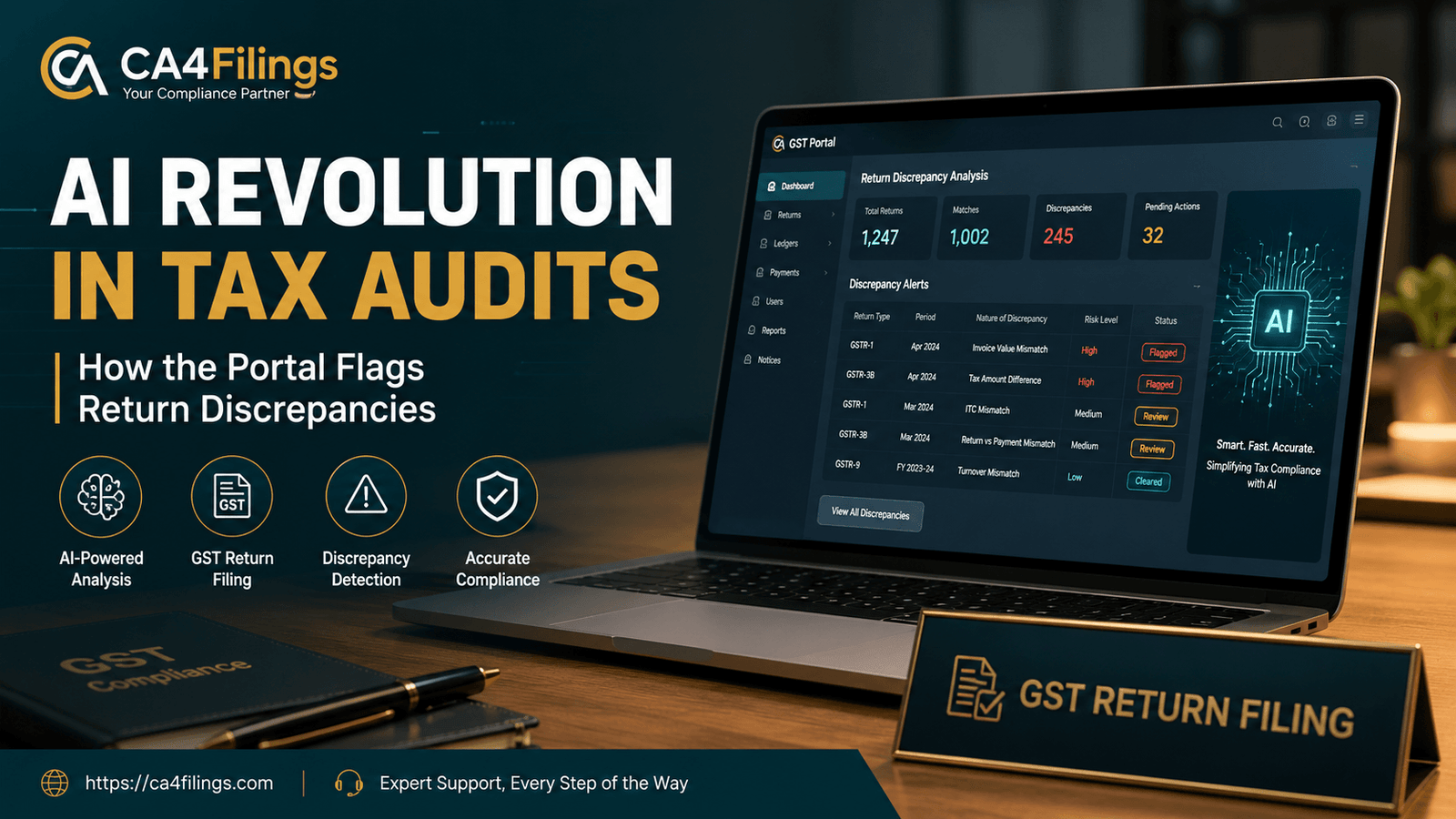
The modern GST landscape in India has undergone a massive digital transformation. As a Chartered Accountant, I often tell my clients that gone are the days when tax assessments were purely manual and subjective. Today, the GST portal functions as a sophisticated, vigilant watchman. If you are struggling with your GST Return Filing, it is vital to understand that the system is now constantly scanning for discrepancies in real-time, leaving very little room for human error.
Many business owners treat compliance as a mere "tick-the-box" activity, but in this age of digital scrutiny, your data speaks louder than any tax audit report. The government’s move toward data analytics means that your filings are not just being stored—they are being compared, cross-verified, and analyzed for any hint of inconsistency.
The Digital Watchman: How the Portal Flags You
The GST portal employs advanced algorithms that automatically compare your reported figures across different forms. The primary goal is to ensure that your outward supplies, inward supplies (ITC), and tax payments align perfectly.
When you file your returns, the system immediately runs a series of checks. If your data doesn't mirror the reality reflected in your supplier’s or customer's filings, an automated mismatch notice is triggered. This isn't a human looking at your file; it is a system-generated alert that instantly flags potential gaps in your reporting.
Why GSTR-1 vs GSTR-3B Differences Are a Major Red Flag
One of the most common triggers for a notice is the discrepancy between GSTR-1 and GSTR-3B. Think of GSTR-1 as your "sales register" and GSTR-3B as your "payment declaration."
The Mismatch: If your GSTR-1 shows a higher tax liability than what you actually paid via GSTR-3B, the portal flags this as potential tax evasion or under-reporting.
The Consequence: This triggers data analytics scrutiny. The system automatically pulls your records, and before you know it, you are receiving a notice asking for an explanation.
The Reality: In many cases, these are simple clerical errors—a typo in a taxable value or an invoice inadvertently left out of the monthly summary. However, to the system, these errors look like deliberate attempts to shortchange the exchequer.
Navigating the Risk: From Scrutiny to Compliance
Maintaining systemic compliance risk management is no longer optional. When the tax department identifies patterns—like consistent mismatches in Input Tax Credit (ITC) or frequent amendments—they may escalate the matter.
Understanding the Hierarchy of Alerts
System-generated discrepancies: Minor warnings on the portal regarding GSTR-2B vs. your purchase register.
Formal Notices: If discrepancies persist, the department moves toward formal inquiries.
Audit Notices: This is where ast 01 tracking becomes critical. If you receive a notice for scrutiny or an audit, you must monitor the status of your case on the portal. Failing to act on an AST-01 (or related audit forms) can lead to ex-parte orders where the tax officer decides the liability on their own, often to your disadvantage.
Practical Steps to Stay "Audit-Proof"
As a professional at CA4Filings, I always emphasize that prevention is infinitely cheaper than litigation. Follow these steps to stay ahead:
Monthly Reconciliation: Never wait for the year-end. Reconcile your GSTR-1, 3B, and 2B every single month.
Validate Invoices: Use accounting software to check for duplicate invoice numbers or incorrect GSTINs before you upload data.
Maintain an Audit Trail: Keep your purchase and sales registers updated and synced with the portal’s data.
Check the Portal Regularly: Don't just log in to file. Log in to check if there are any pending notices or system-generated alerts.
FAQs for Business Owners
1. Does a mismatch always lead to a heavy penalty?
Not necessarily. If you identify an error early and rectify it through amendments or by paying the differential tax with interest, you can often avoid hefty penalties. The trouble starts when you ignore the portal's red flags.
2. What should I do if I receive a notice?
Do not panic, but do not ignore it either. Gather your supporting documents (invoices, ledgers, bank statements) and prepare a formal, point-by-point reply. If the notice is complex, consult a CA immediately.
3. How often should I check for discrepancies?
I recommend a "pre-filing audit" approach. Before you hit the final submit button on your GST return filing, run a quick reconciliation report. Doing this monthly will save you from the headache of answering department notices later.
4. Can an automated notice be wrong?
Sometimes, yes. The system might flag a mismatch due to a technical glitch or timing difference (e.g., you booked an invoice in one month, but your supplier uploaded it in the next). In such cases, your reply should clearly explain the timing difference with evidence.
Compliance in the digital age is about staying ahead of the algorithm. The GST portal is designed to catch errors, but it is also designed to reward those who are proactive. By prioritizing accurate GST return filing, you not only protect your business from the stress of notices but also ensure a clean financial record.
Latest Updates
ca4filings.com Services

























-registration.png)