Reverse Charge Mechanism (RCM): Filing Rules for Unregistered Purchases
Confused by RCM on unregistered purchases? Learn the essential filing rules for your goods and service tax return and avoid penalties with CA4Filings.
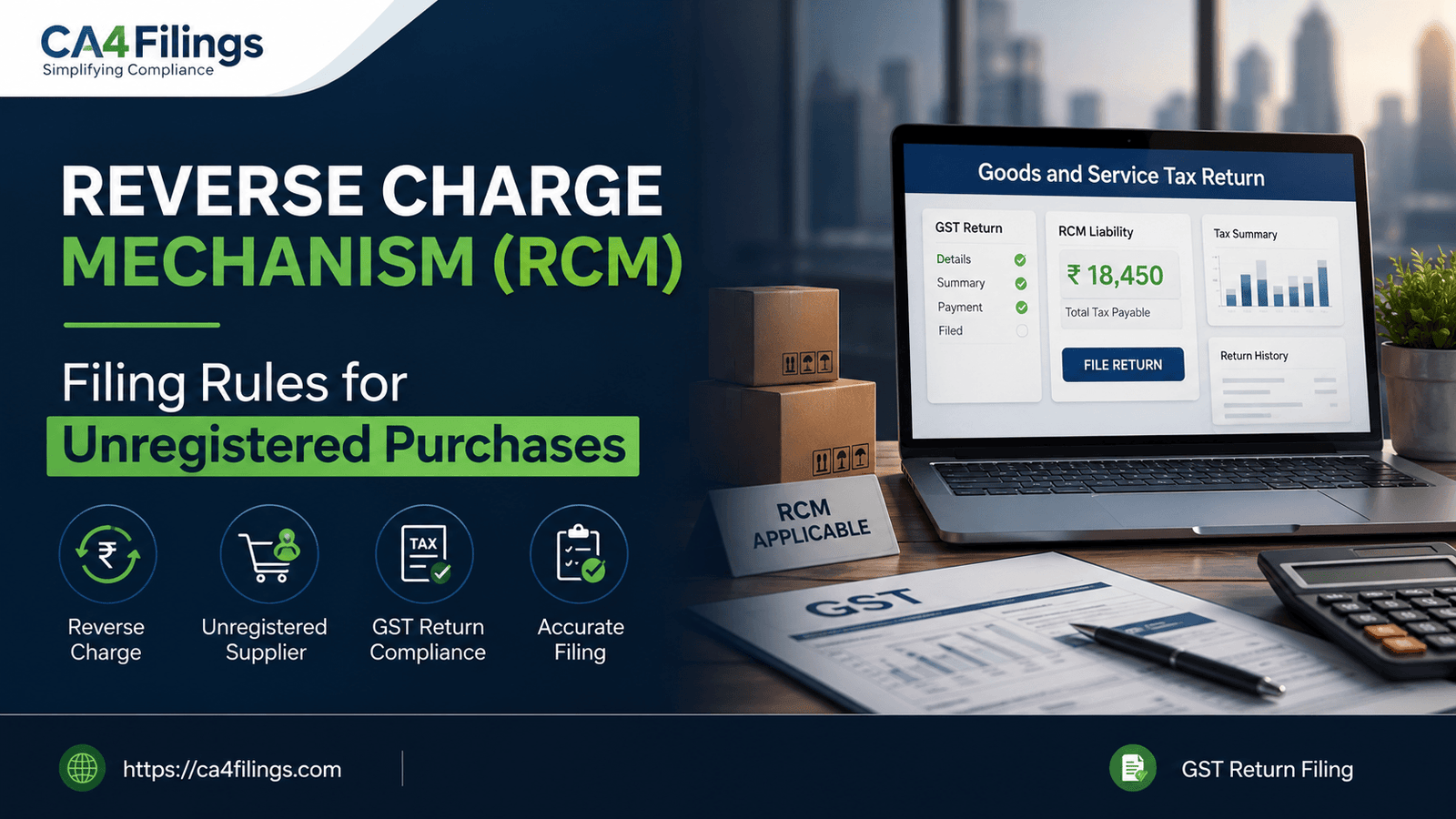
Managing a business in India comes with a fair share of regulatory complexities, and the Reverse Charge Mechanism (RCM) is often where many entrepreneurs feel the most stuck. As you navigate your monthly goods and service tax return, it is crucial to understand that tax compliance isn't just about what you sell, but also what you procure. At CA4Filings, we often see clients struggle with the nuances of tax liability on purchases from unregistered dealers. If you are looking for professional assistance with your GST Return Filing, our team is here to ensure your compliance is error-free and seamless.
Whether you are a startup owner or a seasoned business professional, staying on top of these obligations is critical. In this guide, we will break down the rules for RCM on unregistered purchases in plain, actionable language.
Understanding the Basics: Why Does RCM Exist?
Normally, the supplier of goods or services collects tax from the buyer and deposits it with the government. However, under the Reverse Charge Mechanism, the roles are reversed. The recipient of the supply becomes liable to pay the tax directly to the government.
When you buy from an unregistered dealer, the government wants to ensure it doesn't lose out on tax revenue. If the law didn't mandate RCM on such transactions, every business would be incentivized to buy from unregistered vendors to avoid the tax burden, creating an uneven playing field.
Key Compliance Requirements for Unregistered Purchases
When you purchase goods or services from an unregistered person, the responsibility to comply with the law shifts entirely to you. Here is the checklist you need to follow to ensure your goods and service tax return remains accurate and audit-ready.
The Self Invoicing Rule
One of the most misunderstood aspects of RCM is the self invoicing rule. Since an unregistered dealer cannot issue a tax invoice, you are required to issue an invoice for the goods or services received. This is a self-generated document that records the transaction, the HSN code, the value, and the applicable GST rate. Without this, you cannot claim the Input Tax Credit (ITC) later.
Mandatory Payment Voucher Generation
Alongside the self-invoice, you must facilitate payment voucher generation at the time of making the payment to the supplier. This voucher acts as a record of the transaction and is essential for proving that you have discharged your liability under RCM. Think of this as your audit trail; if the tax authorities ever knock on your door, these documents are your first line of defense.
Handling Specific Categories: Security and Legal Services
Not all services attract RCM in the same way. The government has specifically notified certain categories where RCM is mandatory, regardless of the supplier's registration status.
Security Services: If you hire a private security agency that is not a body corporate, you are likely liable to pay tax under RCM.
Legal Service RCM: If you engage an individual advocate or a firm of advocates to represent your business, the tax liability falls on the recipient.
These corporate tax obligations are often overlooked during the quarterly reconciliation process. Failing to account for these can lead to interest penalties and unnecessary litigation.
Integrating RCM into Your GST Accounting
Correctly recording these transactions in your books is just as important as paying the tax. Once you pay the tax in cash (note: you cannot use your existing ITC balance to pay RCM liabilities), you become eligible to claim it back.
This is where the rcm ledger credit comes into play. Once the payment is made through your Electronic Cash Ledger and the entry is reflected in your GSTR-3B, you can claim the ITC. It effectively becomes a "cash-neutral" process, provided you follow the documentation steps correctly.
Practical Tips for Small Businesses
Audit Your Expenses: Every month, review your purchase ledger. Identify any payments made to vendors who do not have a GSTIN.
Maintain a Separate File: Keep a physical or digital folder specifically for self-invoices and payment vouchers.
Regular Reconciliation: Before filing your goods and service tax return, ensure that your RCM tax liability matches your internal accounting records.
Frequently Asked Questions (FAQs)
1. Can I use Input Tax Credit to pay RCM liability?
No, the law strictly mandates that RCM liability must be paid in cash through the Electronic Cash Ledger. You cannot offset this against existing ITC.
2. Is there a minimum threshold for RCM on unregistered purchases?
As per current provisions, the exemption on purchases from unregistered persons has been largely withdrawn. You should treat even small purchases with caution.
3. What happens if I forget to report RCM in my GST return?
Failing to report RCM leads to unpaid tax liability, which attracts interest at 18% per annum from the due date.
4. How does CA4Filings help with these filings?
We conduct a thorough review of your inward supplies, ensure all self-invoices are generated, and help you reconcile your books so that your goods and service tax return is perfectly aligned with your liabilities.
Expert Advice from CA4Filings
Compliance is not just about avoiding penalties; it is about building a sustainable business foundation. Many business owners view the goods and service tax return as a burden, but when handled with the right expertise, it is simply a part of your monthly business routine.
Don't let complex GST regulations hold your business back. At CA4Filings, we specialize in simplifying tax compliance for businesses of all sizes. If you need help with your GST filings or have questions regarding your specific RCM obligations, reach out to us today. Let our experts handle the paperwork while you focus on growing your business.
Latest Updates
ca4filings.com Services




















-registration.png)