Mastering the GST HSN Code Structure for the Textile Industry
Confused about textile taxes? Learn how to master the gst hsn code for fabrics and garments to ensure compliance and avoid costly errors with CA4Filings.
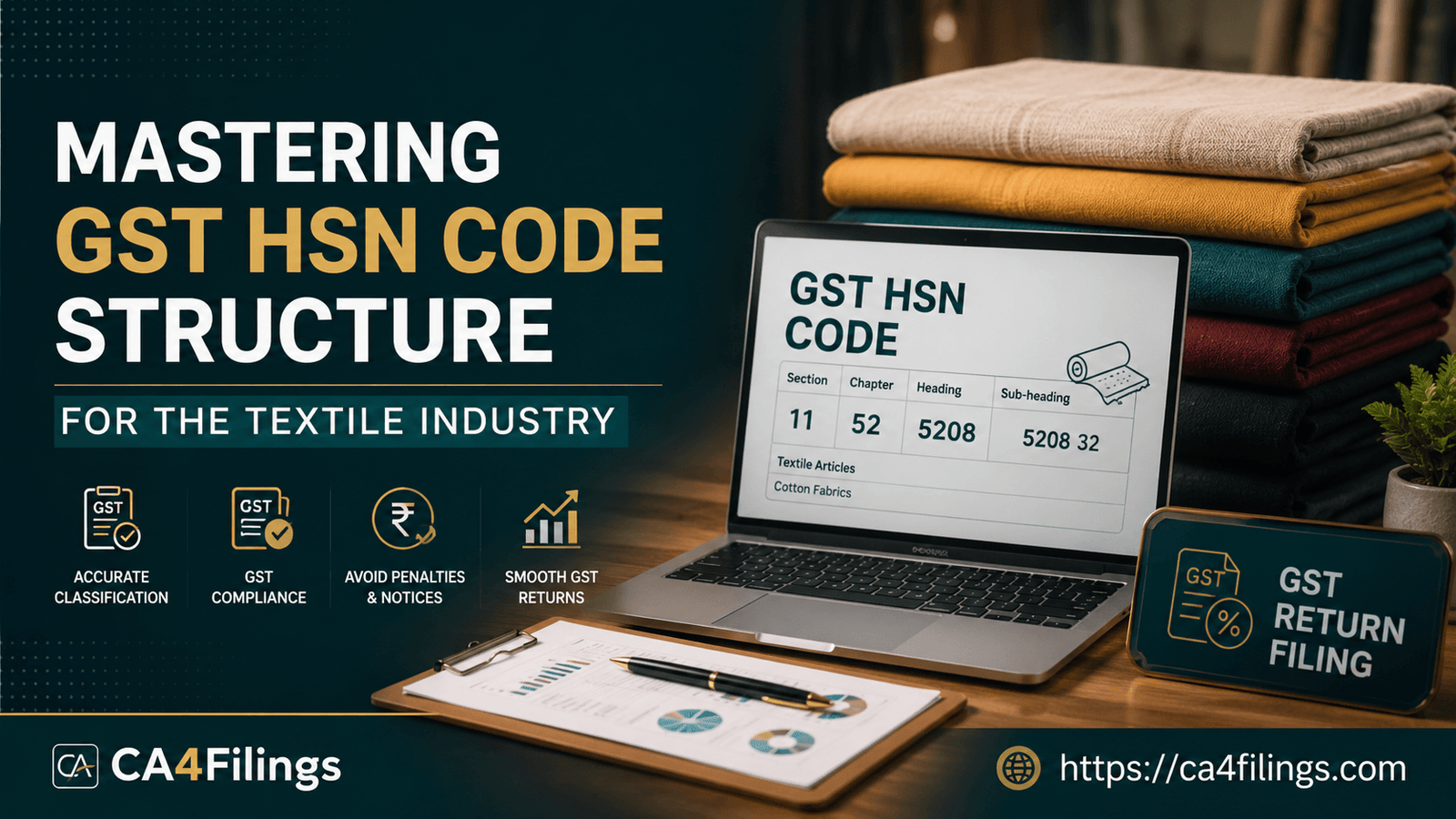
Managing a business in India’s vibrant textile sector is rewarding, but it comes with a complex tax compliance landscape. As a Chartered Accountant, I have seen many business owners struggle with the classification of their goods. Getting your gst hsn code right is not just a regulatory requirement; it is the backbone of your entire tax strategy. If you are struggling to keep track of these filings, our team at CA4Filings is here to simplify the process through our professional GST Return Filing services, ensuring your business stays compliant while you focus on growth.
Understanding the Importance of HSN in Textiles
The Harmonized System of Nomenclature (HSN) was developed to bring uniformity to the classification of goods globally. In India, under the GST regime, using the correct gst hsn code is mandatory for every invoice. For the textile industry, which spans from raw fiber to intricate readymade garments, misclassification is a frequent pitfall that leads to scrutiny from tax authorities.
When you select an incorrect code, you risk paying the wrong tax rate, claiming incorrect input tax credits, or facing penalties during audits. Precision here is key.
Decoding the Fabric Tax Slab and HSN Structure
The textile industry is unique because it often deals with an inverted duty structure. This occurs when the tax rate on inputs (yarn or fabric) is higher than the tax rate on the final output (garments).
Typically, the gst hsn code for textiles starts under Chapter 50 to 63 of the HSN tariff. Here is how you should approach the classification:
Chapter 50-55: Covers silk, wool, cotton, and other vegetable fibers.
Chapter 56-59: Covers wadding, felt, non-wovens, and impregnated fabrics.
Chapter 60-63: Covers knitted fabrics and finished readymade articles.
Practical Tips for Textile Manufacturing
Many manufacturers confuse the fabric sac code with an HSN code. Remember, SAC (Services Accounting Code) is strictly for services. If you are selling physical fabric, you must use the gst hsn code. If you are providing a service—like dyeing or printing on a client’s material—then you would look at the relevant SAC.
Navigating the Inverted Duty Structure and Refunds
One of the most pressing concerns for our clients in textile manufacturing is the accumulation of Input Tax Credit (ITC). Because the tax on raw materials can be higher than the tax on the finished product, businesses often find their working capital locked up.
To claim a refund on input credit caused by the inverted duty structure, your gst hsn code must be flawlessly reported in your GSTR-1 and GSTR-3B filings. If the code on your purchase invoice doesn't match your outward supply classification, the portal may flag your refund application, leading to long delays.
Common Mistakes When Assigning a GST HSN Code
Even experienced traders make mistakes. Here are the most common traps we see:
Generic Coding: Using a 2-digit code when your annual turnover requires a 6-digit or 8-digit gst hsn code.
Ignoring GST Rate Notifications: The government frequently updates tax rates for readymade garments tax slabs. Relying on old data is a recipe for disaster.
Mixing HSN and SAC: As mentioned, ensure you aren't using a service code for goods.
How CA4Filings Can Assist You
At CA4Filings, we don’t just file your returns; we act as your financial partners. We review your inventory classification to ensure every gst hsn code is compliant with the latest government notifications. Whether you are dealing with a complex fabric tax slab or trying to optimize your tax liability, our expertise ensures that you minimize errors and maximize your cash flow.
Frequently Asked Questions
1. Is it mandatory to mention the gst hsn code on all textile invoices?
Yes, under current GST laws, it is mandatory to mention the gst hsn code on all tax invoices to ensure the correct tax is levied and to facilitate smooth credit tracking.
2. What happens if I use the wrong HSN code for my fabrics?
Using the wrong code can lead to short payment of taxes or incorrect ITC claims. This often results in interest, penalties, and scrutiny notices from the GST department.
3. Does the HSN code affect my ability to get a refund on input credit?
Absolutely. If your inward supplies (raw materials) and outward supplies (finished fabric/garments) have inconsistent coding, the authorities may reject your claim for a refund on input credit.
4. How often should I review my HSN codes?
We recommend a quarterly review of your product masters, especially if you are frequently introducing new varieties of fabric or readymade garments, to account for any changes in the tax structure.
5. Can CA4Filings help me re-classify my inventory?
Yes. Our team specializes in reviewing business inventories to verify that each gst hsn code aligns with the latest HSN tariff schedule, ensuring your compliance is bulletproof.
Don't let complex tax structures hold your business back. Reach out to CA4Filings today. Whether you need help with audit, classification, or routine filing, our expert team is ready to guide you. Contact us through our website to schedule a consultation and take the stress out of your GST compliance!
Latest Updates
ca4filings.com Services
























-registration.png)