Inverted Duty Structure: How to Claim Refunds on High Inputs
Are you stuck with an inverted duty structure? Learn how to claim refunds for high GST slab inputs with expert guidance from CA4Filings.
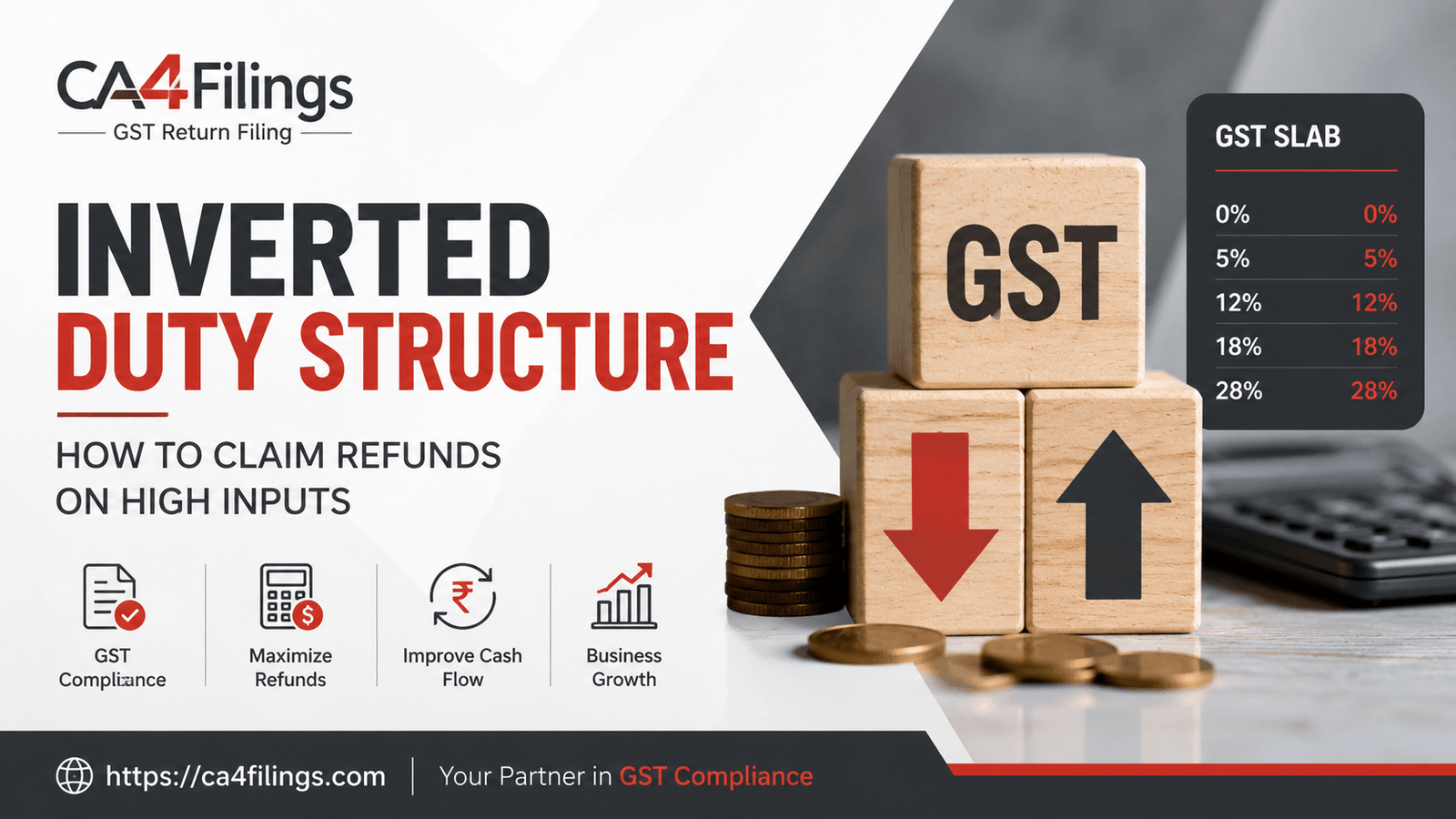
Managing taxes in India can often feel like solving a complex puzzle, especially when your input costs are higher than the tax on your sales. If you are a manufacturer, you have likely encountered the challenge where the gst slab applicable to your raw materials is higher than the rate on your final product. At CA4Filings, we frequently see businesses struggle with this cash-flow trap, which is why we emphasize the importance of keeping your GST Return Filing process updated and accurate to ensure you don't lose out on hard-earned money.
When you find yourself in a position where your gst slab on inputs creates an accumulation of credit that you cannot utilize against your output liability, you are dealing with what we call an "Inverted Duty Structure." Understanding how to navigate this is essential for maintaining a healthy working capital cycle in your business.
What Exactly is an Inverted Duty Structure?
In simple terms, an inverted duty structure occurs when the raw material tax rate is higher than the finished goods tax rate.
Let’s look at a practical example. Suppose you manufacture a specific type of industrial fabric. The government might decide that the raw chemicals or synthetic fibers you import or buy locally are taxed at 18%, but the final fabric you sell is taxed at 12%. Because you are paying more tax on your inputs than you are collecting on your sales, you end up with unutilized input credit sitting in your electronic credit ledger.
Under the GST regime, this credit is not just "lost." Instead, the government allows you to claim this as a refund. However, the process is technical, and the tax authorities are very particular about the documentation involved.
Eligibility and the Impact of the GST Slab
It is important to note that you cannot claim a refund for just any product. The law specifically provides for refunds in cases of inverted duty structures, but there are exceptions. If the government has specifically notified that a certain category of goods is ineligible for such refunds, you cannot claim them regardless of the gst slab discrepancy.
To determine if you are eligible for manufacturing tax relief, you must ensure:
Your output supply is not specifically exempted from GST.
Your output supply is not subject to NIL rated tax.
The inverted structure is specifically applicable to your product category.
The Step-by-Step Refund Process
Claiming your money back involves a systematic approach. If you miss a step, your application may be delayed or rejected.
1. File Your Periodic Returns
Before you can even think about a refund, your GST returns must be perfectly filed. Any mismatch between your GSTR-1 and GSTR-3B will immediately trigger a query.
2. Prepare Your Documents
Documentation is the backbone of any refund claim. You will need:
Invoices for all inward supplies (raw materials).
Invoices for all outward supplies (finished goods).
A statement showing the computation of the refund amount.
3. Submit the Refund Application RF01
Once your data is ready, you must file the refund application rf01 on the GST portal. This is the official request where you upload your supporting documents and provide a declaration that you have not claimed a double benefit.
4. Certification
For larger claims or specific scenarios, you may be required to provide a ca certificate to substantiate the claim. This is where CA4Filings steps in to audit your records and ensure that the credit you are claiming is legitimate and reconcilable with your books of accounts.
Why Managing Your Input Tax Credit (ITC) Matters
Many business owners treat ITC as an afterthought. However, if your gst slab results in constant accumulation, you are essentially giving the government an interest-free loan. By proactively managing your unutilized input credit, you free up cash that can be reinvested into your business.
One common mistake we see is the failure to maintain a proper audit trail. If the tax department audits your claim, they will look at every single invoice. If the raw material tax rate documentation is missing or incorrect, the refund will be denied.
Frequently Asked Questions (FAQs)
Can I claim a refund if my business deals in services?
The inverted duty refund is primarily designed for the supply of goods. Generally, services do not qualify for refunds due to inverted duty structures, though there are specific exceptions. It is best to consult with us to verify your specific service category.
How long does it take to get the refund?
Once the refund application rf01 is filed and verified, the authorities are mandated to process it within a specific timeline. However, discrepancies often lead to "Show Cause Notices" (SCN), which extend the timeline significantly.
Is a CA certificate mandatory for every refund?
While not mandatory for every single claim, having a ca certificate significantly speeds up the verification process and adds a layer of credibility that tax officers appreciate.
Does the GST slab change frequently?
The GST Council does review rates periodically. Always keep an eye on official notifications to ensure that the finished goods tax on your products hasn't been revised.
Dealing with the complexities of the gst slab and government refunds can be overwhelming, especially when you are trying to run a business. You shouldn't have to navigate the intricacies of the GST portal alone. Whether you need help with your refund application rf01 or require a professional ca certificate to support your manufacturing tax relief claim, CA4Filings is here to help.
Latest Updates
ca4filings.com Services






















-registration.png)