How to Prepare for GST Return Filing: Best Practices
How to Prepare for GST Return Filing: Best Practices explained with expert tips, compliance steps, and practical GST filing guidance for businesses.
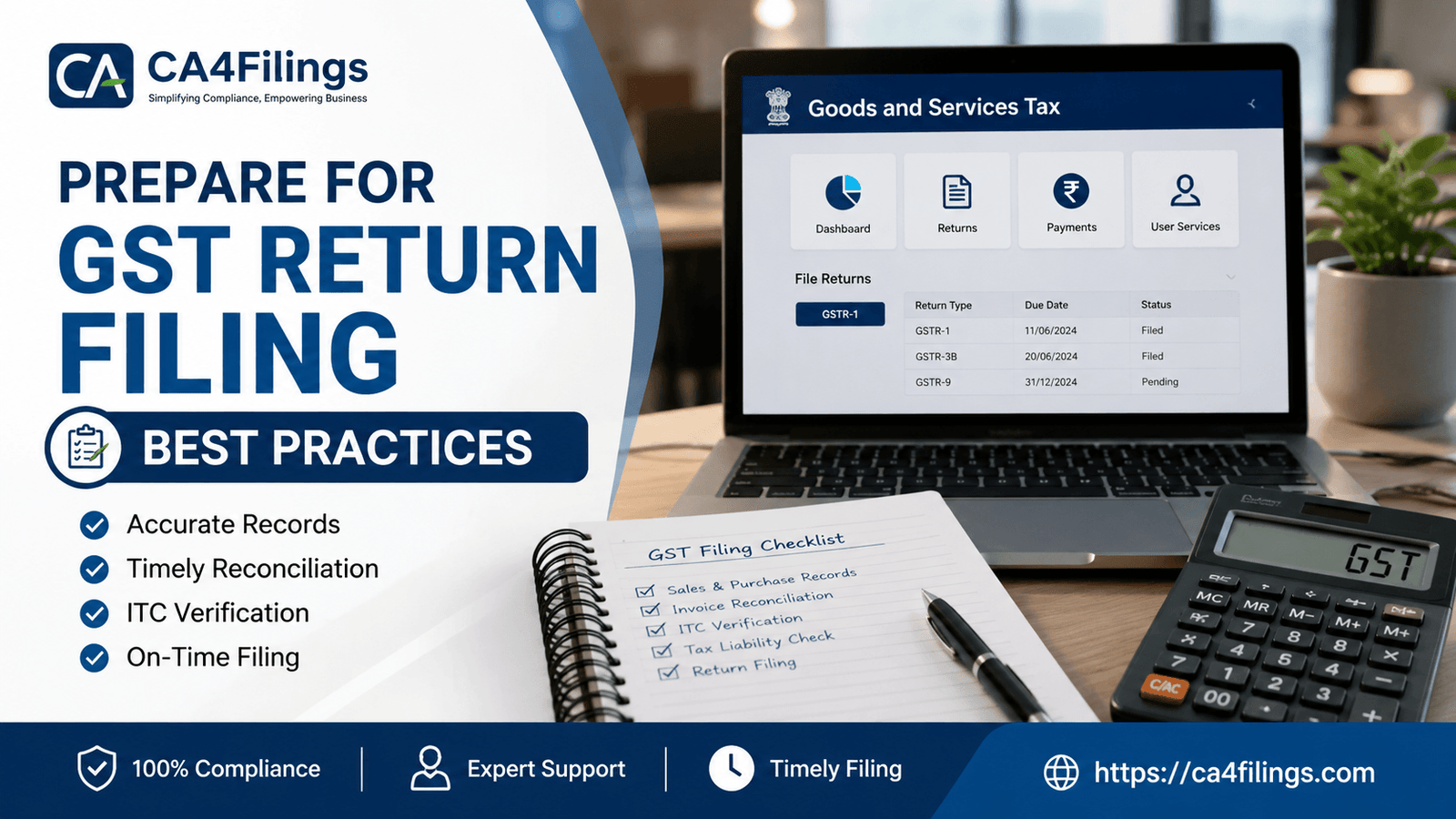
Preparing GST returns properly is one of the most important responsibilities for every registered business in India. Whether you are a small trader, service provider, startup, or established company, understanding How to Prepare for GST Return Filing: Best Practices can help you avoid penalties, notices, and unnecessary stress.
At CA4Filings, we often see businesses struggling with mismatched invoices, late filings, and incorrect input tax credit claims simply because they lack a proper GST preparation process. The good news is that with the right planning and documentation, GST compliance becomes much easier. If you need professional assistance with GST Return Filing, expert guidance can save both time and money.
Why GST Return Preparation Matters
Many taxpayers focus only on the filing date and ignore the preparation work behind it. However, GST return filing is not just about uploading numbers on the portal. It involves:
- Accurate bookkeeping
- Invoice reconciliation
- ITC verification
- Tax liability calculation
- Timely compliance
Businesses that follow How to Prepare for GST Return Filing: Best Practices regularly face fewer compliance issues and maintain better financial records.
Improper GST filing may lead to:
- Late fees and penalties
- Interest on delayed tax payments
- Input tax credit mismatches
- GST notices from the department
- Business cash flow problems
How to Prepare for GST Return Filing: Best Practices for Businesses
Maintain Proper Accounting Records
The first and most important step in GST compliance is maintaining accurate books of accounts.
Ensure that your records include:
- Sales invoices
- Purchase invoices
- Debit and credit notes
- E-way bills
- Expense records
- Bank statements
For example, if a business owner misses recording certain purchase invoices, they may lose eligible input tax credit. This directly increases the GST payable amount.
At CA4Filings, we recommend updating accounting records weekly instead of waiting until month-end.
Reconcile Sales Invoices Regularly
One of the biggest GST filing mistakes is invoice mismatch.
Businesses should reconcile:
- Sales register with GSTR-1
- Purchase register with GSTR-2B
- Tax liability with accounting software
Following How to Prepare for GST Return Filing: Best Practices means identifying mismatches before filing returns.
For instance, if your customer reports a different invoice value than what you uploaded, it may trigger reconciliation issues and departmental scrutiny.
Verify Input Tax Credit (ITC)
Input Tax Credit is one of the most valuable benefits under GST. However, many businesses claim incorrect ITC due to poor verification.
Before filing returns, check:
- Whether suppliers have uploaded invoices
- GSTIN details are correct
- Tax invoices are valid
- Blocked credits are excluded
- ITC matches GSTR-2B
A practical example is when businesses claim ITC from suppliers who have not filed their GST returns. In such cases, the department may reverse the credit later.
This is why understanding How to Prepare for GST Return Filing: Best Practices is crucial for financial accuracy.
Keep Track of GST Filing Deadlines
Late filing can become expensive for businesses.
Important GST returns include:
GSTR-1
Details of outward supplies.
GSTR-3B
Summary return with tax payment details.
GSTR-9
Annual GST return.
Missing deadlines may attract:
- Late fees
- Interest charges
- Compliance notices
Using GST compliance calendars or automated reminders can help businesses stay on track.
Use Reliable Accounting Software
Manual GST calculations increase the risk of errors.
Modern accounting software can help with:
- Automatic tax calculation
- Invoice generation
- GST reconciliation
- Return preparation
- Data backup
Businesses following How to Prepare for GST Return Filing: Best Practices usually invest in reliable accounting systems to simplify compliance.
Popular accounting tools in India include:
- Tally Prime
- Zoho Books
- Busy Accounting Software
- QuickBooks alternatives
However, software alone is not enough. Professional review remains equally important.
Review Vendor Compliance Status
Vendor compliance directly affects your ITC eligibility.
Before working with suppliers, verify:
- GST registration validity
- Filing history
- Invoice accuracy
- Return compliance status
Many businesses unknowingly deal with non-compliant vendors and later face ITC reversals.
At CA4Filings, we advise businesses to conduct periodic vendor compliance checks, especially for high-value transactions.
Avoid Common GST Filing Mistakes
Understanding How to Prepare for GST Return Filing: Best Practices also means knowing what mistakes to avoid.
Incorrect GSTIN Entry
Even a single-digit error can create reconciliation problems.
Wrong Tax Rate Application
Applying the wrong GST slab may result in tax shortfall or excess payment.
Missing Reverse Charge Transactions
Businesses often forget reverse charge liabilities while filing returns.
Delayed Invoice Upload
Late invoice reporting affects customer ITC claims and business relationships.
Ignoring Notices
GST notices should never be ignored. Timely response is critical.
Create a Monthly GST Checklist
A monthly GST checklist helps maintain consistency and reduces compliance risk.
Suggested GST Preparation Checklist
- Update sales and purchase records
- Reconcile bank transactions
- Match GSTR-2B with purchase register
- Verify ITC eligibility
- Check tax liability
- Review vendor compliance
- Confirm invoice sequence
- File returns before due dates
Businesses that follow structured systems generally face fewer GST-related issues.
How to Prepare for GST Return Filing: Best Practices for Small Businesses
Small businesses often believe GST compliance is difficult. In reality, proper planning makes the process manageable.
Separate Business and Personal Expenses
Mixing personal expenses with business transactions creates accounting confusion.
Maintain Digital Copies of Invoices
Digital recordkeeping improves accessibility during audits or notices.
Consult GST Experts Regularly
Even experienced business owners may overlook compliance changes.
Monitor Cash Flow for Tax Payments
GST liabilities should be planned in advance to avoid financial pressure during return filing.
At CA4Filings, we regularly help small businesses streamline GST processes and reduce compliance stress.
Importance of GST Reconciliation
GST reconciliation is one of the most important parts of How to Prepare for GST Return Filing: Best Practices.
Reconciliation helps identify:
- Missing invoices
- Duplicate entries
- ITC mismatches
- Incorrect tax amounts
- Filing discrepancies
Without reconciliation, businesses may end up paying incorrect taxes or facing departmental notices.
Regular reconciliation also improves financial transparency and audit readiness.
FAQs
What is the best way to prepare for GST return filing?
The best way is to maintain proper accounting records, reconcile invoices regularly, verify ITC, and file returns before deadlines.
Why is GST reconciliation important?
GST reconciliation helps identify mismatches between books and GST returns, reducing the risk of notices and penalties.
Can businesses file GST returns without professional help?
Yes, but professional guidance reduces errors and ensures better compliance, especially for growing businesses.
What happens if GST returns are filed late?
Late filing may attract penalties, interest, and compliance notices from the GST department.
How often should GST records be updated?
Ideally, businesses should update records weekly or daily instead of waiting until month-end.
Understanding How to Prepare for GST Return Filing: Best Practices is essential for every business operating under GST in India. Proper preparation not only ensures smooth compliance but also protects businesses from penalties, ITC reversals, and financial disruptions.
From maintaining accurate records to reconciling invoices and verifying ITC claims, every step plays a crucial role in successful GST compliance. Businesses that follow disciplined GST processes are always in a stronger financial and legal position.
At CA4Filings, we help businesses simplify GST compliance with expert support, accurate filing, and practical tax guidance. Whether you are a startup, trader, freelancer, or established company, our team ensures your GST returns are filed correctly and on time. Connect with CA4Filings today and make GST compliance stress-free for your business.
Latest Updates
ca4filings.com Services

























-registration.png)