How to Handle Late Fees and Penalties During GST Return Submissions
Struggling with late fees on your gst return? Learn how to handle penalties, interest, and stay compliant with this expert guide from CA4Filings.
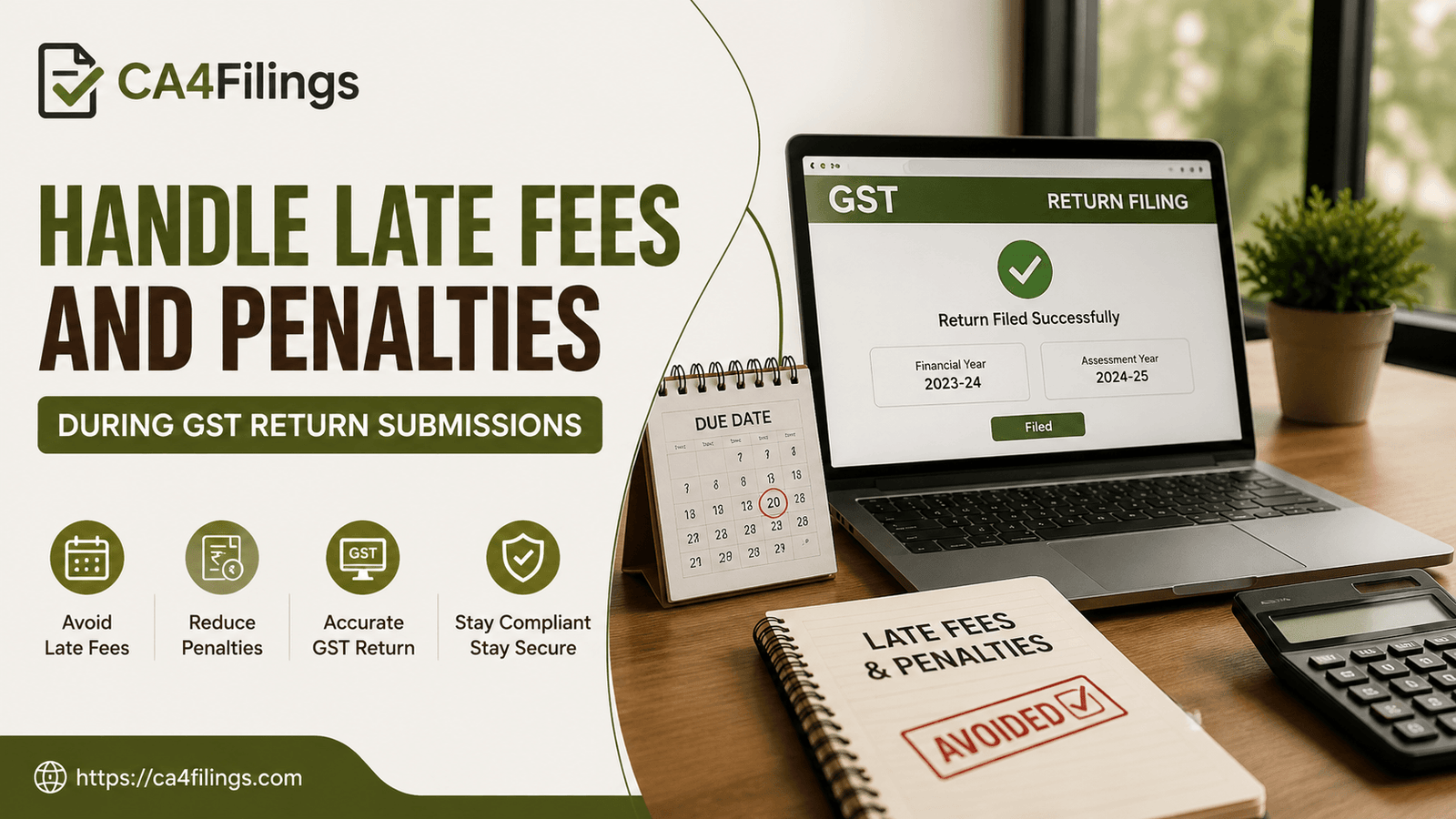
Missing a deadline is something every business owner fears, but in the world of indirect taxation, it is a reality many face. When you fail to file your gst return on time, the consequences go beyond just a simple missed date. At CA4Filings, we often see clients panic when they see those automated penalty notifications pop up on the GST portal. However, understanding the mechanics of these charges is the first step toward regaining control. If you are currently feeling overwhelmed by your compliance obligations, our team provides comprehensive GST Return Filing services to ensure you never miss a deadline again.
Understanding the Structure of Penalties
Under the GST law, the government has streamlined the penalty structure to ensure transparency. Most people assume there is just one "late fee," but it is actually a two-pronged approach involving both a flat fee and interest.
The Mechanism of Section 47 Penalty
The section 47 penalty is the primary late fee charged for failing to furnish your gst return by the due date. The law specifies a fixed amount per day of delay. It is important to note that this is calculated separately for CGST and SGST.
For taxpayers with tax liability: The late fee is currently ₹50 per day (₹25 CGST + ₹25 SGST) of delay, subject to a maximum cap.
For Nil returns: The nil return late fee is lower, usually capped at a reduced amount to ensure that small businesses are not burdened excessively for inactivity.
The Reality of the Daily Penalty Cap
One question we frequently answer at CA4Filings is: "Is there a limit to how much I will be charged" Yes, there is. The government has implemented a daily penalty cap to prevent late fees from ballooning into astronomical figures that could bankrupt a small business.
The maximum cap depends on your annual aggregate turnover. For smaller taxpayers, the cap is significantly lower than for large corporations. It is essential to keep track of these limits because once you hit the cap, the penalty stops increasing, but the interest liability does not.
Interest on Delayed Payment: The Hidden Cost
While the late fee is a fixed penalty, the interest on delayed payment is a percentage-based charge that can hurt your cash flow. If you have a tax liability and you file your gst return late, you are required to pay interest at 18% per annum on the net tax liability paid in cash.
Pro Tip: Always calculate your interest manually before finalizing the payment. The portal sometimes auto-calculates, but errors can occur.
Example: If your tax liability is ₹1,00,000 and you are late by 10 days, you owe interest on that specific amount for those 10 days. This is calculated on a daily basis, making time the most expensive factor.
Can You Avoid Penalties?
Many taxpayers wait for a tax waiver scheme or a government notification regarding amnesty updates to clear their pending returns. While the government occasionally announces amnesty schemes to provide relief to taxpayers by reducing the maximum late fee, these are not guaranteed.
You should never wait for an amnesty scheme to file your gst return. The cost of waiting—accruing interest—often outweighs the potential benefit of a future waiver. Proactive compliance is always cheaper than reactive correction.
How to Correct Past Mistakes
If you find yourself with outstanding returns, follow these steps to minimize the damage:
Reconcile your books: Ensure your sales and purchase registers match the data you intend to file.
Calculate the total liability: Sum up the tax due, the interest, and the late fees.
File immediately: The longer you delay, the more interest you pay.
Download the challan: Make sure the payment is reflected in your electronic cash ledger before submitting the return.
Frequently Asked Questions
1. Is the late fee the same for all types of returns?
No. The late fee structure varies depending on whether you are filing GSTR-1, GSTR-3B, or an annual return. Always check the specific due date for your form type.
2. Can I request a waiver for my penalty?
Generally, the GST portal applies penalties automatically. While there are legal provisions for hardships, practically speaking, waivers are only granted through formal government amnesty updates.
3. Does the daily penalty cap apply to interest?
No. The cap applies only to the late fee under Section 47. Interest is charged on the tax amount and continues to accrue as long as the tax remains unpaid.
4. What happens if I don't file my gst return at all?
Continued non-compliance can lead to the cancellation of your GST registration, which effectively stops your business operations. It can also lead to departmental notices and recovery proceedings.
Secure Your Business Future with CA4Filings
Handling compliance in India can be complex, but you don't have to navigate it alone. At CA4Filings, we specialize in helping businesses stay ahead of their filing obligations. Whether you are dealing with past-due penalties or simply want to streamline your monthly gst return process, our experts are here to assist you.
Latest Updates
ca4filings.com Services
























-registration.png)