How E-Invoicing Data Syncs Automatically into Your GSTR 3B
Learn how your e-invoice data flows into your gstr 3 b seamlessly. Simplify your tax compliance and avoid errors with this expert guide from CA4Filings.
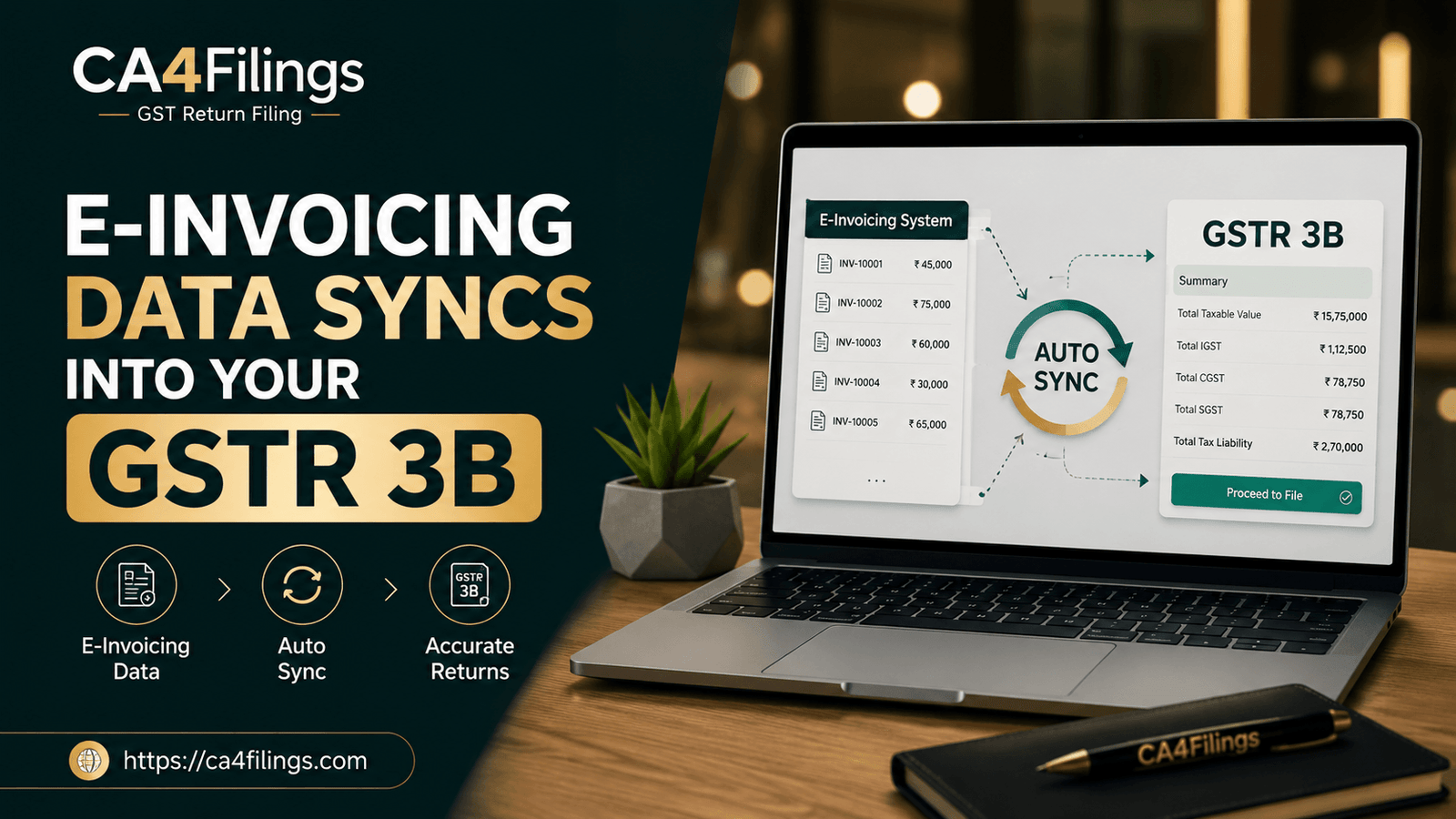
Managing GST compliance in India has undergone a massive transformation over the past few years, moving from manual data entry to a fully digitized ecosystem. As business owners, we often dread the end of the month, but the integration between e-invoicing and your gstr 3 b has made life significantly easier. If you are struggling to keep up with your monthly obligations, our GST Return Filing service is designed to take that burden off your shoulders while ensuring complete accuracy.
At CA4Filings, we often hear clients ask, "Why do I need to worry about e-invoicing if I am already filing my returns" The truth is, the two systems are now deeply connected, and understanding this sync is crucial for anyone handling business accounts in India.
Understanding the E-Invoicing and GST Integration
The government’s primary goal with e-invoicing was to curb tax evasion and simplify the reporting process. When you generate an invoice on the e-invoice portal, you are essentially creating a standardized digital document that the tax department can track in real-time.
The process kicks off the moment you complete your IRN generation. Once your invoice is successfully authenticated by the IRP authentication process, that data is pushed directly into the GST system. This is where the magic happens. The data does not just sit on a server; it starts a chain reaction that ultimately impacts your gstr 3 b liability.
The Journey from IRN to GSTR 1 Auto-Population
The bridge between your sales invoice and your gstr 3 b is gstr 1 auto-population. Here is how the data flows:
IRN Generation: You issue an invoice and obtain a unique Invoice Reference Number (IRN).
System Sync: The e-invoice portal shares this data with the GST portal.
GSTR 1 Update: The system automatically populates your GSTR 1 return with the details of your outward supplies.
Final Summary: Once your GSTR 1 is filed, these figures flow into your gstr 3 b summary.
By leveraging enterprise accounting software that syncs directly with the government APIs, you ensure that there is no manual data entry gap. Manual entry is where most errors occur, and in the world of GST, a minor typo can lead to a dreaded scrutiny notice.
Why Automated Tax Return Sync Matters for Your Business
Moving toward an automated tax return workflow is no longer a luxury; it is a necessity for scalability. When your e-invoicing data flows automatically into your gstr 3 b, you achieve two major things:
Accuracy: Since the data comes directly from the government-authenticated source, the risk of mismatching figures is near zero.
Time Efficiency: Instead of spending hours reconciling sales registers with the portal, your team can focus on actual business growth.
We have seen many businesses struggle during the final stages of filing because their sales data didn't match their tax liability. Automating this flow ensures that your gstr 3 b always reflects the correct tax output, preventing interest and penalties on short payments.
Best Practices for Maintaining Compliance
Even with automation, human oversight is essential. Here are some tips from our desk at CA4Filings:
Regular Reconciliation: Even if the system is automated, perform a monthly reconciliation between your books of accounts and the gstr 3 b summary.
Check Portal Status: Ensure that all your invoices have successfully passed the IRP authentication stage before the month ends.
Handle Amendments Early: If you realize an invoice was uploaded with an error, amend it in your GSTR 1 as soon as possible so it reflects correctly in the subsequent gstr 3 b.
Frequently Asked Questions
Does the auto-population of GSTR 1 cover all types of sales?
Yes, generally, all B2B invoices generated via the e-invoice portal are captured for gstr 3 b reporting. However, B2C invoices and exempt supplies might still require manual input depending on your turnover and reporting requirements.
Can I edit the auto-populated data in my gstr 3 b?
The system allows for certain adjustments, but you should aim to have the underlying data correct at the source (the invoice level). Relying on manual edits in the return defeats the purpose of an automated tax return system.
What happens if I miss generating an IRN?
If you are required to generate an e-invoice based on your turnover, failing to do so makes your invoice invalid. This will result in your gstr 3 b data being incomplete, which can lead to compliance issues during audits.
How does enterprise accounting software help in this process?
Quality software acts as a buffer. It performs validation checks before the data even reaches the government portal, ensuring that your gstr 3 b filing is smooth and error-free.
Automation is the future of taxation in India. By understanding how e-invoicing feeds into your gstr 3 b, you are not just staying compliant—you are building a robust foundation for your business. The days of panic-stricken tax filing are behind us if we utilize the tools available correctly.
However, we understand that tax laws can be complex and sometimes overwhelming. If you feel that your business deserves a more seamless approach to its statutory filings, CA4Filings is here to help. Our experts specialize in navigating the nuances of GST, ensuring that your business stays on the right side of the law at all times. Let us handle the complexities while you focus on what you do best—running your business. Get in touch with us today!
Latest Updates
ca4filings.com Services
























-registration.png)