Help! I Filed My GSTR 3B Late. How is My Penalty Calculated Automagically?
Missed your deadline? Discover how the penalty for a late gstr 3 b is calculated automatically. Learn to manage your compliance with CA4Filings today.
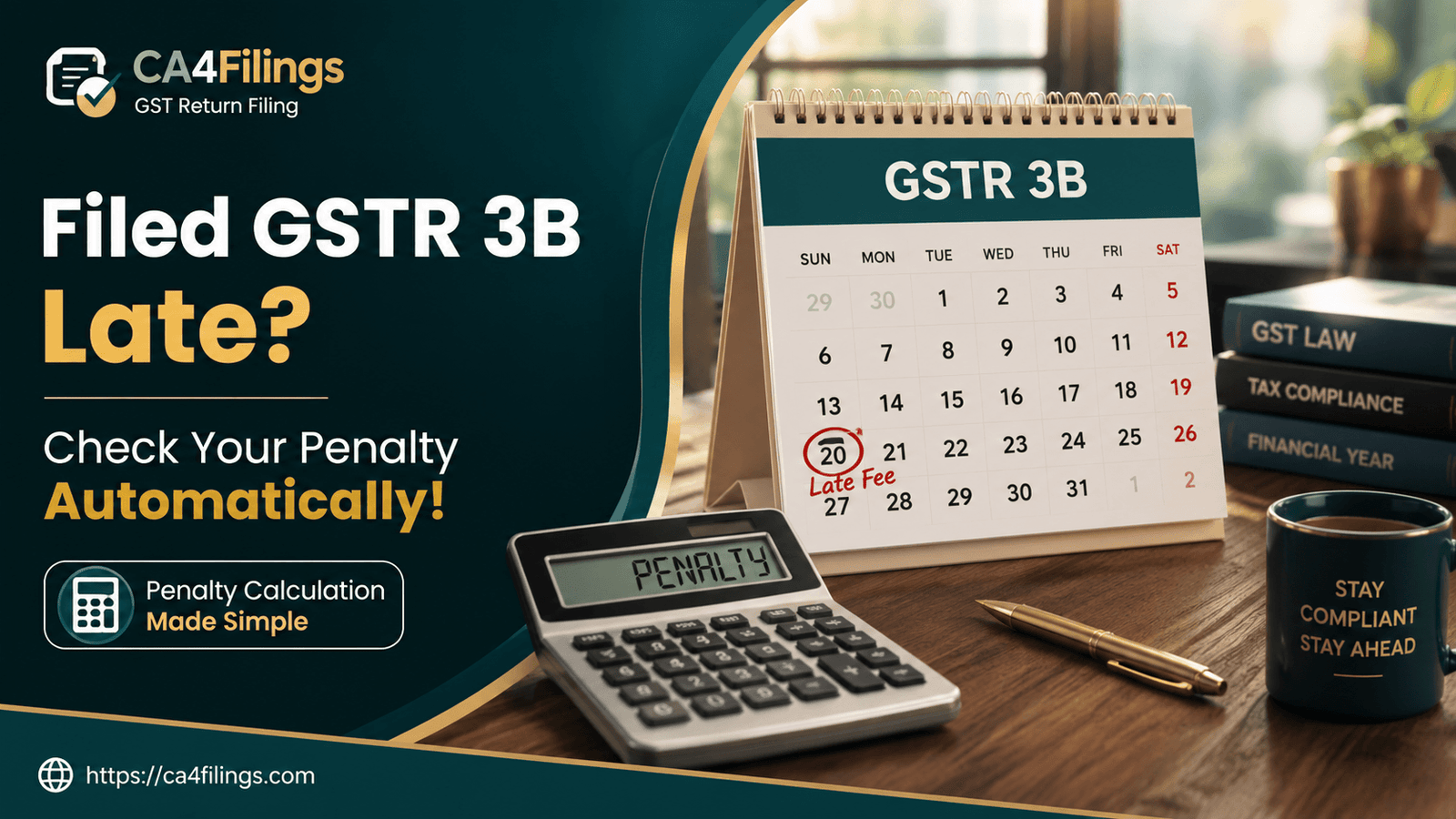
It happens to the best of us. You’re buried in operational tasks, client calls, and supply chain logistics, and suddenly, you realize the deadline for your monthly compliance has slipped by. If you’ve missed your gstr 3 b filing, take a deep breath—you aren't alone. At CA4Filings, we often handle cases where busy entrepreneurs need urgent support with GST Return Filing to get back on track. While missing a due date isn't ideal, understanding how the system automatically computes your penalties can save you a lot of unnecessary stress.
The GST portal is a "smart" system designed to penalize non-compliance without human intervention. In this guide, we’ll break down exactly how the government calculates those late fees and interest, and how you can manage your obligations efficiently.
The Anatomy of a Late Filing Penalty
When you file your gstr 3 b after the statutory due date, you are immediately hit with two distinct types of financial consequences: Late Fees and Interest.
1. Late Fees: The Flat Charge
Late fees are fixed amounts charged for every day of delay. These are not interest-based; they are penalties for failing to meet your administrative obligation.
For Nil Returns: You are looking at a smaller amount, generally ₹20 per day (₹10 CGST + ₹10 SGST).
For Returns with Tax Liability: This can go up to ₹50 per day (₹25 CGST + ₹25 SGST), subject to a maximum cap depending on your turnover.
2. Interest: The Cost of Capital
This is where many business owners get surprised. The interest is calculated at 18% per annum on the net tax liability you paid late. Crucially, this interest is calculated on the amount you paid via auto debit ledger balance rather than the gross liability, provided the input tax credit was rightfully claimed.
How the System Calculates Your Penalty Automagically
The GST portal uses a real-time daily interest tracker tool built into its backend. Once you log in to file your delayed gstr 3 b, the system automatically calculates the exact number of days between the due date and the actual date of filing.
It then performs a calculation based on the following logic:
Step 1: The system identifies your net cash tax liability.
Step 2: It applies the 18% interest rate to that amount.
Step 3: It multiplies that by the number of days of delay divided by 365.
Step 4: The portal generates a tax demand that must be paid before or alongside the filing.
You cannot file the return until this amount is settled. This is where cash buffer utilization becomes important. If you keep a small buffer in your Electronic Cash Ledger, the portal can instantly offset these late fees, preventing further delays.
Proactive Steps for Dispute Mitigation
If you find yourself in a situation where the system has calculated an incorrect penalty—perhaps due to a technical glitch—you need a late filing notification response strategy.
Keep Records: Always maintain a log of when you attempted to file.
Check Input Tax Credit: Ensure your ledger is reconciled. Often, what looks like a penalty issue is actually a mismatch in ITC.
Consult Experts: If the discrepancy is significant, reach out to a professional firm like CA4Filings. We help reconcile the figures before the portal locks in the demand.
Frequently Asked Questions
Is there any way to waive the late fee for gstr 3 b?
Generally, no. The late fee is a statutory requirement. However, in cases of major technical outages on the GST portal, the government sometimes issues a notification to waive or reduce late fees. These are rare and event-specific.
Does the interest apply if I have enough ITC to cover the tax?
Interest is charged only on the tax paid in cash. If your tax liability is fully covered by your Input Tax Credit (ITC), you generally do not pay interest, though you might still be liable for late fees.
What happens if I don't pay the interest shown on the screen?
The GST portal prevents the submission of the gstr 3 b until the full interest and late fee are settled. You effectively cannot file without paying these costs.
Can I file a nil return if I have had no business activity?
Yes. Even if your business had no sales or purchases in a particular month, you are still required to file a Nil gstr 3 b. Failing to do so triggers the same late fee penalties mentioned earlier.
Don't Let Penalties Accumulate
Managing your compliance shouldn't feel like a constant battle against automated penalties. While the government's system is efficient, it doesn't leave room for error. The best way to avoid these charges is to set internal reminders, reconcile your books early, and ensure your ledger is funded.
At CA4Filings, we understand that running a business is hard enough without worrying about complex tax calculations. Whether you need help streamlining your monthly filings or you're dealing with a sudden tax demand, our experts are here to help.
Latest Updates
ca4filings.com Services
























-registration.png)