E-Way Bill and GST Return Integration: Spotting Multi-Vehicle Discrepancies
Worried about E-Way Bill discrepancies? Learn how to sync your transport data with your gst return to avoid audits and penalties with our expert guide.
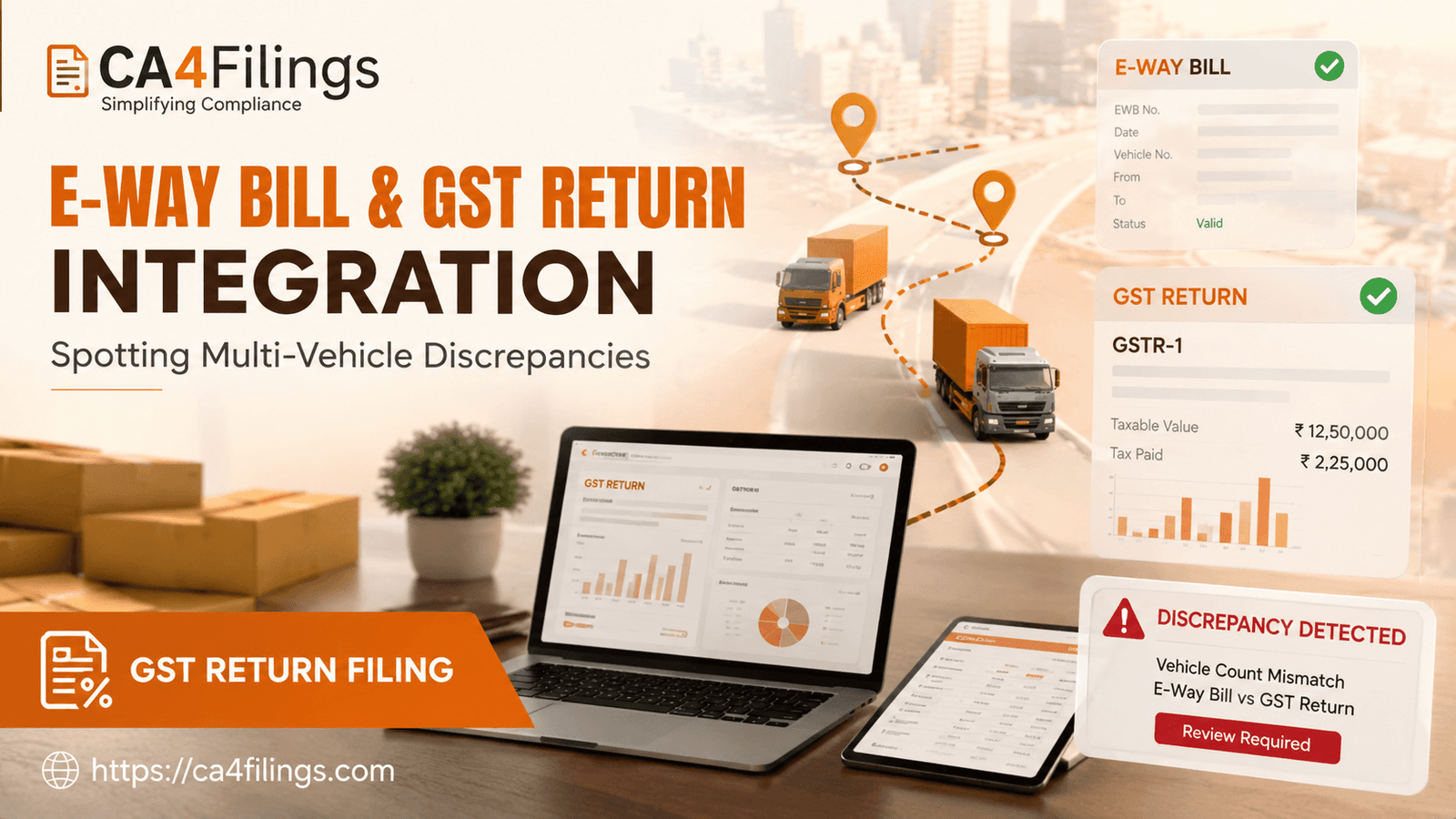
Managing a business in India today means constantly keeping an eye on digital compliance. As a Chartered Accountant, I often see clients get into trouble not because they intend to hide anything, but because their logistics records don’t match their financial filings. If you are struggling with the complexities of tax compliance, our GST Return Filing service is designed to bridge that gap seamlessly. Getting your gst return right is no longer just about accounting; it is about ensuring that the physical movement of your goods, tracked via E-Way Bills (EWB), perfectly mirrors what you report in your monthly filings.
Understanding the Link Between Logistics and Compliance
The GST portal is smarter than most people realize. It doesn’t just look at the numbers you punch in at the end of the month; it cross-verifies your data against the E-Way Bill system. When you generate an E-Way Bill, you create a trail of evidence regarding the movement of your stock. If the value, quantity, or recipient details in that bill do not align with the invoices uploaded in your gst return, you are essentially inviting a notice from the tax department.
One common issue we see at CA4Filings is the negligence surrounding part a part b mapping. Many business owners focus heavily on Part A (the invoice details) but treat Part B (the vehicle/transport details) as an afterthought. If Part B is not updated or is mismatched during transit, the system flags it as an invoice mismatch alert.
The Challenge of Multi-Vehicle Discrepancies
In large-scale logistics, goods are often transshipped. You might send a consignment in a large truck, only for it to be broken down into smaller vehicles at a warehouse hub. This is where most discrepancies arise.
Vehicle Change Failures: If you fail to update the E-Way Bill with the new vehicle number during transshipment, the transit validation check will fail at the next checkpoint.
Time Lags: If the goods reach the destination before the EWB is updated, the system records a temporal mismatch.
RFID Tracking Data: With the integration of rfid tracking data at toll plazas, the government can track exactly where a vehicle is at any given moment. If that vehicle’s location doesn't match the destination declared in your EWB, your records become highly suspicious.
When these physical logs don't tally with the sales shown in your gst return, you create an audit trail that is difficult to justify during a gst audit.
How to Prevent Mismatches and Stay Audit-Ready
At CA4Filings, we always advise our clients to treat transport documentation as a critical part of their tax compliance strategy. Here is how you can minimize these risks:
Reconcile Weekly: Don't wait until the month-end to compare E-Way Bills with your ledger. Do a weekly reconciliation to spot inconsistencies early.
Verify Transshipment Details: Ensure your logistics partner provides the new vehicle details immediately upon transshipment. Update the EWB portal instantly.
Cross-Reference Invoices: Before finalizing your gst return, ensure that every invoice number matches the one linked to an active or completed E-Way Bill.
Monitor the Portal: Regularly check the "Reports" section on the E-Way Bill portal to see if any bills are showing as "Pending" or "Mismatched."
Why Data Integrity Matters for Your GST Return
The goal of the GST regime is transparency. The government is using data analytics to identify taxpayers whose gst return figures deviate significantly from their logistics data. If your sales figures show high-value goods moving in and out of the state, but your gst return reflects low turnover, or if your EWB data shows thousands of units moved while your filing shows fewer, you will likely be flagged for manual verification.
Maintaining consistent records doesn't just protect you from penalties; it improves your business's credibility and makes the entire process of filing a gst return far less stressful.
Frequently Asked Questions
What happens if there is a mismatch between the E-Way Bill and my GST return?
A discrepancy often leads to a system-generated invoice mismatch alert. This can trigger a scrutiny notice, requiring you to provide physical proof of transit, such as Lorry Receipts (LR) and delivery challans.
How does RFID tracking data affect my compliance?
RFID sensors at toll plazas capture the real-time movement of vehicles. If this data contradicts the route or destination on your E-Way Bill, it can result in the detention of your vehicle and heavy fines.
Can I correct an E-Way Bill after the goods have reached the destination?
Generally, no. Once a bill is generated and the movement is complete, amendments are restricted. This is why accurate part a part b mapping at the time of dispatch is crucial.
Why is an accurate gst return so important for my credit rating?
Consistent and error-free tax filings ensure that your business maintains a healthy compliance rating. This makes it easier to obtain loans and proves your reliability to the tax authorities.
Expert Support from CA4Filings
Compliance isn't just about avoiding penalties; it’s about building a robust foundation for your business growth. At CA4Filings, we understand the nuances of the GST framework and how gst return filings interact with the logistics cycle.
Latest Updates
ca4filings.com Services






















-registration.png)