E-Commerce Sellers and GST: Filing Returns for Online Platforms
Struggling with e-commerce compliance? Learn essential tips for TCS reconciliation, multi-state registration, and seamless gst filing with CA4Filings today.
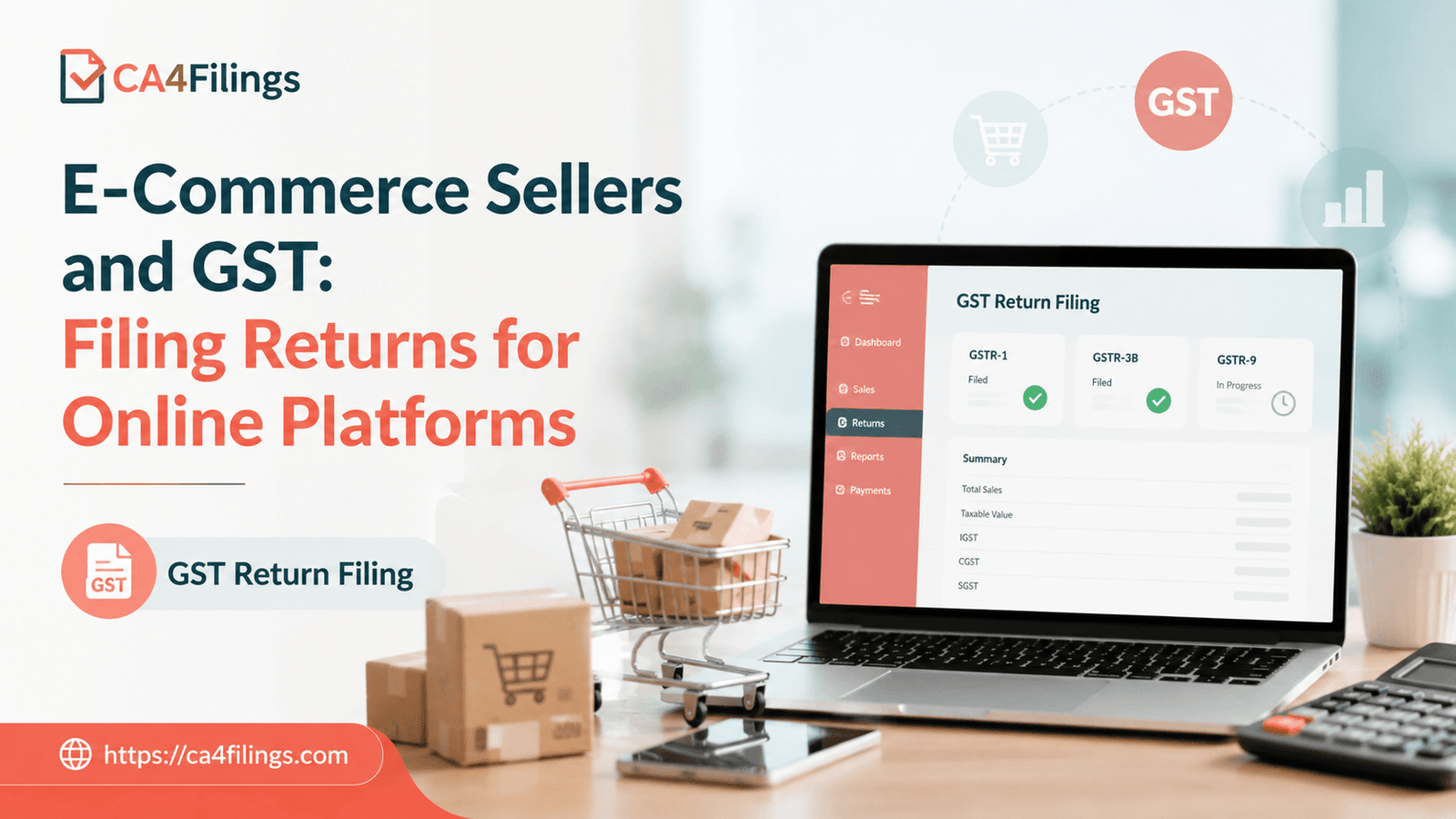
Selling online is an exciting milestone for any entrepreneur, but as we often tell our clients at CA4Filings, the shift from a traditional shop to a digital marketplace brings a whole new set of tax responsibilities. When you start selling on platforms like Amazon or Flipkart, you aren't just managing inventory; you are entering a regulated ecosystem where precise gst filing is the bedrock of your business’s sustainability. If you are feeling overwhelmed by the paperwork, our expert team provides comprehensive GST Return Filing services to help you stay compliant and focus on growing your sales.
For e-commerce sellers, compliance isn't just about paying taxes; it’s about maintaining a clean record that prevents marketplace account suspensions and protects your input tax credits. Let’s dive into how you can master your tax obligations.
Understanding the E-Commerce Compliance Landscape
Unlike offline businesses, e-commerce sellers do not get the benefit of the standard threshold exemption. Whether you are selling a handful of products or thousands, registration is mandatory from day one. Because the marketplace acts as a facilitator, they are legally required to deduct a small portion of your payment as tax—this is the tcs collection mechanism.
As a seller, you must understand that this TCS isn't a tax expense; it’s an asset. It sits in your electronic cash ledger, ready to be used to offset your final GST liability. The challenge lies in ensuring that the data reported by the platform matches your own sales records.
Mastering TCS Collection and Reconciliation
Every month, the e-commerce operator files GSTR-8, which details the sales made through their platform and the TCS collected. This is where gstr 8 reconciliation becomes critical.
We often see sellers lose out on potential credits simply because they don't reconcile their internal sales reports against the platform’s dashboard. If your GSTR-1 and GSTR-3B filings don’t align with the figures reported by the operator, you invite unnecessary scrutiny from the GST department.
Why Reconciliation Matters:
Preventing Mismatches: Errors in HSN codes or GSTIN details can lead to flags in the system.
Claiming Credits: You cannot claim the TCS credit if the platform hasn't filed their GSTR-8 correctly or if you have misreported your outward supplies.
Audit Readiness: A history of clean reconciliations makes you a low-risk profile for tax authorities.
Key Considerations for Modern Sellers
When you are managing amazon seller tax obligations or navigating flipkart gst compliance, there are specific operational nuances you must track:
1. The Interstate Supply Threshold
While you are mandatory registered, remember that an interstate supply threshold doesn't exempt you from registration; however, it does impact how you classify your supplies. Always ensure your invoices clearly distinguish between intra-state (B2C/B2B) and inter-state transactions.
2. The Myth of Dual Registration
Many sellers ask us, "Do I need a separate GSTIN for every warehouse" The answer lies in your operational footprint. If you stock goods in multiple states to leverage faster delivery, you are effectively conducting business in those states. Under current law, you must maintain dual registration or multi-state registration for every location where you have a place of business or warehouse. Failing to register in a state where you store goods can lead to significant penalties.
Practical Tips for Seamless GST Filing
To make your monthly gst filing less of a headache, follow these best practices:
Centralize Your Data: Use an accounting software or a consolidated Excel sheet that pulls data from all your selling platforms.
Check Your HSN Codes: With the government frequently updating tax slabs, ensure your HSN codes are current to avoid overpaying or underpaying tax.
Review GSTR-2B Monthly: Always cross-verify the input tax credit appearing in your GSTR-2B with your purchase invoices.
Frequently Asked Questions
Is it possible to sell on Amazon without a GSTIN?
In most cases, no. GST registration is mandatory for all e-commerce sellers of goods, regardless of their annual turnover. There are very limited exceptions for certain service-based categories or platform-specific exemptions, but for standard product sellers, a GSTIN is non-negotiable.
What happens if the e-commerce operator fails to file GSTR-8?
If the operator does not file their return, your TCS credit will not reflect in your electronic cash ledger. This directly impacts your cash flow. We advise our clients to follow up with their account managers if there is a consistent delay in credit reflection.
Can I change my GST registration state if I move my warehouse?
Yes, you can add or remove a place of business through an amendment in your existing GST registration. This is a common requirement for scaling e-commerce businesses.
How do I handle refunds and returns in my GST filing?
Returns (Credit Notes) must be meticulously recorded. When a customer returns a product, you issue a credit note, which reduces your output tax liability. These must be reported in the same month they are issued to maintain the accuracy of your gst filing.
E-commerce is a high-speed business, and your tax compliance needs to keep pace. Don't let tax complexities become a roadblock to your success. At CA4Filings, we specialize in helping online sellers navigate the intricate landscape of gst filing. Whether it's setting up your registrations or ensuring your monthly returns are flawless, we are here to support your growth. Reach out to us today and let’s get your tax compliance sorted once and for all.
Latest Updates
ca4filings.com Services
























-registration.png)