Cross-Border Transactions: Goods and Services Tax Filing for Imports
Simplify your cross-border compliance with our expert guide on goods and services tax filing for imports. Learn about ITC, RCM, and ICEGATE today.
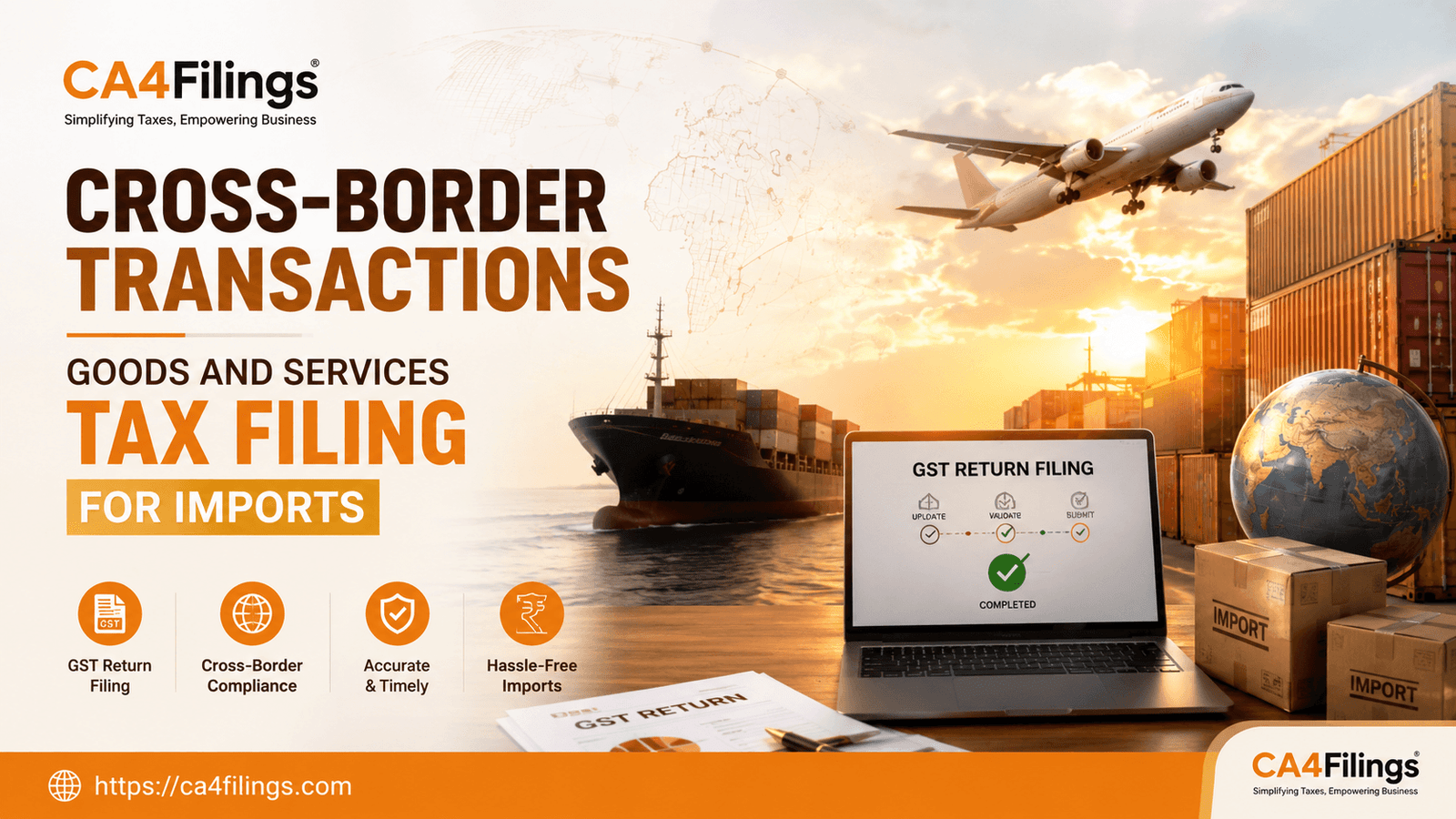
Navigating the complexities of international trade can often feel like a maze, especially when it comes to the technicalities of tax compliance. As a business owner, you likely focus on the growth and logistics of your supply chain, but the tax implications are just as critical. Many of our clients at CA4Filings come to us concerned about the nuances of cross-border tax compliance, especially when they need to ensure their GST Return Filing is perfectly aligned with their import records. Getting your goods and services tax filing right is not just about avoiding penalties; it is about maintaining a healthy cash flow through efficient tax credit management.
When you import goods or services into India, you are essentially engaging in a transaction that triggers specific tax liabilities under the GST regime. This article aims to break down these requirements into simple, actionable steps to help you stay compliant.
Understanding the Basics: Imports and GST
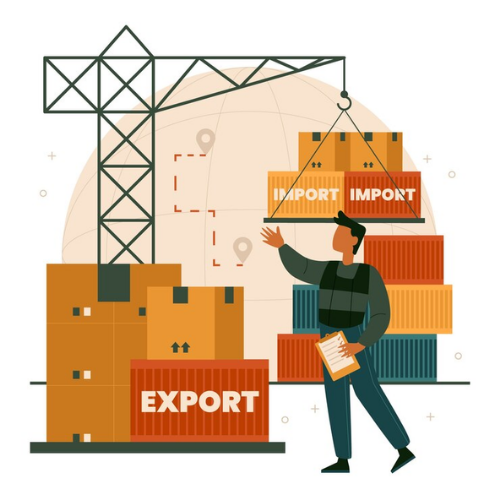
In the eyes of the law, importing goods or services is treated as an inter-state supply. Because these transactions cross international borders, they attract the Integrated Goods and Services Tax (IGST).
Import of Goods
When you bring physical goods into India, the process is governed by the Customs Act, 1962, alongside GST laws. You are required to pay IGST on the value of the imported goods, which is calculated based on the assessable value plus the applicable basic customs duty. The beauty of this system is that the IGST paid at the time of import is not just a sunk cost; it is eligible for input tax credit.
Import of Services and RCM
The import of services works slightly differently. If you are hiring consultants, software developers, or service providers based outside India, the liability to pay GST often shifts to you under the Reverse Charge Mechanism (RCM). You must calculate and pay this tax directly to the government, ensuring your internal records and goods and services tax filing remain transparent and audit-ready.
The Role of ICEGATE Integration
One of the most common questions we receive involves ICEGATE integration. ICEGATE (Indian Customs Electronic Data Interchange Gateway) acts as the bridge between your customs documentation and the GST portal.
When you file your Bill of Entry at the port, those details are digitally transmitted to the GST network. This automated flow is essential for your input credit on import. If there is a mismatch between your customs declaration and your GST filings, you could face significant delays in receiving your tax credits. Regular bill of entry tracking is a best practice we always recommend to our clients to ensure that every document is accounted for before you sit down for your monthly filings.
Maximizing Input Credit on Import
Successfully claiming credit for the taxes paid at the border is vital for your bottom line. To ensure a seamless process:
Mandatory GSTIN: Always ensure your GSTIN is correctly reflected in the Bill of Entry.
Verify GSTR-2B: Check your GSTR-2B statement regularly. Your IGST paid on imports should automatically populate here. If it doesn't appear, you might need to reconcile your customs records with the GST portal.
Port Customs Clearance: Ensure your Customs House Agent (CHA) is providing you with the "Out of Charge" (OOC) copy, as this is your primary proof of payment.
Addressing RCM on Freight
Many importers overlook the RCM on freight charges. If you are importing goods on a CIF (Cost, Insurance, and Freight) basis, the freight component paid to a foreign shipping line might also attract GST under the reverse charge mechanism, depending on specific government notifications and the nature of the contract. It is crucial to evaluate every invoice segment to determine if RCM applies to avoid unexpected tax notices later.
Frequently Asked Questions
Is IGST paid on imports available as Input Tax Credit?
Yes, the IGST and any compensation cess paid at the time of import are available as input tax credit to the registered importer, provided they have the relevant Bill of Entry and proof of payment.
Why is my Bill of Entry not reflecting in GSTR-2B?
This often happens due to a delay in data transmission between ICEGATE and the GST portal or an incorrect GSTIN on the Bill of Entry. We recommend double-checking your ICEGATE profile to ensure it is correctly linked to your GST registration.
Do I need to pay GST on services imported from outside India?
Yes, in most cases, the import of services is subject to GST under the Reverse Charge Mechanism, and the recipient in India is liable to pay the tax.
Can I claim ITC without a Bill of Entry?
No, the Bill of Entry is the primary document required to substantiate your claim for input tax credit on imported goods.
Expert Advice from CA4Filings
Compliance is not just a periodic chore; it is the backbone of a sustainable business. Whether you are dealing with port customs clearance or complex RCM calculations, the key is consistency. At CA4Filings, we specialize in helping businesses streamline their tax processes. If you are struggling with your goods and services tax filing or need assistance with complex import reconciliations, reach out to us today. Let our experts handle the paperwork so you can focus on scaling your business across borders.
Latest Updates
ca4filings.com Services
























-registration.png)