Common Pitfalls in GSTR 3B Filing and How to Correct Them Next Month
Struggling with your taxes? Discover the common mistakes made during gstr 3 b filing and learn expert tips from CA4Filings to ensure compliance today.
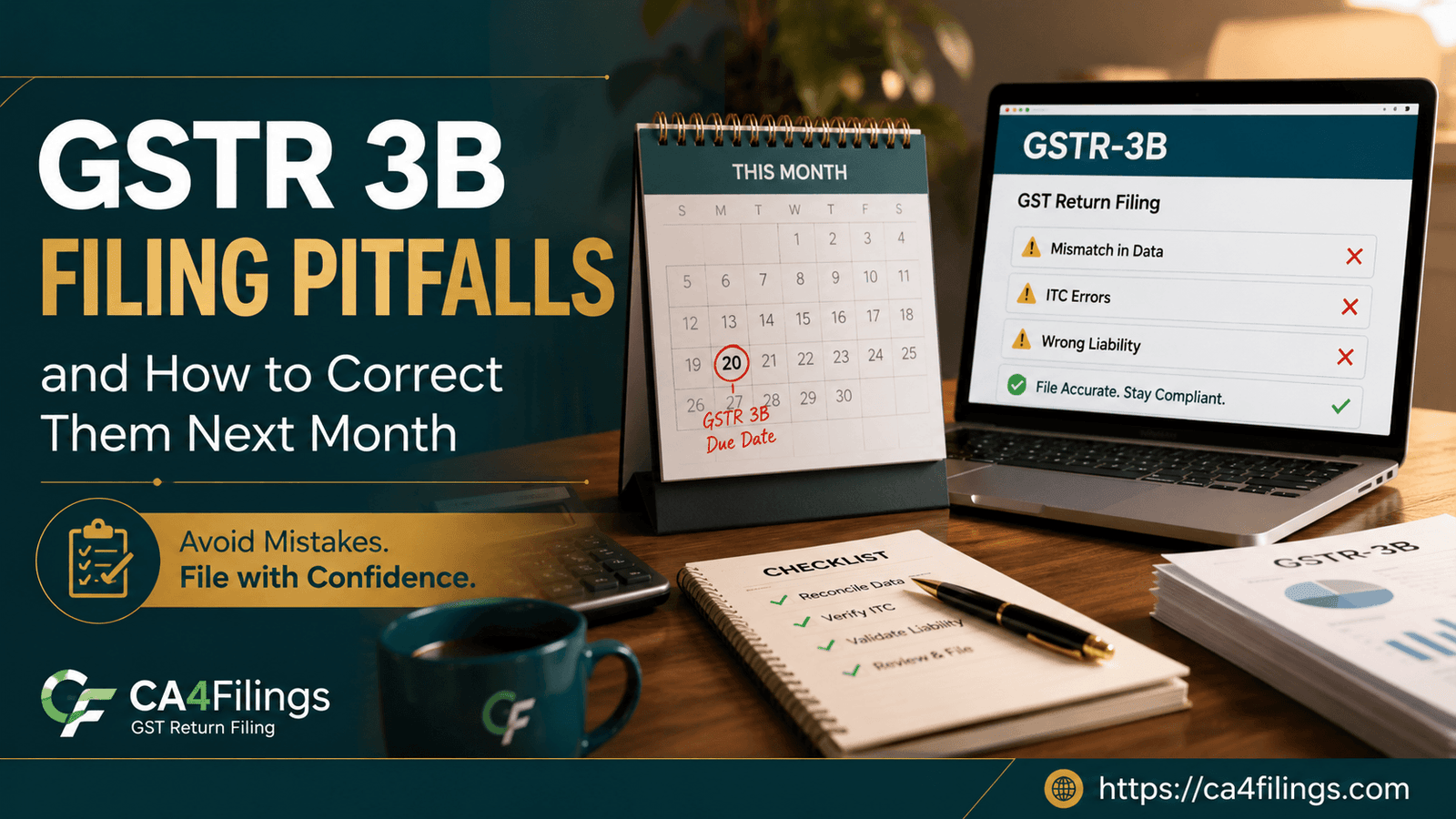
Filing your monthly taxes can often feel like navigating a maze, especially when you are trying to balance growing your business with the rigid demands of the Goods and Services Tax regime. At CA4Filings, we understand that errors in your gstr 3 b filing are not just stressful—they can lead to unnecessary penalties and notices from the department. If you are currently looking for professional assistance to streamline your compliance, you can explore our GST Return Filing services to ensure everything is handled accurately and on time.
The reality is that even the most meticulous business owners occasionally stumble when preparing their monthly returns. Whether it is a simple data entry slip or a complex mismatch in Input Tax Credit (ITC), these hiccups are common. However, the good news is that the GST system is designed to allow for adjustments. In this guide, we will break down the most frequent pitfalls and provide you with a clear roadmap to rectify them in your next filing cycle.
Common Reporting Errors in GSTR 3B
One of the primary reasons we see clients facing issues with their gstr 3 b is inconsistent data entry. When your sales or purchase registers do not align perfectly with what is being uploaded, the system flags discrepancies.
Mismatch Between GSTR-1 and GSTR 3B
Often, taxpayers report outward supplies in their GSTR-1 but fail to match those figures precisely in their gstr 3 b. This often happens due to manual calculation errors or failing to account for amendments made in previous months. When the values in these two returns do not sync, it draws the attention of tax officers, leading to potential scrutiny.
Misclassification of Supplies
Many businesses struggle to categorize supplies correctly between inter-state and intra-state transactions. Filing a transaction under the wrong tax head (IGST vs. CGST/SGST) is a classic reporting error. While the tax might have been paid, the destination of the credit is incorrect, causing a headache during the reconciliation process.
Handling Excess ITC Claims
Claiming Input Tax Credit is a vital right for every business owner, but an excess itc claim is one of the quickest ways to receive a notice.
Ineligible Credits: Sometimes, ITC is claimed on goods or services that are blocked under Section 17(5) of the CGST Act, such as personal expenses or certain types of motor vehicles.
Missing Vendor Compliance: If your supplier has not filed their own returns, your credit becomes ineligible. Many taxpayers jump the gun and claim the credit before the system reflects it in their GSTR-2B.
To correct an excess itc claim, you must reverse the credit in the gstr 3 b of the month in which the error is identified. You should ideally pay the tax along with applicable interest to avoid future litigation.
Correcting Short Tax Payment
A short tax payment usually occurs due to calculation oversight or late payment of tax liabilities. If you realize after filing that you have underpaid, do not panic.
The GST law allows for the amendment of return in terms of tax liability adjustments in the subsequent tax period. If you missed paying a portion of your tax, you can disclose the additional liability in the next month’s return. Remember, when you pay the tax in the subsequent month, you must also calculate and pay the interest for the delayed period.
The Role of GST Credit Notes in Reconciliations
A gst credit note is a powerful tool to rectify errors in invoices issued previously. If you have overcharged a client or if goods were returned, issuing a credit note is mandatory. However, the pitfall occurs when these notes are not properly accounted for in the gstr 3 b. Ensure that your credit notes are reflected accurately to reduce your output tax liability.
How to Stay Compliant Next Month
To ensure your future gstr 3 b filings are seamless, follow this simple checklist:
Reconcile Early: Start your reconciliation at least three days before the due date.
Verify GSTR-2B: Never claim ITC without cross-verifying it with your GSTR-2B statement.
Check Interest Calculations: Always keep a buffer for interest if you are filing late or making adjustments for a short tax payment.
Use Automation: Relying on manual spreadsheets is risky. Use accounting software that integrates directly with the GST portal.
Frequently Asked Questions (FAQs)
Can I revise my GSTR 3B if I made a mistake?
Currently, there is no provision to "revise" a gstr 3 b once it is filed. However, you can rectify most errors by making the necessary adjustments in the returns of the subsequent tax period.
What happens if I fail to report a GST credit note?
If you fail to report a credit note, your outward tax liability remains overstated, meaning you end up paying more tax than you actually owe. It is essential to report it promptly to claim the reduction in liability.
Is interest mandatory on short tax payments?
Yes. If you underpay your tax, the law requires you to pay the tax along with interest at 18% per annum for the period of delay.
How do I correct an error made two months ago?
You can make the adjustment in the gstr 3 b of the current month. The system allows for the disclosure of previous period corrections under the specific amendment tables provided in the return.
Secure Your Compliance with CA4Filings
Managing your gstr 3 b requires precision, vigilance, and up-to-date knowledge of ever-changing GST laws. At CA4Filings, we specialize in taking the complexity out of your tax obligations. Whether you are dealing with reconciliation issues, ITC reversals, or regular monthly filings, our team is here to ensure your business remains audit-ready.
Latest Updates
ca4filings.com Services
























-registration.png)