The Impact of GST Cancellation on Businesses
The Impact of GST Cancellation on Businesses explained with legal effects, compliance risks, ITC loss, and practical solutions for businesses.
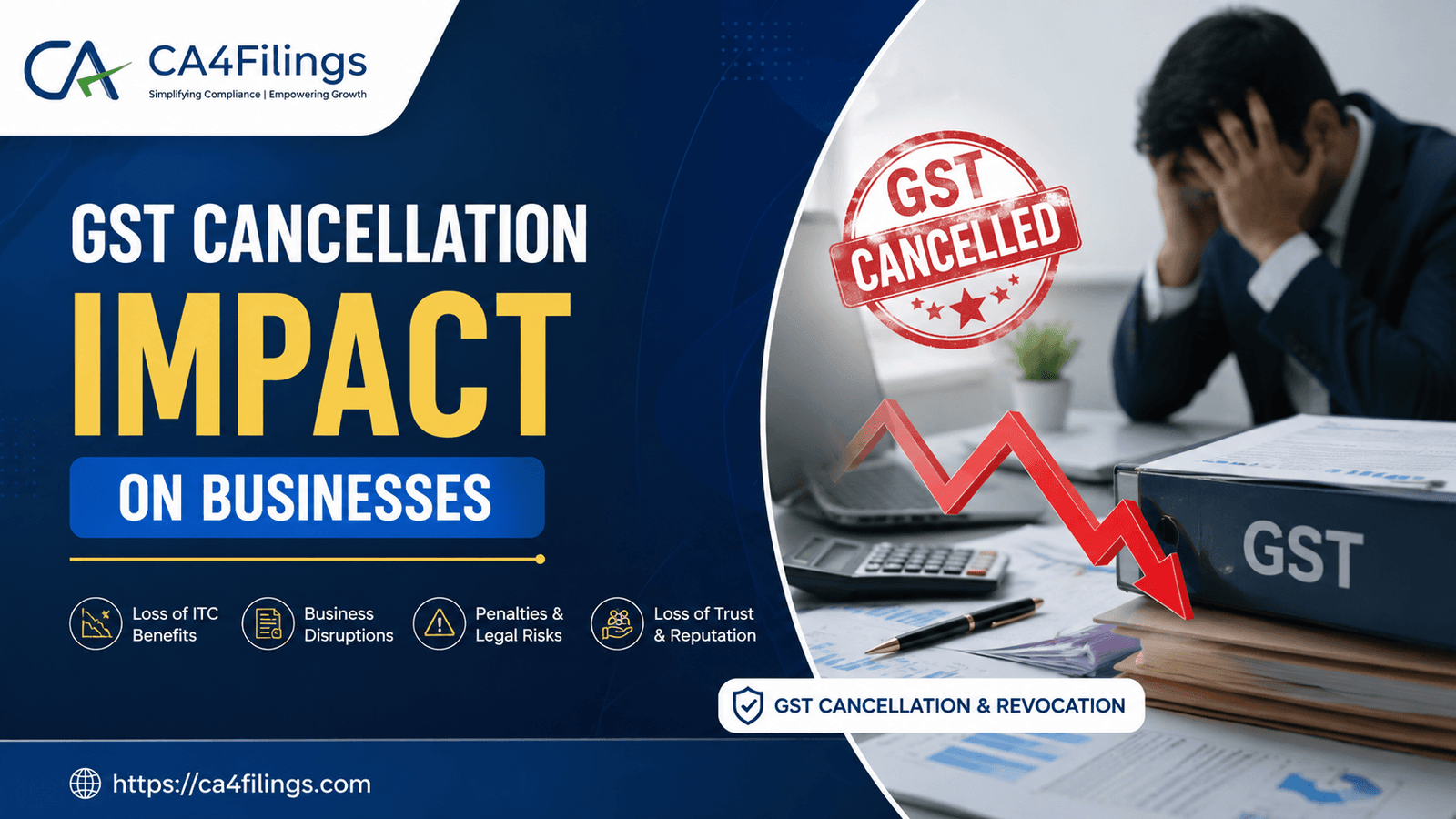
GST registration plays a crucial role in the smooth functioning of any business in India. Whether you are a trader, manufacturer, freelancer, service provider, or e-commerce seller, GST compliance directly impacts your operations, reputation, and cash flow. However, many businesses underestimate The Impact of GST Cancellation on Businesses until they face notices, penalties, or operational disruptions.
At CA4Filings, we regularly assist businesses dealing with GST cancellation issues, compliance defaults, and registration revocation procedures. In many cases, business owners are unaware that delayed returns, inactive operations, or non-compliance can result in cancellation of GST registration by the department itself. If you are facing such issues, professional support for GST Cancellation & Revocation can help businesses restore compliance quickly and avoid legal complications.
Understanding The Impact of GST Cancellation on Businesses is essential for every taxpayer because the consequences extend far beyond just losing a GST number.
What is GST Cancellation?
GST cancellation refers to the termination of a taxpayer’s GST registration either voluntarily by the taxpayer or compulsorily by the GST department.
GST registration may be cancelled due to:
- Continuous non-filing of GST returns
- Business closure or discontinuation
- Voluntary surrender of GST registration
- Obtaining registration through fraud or misrepresentation
- Violation of GST provisions
- Non-commencement of business after registration
Once the registration is cancelled, the taxpayer legally loses the authority to collect GST or issue tax invoices.
The Impact of GST Cancellation on Businesses
Understanding The Impact of GST Cancellation on Businesses is critical because cancellation can create severe operational, financial, and legal challenges.
Loss of Legal Authority to Collect GST
After cancellation, businesses cannot charge GST from customers. Continuing to collect GST after cancellation is considered illegal and may attract penalties.
For example, if a consulting firm continues issuing GST invoices after cancellation, the department may impose heavy fines and demand repayment of taxes collected unlawfully.
Input Tax Credit (ITC) Becomes Unavailable
One of the biggest aspects of The Impact of GST Cancellation on Businesses is the loss of Input Tax Credit.
Businesses rely on ITC to reduce tax liability. Once registration is cancelled:
- The business cannot claim ITC on purchases
- Customers may refuse to deal with the business
- Working capital pressure increases
This is especially problematic for manufacturers and wholesalers who regularly purchase goods with GST.
Negative Impact on Business Reputation
GST compliance is often viewed as a sign of business credibility. Cancellation may create trust issues among:
- Customers
- Vendors
- Financial institutions
- Corporate clients
Many companies verify GST status before entering into contracts. A cancelled GST registration may lead to loss of business opportunities.
Financial Consequences of GST Cancellation
Penalties and Interest
Another major part of The Impact of GST Cancellation on Businesses involves financial penalties.
If GST registration is cancelled due to non-compliance, businesses may still be liable for:
- Pending GST dues
- Interest on delayed payments
- Late filing penalties
- Additional departmental notices
Ignoring GST obligations can increase financial burdens significantly over time.
Disruption in Cash Flow
Businesses with cancelled GST registrations often experience:
- Delayed payments from clients
- Vendor disputes
- Increased tax costs
- Blocked input credits
For small businesses and startups, this cash flow disruption can become a serious survival issue.
Difficulty in Obtaining Loans or Investments
Banks and investors prefer businesses with proper compliance records. GST cancellation may negatively affect:
- Loan approvals
- Creditworthiness
- Investor confidence
- Tender eligibility
This demonstrates how The Impact of GST Cancellation on Businesses extends beyond taxation into overall business growth.
Operational Challenges Faced by Businesses
Inability to Issue Valid Tax Invoices
A cancelled GSTIN makes invoices invalid for GST purposes. Customers may reject such invoices because they cannot claim ITC.
This creates:
- Customer dissatisfaction
- Payment delays
- Contractual disputes
Supply Chain Disruptions
Many suppliers avoid dealing with businesses having cancelled GST registrations due to compliance risks.
For example:
- E-commerce platforms may suspend seller accounts
- Vendors may stop supplies
- B2B customers may terminate contracts
This is one of the most practical examples of The Impact of GST Cancellation on Businesses in day-to-day operations.
Restrictions on Interstate Sales
Businesses without active GST registration may face restrictions on interstate transactions, especially if turnover exceeds prescribed limits.
This can severely affect:
- Online sellers
- Exporters
- Logistics companies
- Service providers operating across states
Common Reasons Businesses Face GST Cancellation
To avoid The Impact of GST Cancellation on Businesses, it is important to understand the common mistakes leading to cancellation.
Non-Filing of Returns
The most common reason is continuous non-filing of:
- GSTR-1
- GSTR-3B
- Annual returns
Even businesses with nil turnover must file returns regularly.
Incorrect GST Compliance
Errors such as:
- Fake invoices
- Mismatch in returns
- Wrong ITC claims
- Invalid transactions
may trigger departmental action.
Business Inactivity
If the department finds no genuine business activity at the registered address, GST registration may be cancelled after verification.
How Businesses Can Avoid GST Cancellation
Preventing cancellation is always easier than dealing with restoration procedures later.
File Returns on Time
Ensure timely filing of:
- Monthly returns
- Quarterly returns
- Annual GST returns
Even nil returns should never be ignored.
Maintain Proper Documentation
Businesses should maintain:
- Purchase invoices
- Sales invoices
- E-way bills
- Books of accounts
Accurate records reduce compliance risks.
Respond to GST Notices Immediately
Many businesses ignore departmental notices until cancellation occurs.
Professional guidance can help in:
- Drafting proper replies
- Rectifying compliance issues
- Avoiding legal complications
Conduct Regular GST Reviews
Periodic GST health checks help identify issues before they become serious.
At CA4Filings, we recommend regular compliance reviews for businesses of all sizes.
Revocation of Cancelled GST Registration
If cancellation has already occurred, businesses may apply for revocation under prescribed conditions.
Steps for Revocation
Step 1: File Pending Returns
Clear all pending GST returns and tax liabilities.
Step 2: Pay Interest and Penalties
Any outstanding dues must be settled before applying for revocation.
Step 3: Submit Revocation Application
The application must be filed within the prescribed timeline through the GST portal.
Step 4: Respond to Departmental Queries
Authorities may seek additional clarification or supporting documents.
Quick action is important because delayed responses may reduce the chances of successful revocation.
The Long-Term Impact of GST Cancellation on Businesses
The long-term consequences can be more damaging than immediate penalties.
Reduced Market Competitiveness
Businesses without active GST registration often struggle to compete with compliant companies.
Legal and Compliance Risks
Repeated defaults may attract:
- Audits
- Investigations
- Penalty proceedings
Loss of Growth Opportunities
Corporate clients, government tenders, and large marketplaces usually prefer GST-compliant vendors.
Therefore, The Impact of GST Cancellation on Businesses can directly affect future expansion opportunities.
FAQs
Can a cancelled GST registration be restored?
Yes, businesses can apply for revocation if cancellation was done by the department and eligibility conditions are satisfied.
What happens if I continue business after GST cancellation?
Operating without valid GST registration may result in penalties, tax demands, and legal action.
How long does GST revocation take?
The timeline varies depending on pending compliance, documentation, and departmental verification.
Is GST cancellation permanent?
Not always. In many cases, registration can be restored through proper revocation procedures.
Can customers claim ITC from a cancelled GSTIN?
No. Customers generally cannot claim Input Tax Credit on invoices issued after GST cancellation.
The Impact of GST Cancellation on Businesses can be severe, affecting legal compliance, cash flow, customer trust, and long-term growth. Many businesses realize the seriousness only after facing blocked operations, ITC losses, or departmental notices.
The good news is that most GST cancellation issues can be prevented with timely compliance, proper documentation, and professional guidance. Businesses should proactively monitor their GST status and address notices immediately to avoid unnecessary complications.
At CA4Filings, we help businesses manage GST compliance, cancellation issues, and revocation procedures efficiently. Whether you are facing cancellation notices or need assistance restoring your GST registration, our experts are here to provide practical and reliable support tailored to your business needs.
Latest Updates
ca4filings.com Services























-registration.png)