The Future of GST Cancellation: Trends and Predictions
The Future of GST Cancellation: Trends and Predictions – explore upcoming GST changes, trends, and expert insights for businesses.
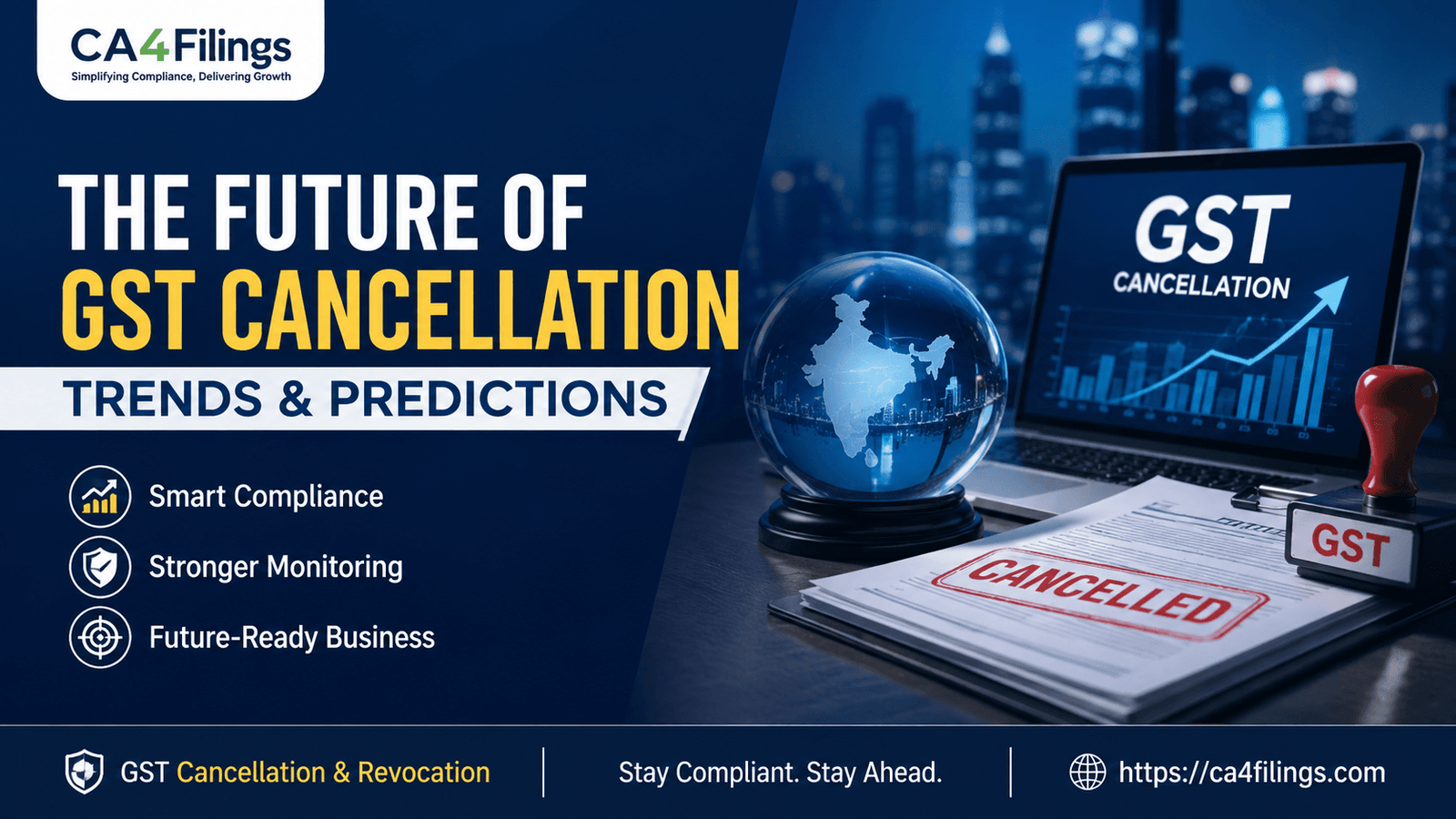
The Goods and Services Tax (GST) system has significantly transformed India's tax framework over the years. From registration and return filing to compliance monitoring and cancellations, the government continues to strengthen and digitize the system. Today, businesses are increasingly asking what lies ahead for GST cancellation processes and how future developments may impact them. That is where understanding The Future of GST Cancellation: Trends and Predictions becomes important.
As tax professionals at CA4Filings, we regularly guide businesses facing registration issues, compliance notices, and cancellation concerns. Businesses looking for assistance with GST Cancellation & Revocation often want clarity on changing regulations and future compliance expectations. The GST ecosystem is evolving rapidly, and staying informed can help businesses avoid unnecessary disruptions.
In this article, we will explore The Future of GST Cancellation: Trends and Predictions, emerging trends, expected policy changes, and practical insights for businesses.
Understanding GST Cancellation in the Current Scenario
Before discussing The Future of GST Cancellation: Trends and Predictions, it is important to understand how GST cancellation currently works.
GST registration can be cancelled under various circumstances, including:
- Discontinuation of business operations
- Business merger or transfer
- Voluntary cancellation requests
- Non-filing of GST returns
- Fraudulent registration detection
- Violation of GST rules
Authorities have become increasingly strict regarding compliance, especially for inactive entities and businesses showing irregular filing patterns.
For example, a small trading company that continuously fails to file GST returns for six months may receive notices and eventually face cancellation proceedings.
The Future of GST Cancellation: Trends and Predictions in India's GST Ecosystem
Several developments indicate where GST administration is heading.
Increased Automation in GST Monitoring
One of the strongest trends affecting The Future of GST Cancellation: Trends and Predictions is automation.
The GST system is becoming more technology-driven. Authorities now rely heavily on:
- Data analytics
- Artificial intelligence-based pattern recognition
- Automated mismatch detection
- Real-time transaction monitoring
In the future, GST systems may automatically identify:
- Suspicious filing patterns
- Inactive businesses
- Fake invoice networks
- High-risk taxpayers
Rather than manual intervention, technology will likely trigger notices and cancellation actions faster.
For businesses, this means compliance cannot be delayed or ignored.
Greater Focus on Fake Registrations
The government has repeatedly targeted fake GST registrations and invoice fraud.
Future GST cancellation trends may include:
- Stricter verification processes
- Enhanced Aadhaar authentication
- Geo-location verification
- Mandatory physical verification for selected businesses
For instance, if multiple GST registrations are linked to suspicious activity from one address, authorities may instantly flag them.
As part of The Future of GST Cancellation: Trends and Predictions, businesses should expect stronger scrutiny during registration and post-registration monitoring.
Predictive Compliance Systems
How Predictive Analytics May Change GST Administration
Predictive analytics is expected to play a major role in The Future of GST Cancellation: Trends and Predictions.
Instead of waiting for compliance failures, systems may identify businesses likely to default based on patterns such as:
- Delayed return filing history
- Sudden turnover fluctuations
- Irregular invoice activities
- Tax payment inconsistencies
A predictive model could warn authorities before serious defaults occur.
Businesses may receive alerts like:
"Your filing behavior indicates possible compliance risks."
Such proactive measures may reduce disputes while improving tax collection efficiency.
The Future of GST Cancellation: Trends and Predictions for Small Businesses
Small businesses often face the biggest compliance challenges because of:
- Limited accounting knowledge
- Cash flow constraints
- Delayed documentation
- Lack of professional guidance
Future reforms may introduce simplified compliance models for smaller taxpayers.
Possible improvements include:
Simplified Cancellation Procedures
Authorities may simplify cancellation procedures by:
- Reducing documentation requirements
- Offering guided online workflows
- Faster application processing
- Automatic status tracking
Better Notification Systems
Many businesses currently miss GST notices due to poor communication practices.
Future systems may include:
- Mobile alerts
- WhatsApp notifications
- Email reminders
- Dashboard-based compliance warnings
This could significantly reduce accidental cancellations.
Impact of Stronger Digital Integration
India is moving toward complete digital integration across tax systems.
Future GST processes may connect with:
- Income tax databases
- Banking systems
- E-invoicing platforms
- MCA records
- Financial reporting systems
This interconnected structure may influence The Future of GST Cancellation: Trends and Predictions significantly.
Example
Imagine a company reporting ₹1 crore turnover under GST but declaring substantially different revenue figures elsewhere.
Integrated systems may automatically detect inconsistencies and initiate verification.
Therefore, maintaining consistency across all financial records will become increasingly important.
How Businesses Can Prepare for The Future of GST Cancellation: Trends and Predictions
Businesses should not wait for regulatory changes before strengthening compliance practices.
Follow these practical steps:
Step 1: File GST Returns on Time
Late filings remain one of the major reasons for GST cancellation.
Maintain a filing calendar and track due dates carefully.
Step 2: Conduct Regular Compliance Reviews
Periodic reviews help identify issues before authorities detect them.
Check:
- Pending returns
- Input tax credit mismatches
- Outstanding notices
- Registration status
Step 3: Maintain Accurate Documentation
Keep organized records of:
- Purchase invoices
- Sales invoices
- Bank statements
- GST payment records
Step 4: Monitor GST Portal Notifications
Businesses often ignore notices until problems become serious.
Assign responsibility to a dedicated person or consultant.
Step 5: Seek Professional Guidance
GST regulations continue evolving.
Professional support can help businesses:
- Avoid mistakes
- Respond to notices
- Handle cancellations
- Complete revocation procedures efficiently
Challenges That May Continue in Future GST Systems
Even with technological improvements, some challenges may remain.
Technical System Issues
Businesses may continue facing:
- Portal downtimes
- Data syncing delays
- Filing errors
Compliance Burden on Small Enterprises
Smaller entities may still struggle with increasing digital requirements.
Interpretation of Rules
GST law frequently changes, and interpretation differences may continue causing confusion.
Businesses should stay updated regularly.
FAQs
1. What is meant by GST cancellation?
GST cancellation refers to the termination of a GST registration either voluntarily by the taxpayer or by tax authorities due to non-compliance or other reasons.
2. How does The Future of GST Cancellation: Trends and Predictions affect businesses?
Future developments may introduce automated monitoring, stricter verification, predictive compliance systems, and stronger digital integration.
3. Can cancelled GST registration be restored?
Yes. Businesses can apply for revocation if they meet eligibility conditions and comply with applicable requirements.
4. Will technology increase GST cancellation risks?
Technology itself does not increase risk. However, non-compliant businesses may be identified much faster through automated systems.
5. Why should businesses prepare now?
Early preparation helps avoid penalties, registration issues, business interruptions, and unnecessary compliance complications.
As India's tax ecosystem evolves, The Future of GST Cancellation: Trends and Predictions points toward a more automated, data-driven, and compliance-focused environment. Businesses that rely on delayed filings or inconsistent records may face increased scrutiny in the coming years.
At the same time, improvements in technology may also create a smoother and more transparent experience for compliant taxpayers. The key lies in preparation, proper documentation, and proactive compliance management.
At CA4Filings, we help businesses navigate changing GST regulations with practical solutions and expert guidance. If you are facing GST registration concerns, cancellation notices, or need professional assistance, connect with CA4Filings today and ensure your business stays compliant and future-ready.
Latest Updates
ca4filings.com Services

























-registration.png)