How to Apply for FSSAI Registration Online: A Detailed Guide
Learn How to Apply for FSSAI Registration Online: A Detailed Guide. Step-by-step process, fees, documents, and expert compliance tips by CA4Filings.
Starting a food business in India is an exciting venture, but it comes with its fair share of legal responsibilities. Whether you are launching a cozy neighborhood cafe, a cloud kitchen, a manufacturing unit, or a simple grocery store, ensuring food safety is non-negotiable. This is where the Food Safety and Standards Authority of India (FSSAI) steps in. Acquiring your food license is the foundational legal step to running your business legally and winning consumer trust. In this post, we will walk you through everything you need to know about How to Apply for FSSAI Registration Online: A Detailed Guide.
Navigating government portals and compliance requirements can feel overwhelming when you are busy managing daily operations. At CA4Filings, we understand the challenges entrepreneurs face, which is why we break down complex legal processes into clear, actionable steps. If you want to bypass the bureaucratic hurdles completely, you can always leverage our expert team for seamless FSAAI Registration services to secure your certificate without any stress. Let us dive into the details so you can understand exactly how this system works.
Understanding the FSSAI Framework: Which License Do You Need?
Before we jump into the application process, it is crucial to understand that FSSAI does not follow a "one size fits all" rule. The type of registration or license you require depends directly on the scale of your operations, your annual turnover, and your production capacity.
Applying for the wrong category is one of the most common mistakes business owners make, often leading to application rejections or unnecessary expenses. FSSAI categories are split into three distinct tiers:
1. Basic FSSAI Registration
This is meant for petty food business operators (FBOs), small-scale manufacturers, retailers, or startups with an annual turnover of up to ₹12 Lakhs. If you operate a small home bakery, a roadside stall, or a local distribution setup within this turnover limit, this basic registration is your starting point.
2. State FSSAI License
If your business has outgrown the basic tier or falls between an annual turnover of ₹12 Lakhs and ₹20 Crores, you must apply for a State FSSAI License. This generally applies to medium-sized restaurants, hotels, caterers, and food processing units operating within a single state.
3. Central FSSAI License
This is the highest level of licensing, mandatory for large-scale operations with an annual turnover exceeding ₹20 Crores. It is also required if you operate food businesses across multiple states, engage in importing or exporting food products, or supply food to central government agencies like the railways or airports.
Documents Required Before You Apply
To ensure a smooth online application process, you should gather all your documentation in advance. Having scanned, legible copies of these papers will prevent the portal from timing out and reduce the chances of a scrutiny officer raising a query.
Proof of Identity and Address: Aadhaar Card, PAN Card, Voter ID, or Passport of the business owner, partners, or directors.
Proof of Business Premises: A recent electricity bill, water bill, or property tax receipt. If the property is rented, you must provide a valid rent agreement along with a No Objection Certificate (NOC) from the landlord.
Business Entity Proof: Incorporation certificate, partnership deed, or shop and establishment registration depending on your business structure.
Food Safety Management System (FSMS) Plan: A declaration or plan detailing how you intend to maintain hygiene and food safety standards.
List of Food Categories: A precise list of the specific food items or categories your business will handle, manufacture, or sell.
For Manufacturers: A blueprint layout of the processing unit showing dimensions, a complete list of machinery with horsepower capacity, and a water analysis test report from a certified lab.
How to Apply for FSSAI Registration Online: A Detailed Guide
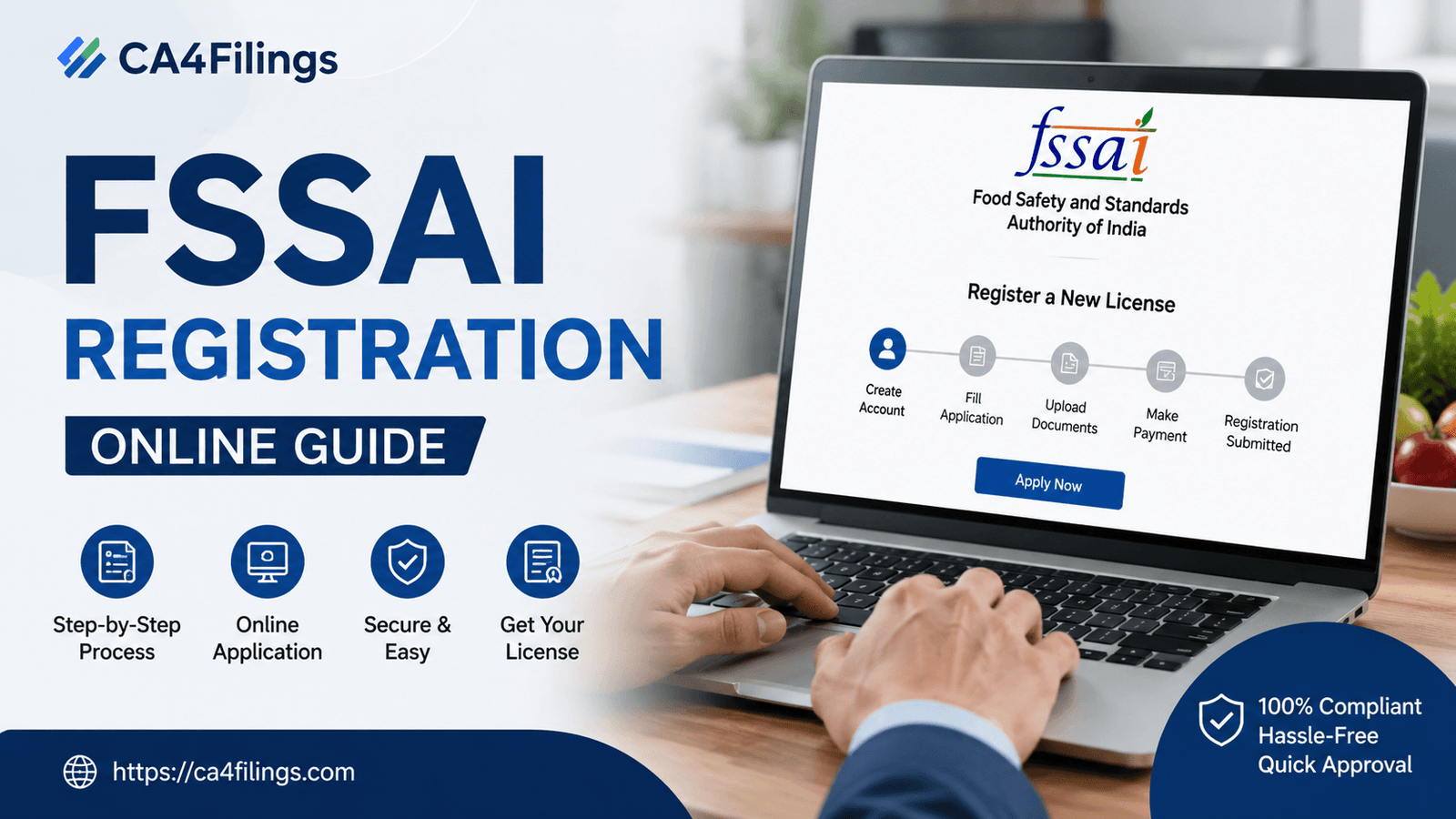
The entire process of obtaining your food license has been digitized through the FoSCoS (Food Safety Compliance System) portal. Here is a clear, step-by-step breakdown of how to navigate the portal and file your application successfully.
Step 1: Account Creation on FoSCoS
Go to the official FoSCoS portal. If you are a new user, click on the 'Sign Up' option. Fill in your operational details, including an active email ID and mobile number. Create a secure password. This user ID will be your single point of contact for all future renewals, modifications, and annual filings.
Step 2: Check Your Business Eligibility
Once logged in, click on "Apply for New License/Registration". The system will prompt you to select the state where your business premises are physically located. Next, you will need to choose your operational sector—whether you are a manufacturer, retailer, distributor, or food service provider. Enter your expected annual turnover or production capacity carefully so the system maps you to the correct category (Basic, State, or Central).
Step 3: Complete the Application Form
Based on your selection, the portal will open the appropriate form (Form A for Basic Registration or Form B for State/Central Licenses). Fill in the business name exactly as it appears on your legal entity documents. Provide accurate details regarding the premises address, communication address, and contact numbers. Select the specific food product categories you intend to deal with from the standardized dropdown menu.
Step 4: Document Upload
Upload clear, scanned copies of the required documents we discussed earlier. Ensure that the files are within the specified format (usually PDF, JPEG, or PNG) and do not exceed the portal’s maximum file size limits. Blurry or unreadable documents are the number one reason for application delays.
Step 5: Fee Payment and Submission
Review your filled-in application thoroughly to catch any typos. Once verified, proceed to the payment gateway. The fee structure varies: Basic registration costs ₹100 per year, while State and Central licenses can range anywhere from ₹2,000 to ₹7,500+ per year depending on your specific business activity. Pay online using credit cards, net banking, or UPI.
Once the payment is successful, the portal will generate an Application Reference Number (ARN) consisting of 17 digits. Keep this number safe, as it allows you to track the real-time status of your file.
Post-Submission: Inspection and Approval
After submitting your application, the Food Safety Officer (FSO) will review your documents. For State or Central licenses, the authorities may schedule a physical inspection of your business premises to verify hygiene practices, infrastructure layouts, and food handling safety.
If the inspector finds everything compliant with the FSSAI guidelines, your certificate will be issued. The digital certificate, complete with a unique 14-digit FSSAI registration or license number, will be emailed to your registered address. You must print this certificate and display it prominently at your place of business.
Expert Compliance Advice for Food Entrepreneurs
As Chartered Accountants, we don’t just look at getting you registered; we look at long-term business sustainability. Here are a few critical insights every food business owner must keep in mind:
Display the 14-Digit Number: It is legally mandatory to display your FSSAI logo and registration number on all food packages, invoices, and receipts.
Track Expiry Dates: FSSAI licenses are issued for a period ranging from 1 to 5 years. You must apply for a renewal at least 30 days before your current license expires. Failing to do so attracts a penalty of ₹100 per day for every day the renewal is delayed.
Maintain Hygiene Records: Keep your premises clean and maintain regular pest control logs, medical fitness certificates of your food handlers, and water testing reports. Surprise inspections can happen, and non-compliance leads to heavy fines or license suspension.
Frequently Asked Questions (FAQs)
Can I run a home-based food business without an FSSAI registration?
No. Even if you run a small cloud kitchen or a baking business from your home kitchen, an FSSAI basic registration is mandatory if you sell food products commercially.
How long does it take to get the FSSAI certificate online?
For Basic Registration, the certificate is usually processed and issued within 7 to 15 days. For State and Central licenses, it can take anywhere between 30 to 60 days, depending on documentation clarity and physical inspections.
What is the penalty for operating a food business without FSSAI?
Operating a food business without a valid FSSAI license or registration can result in imprisonment for up to six months and a financial penalty that can extend up to ₹5 Lakhs, depending on the scale and nature of the non-compliance.
Can I modify my FSSAI license details later if I expand my menu?
Yes, you can apply for a modification of your existing license through the FoSCoS portal by paying a designated modification fee and uploading documents relevant to the changes, such as adding new food categories or expanding machinery.
Understanding How to Apply for FSSAI Registration Online: A Detailed Guide is the first step toward building a legally secure, credible, and scalable food brand in India. While the digital portal has made the process more accessible, selecting the proper categories, drafting safety plans, and ensuring accurate documentation still require a meticulous approach to avoid delays or rejections.
Let the team at CA4Filings handle the regulatory heavy lifting while you focus on perfect recipes and customer satisfaction. Reach out to us today, and we will get your FSSAI registration sorted smoothly and efficiently!
Latest Updates
ca4filings.com Services























-registration.png)