The Role of DSC in Securing Online Transactions
The Role of DSC in Securing Online Transactions explained with benefits, uses, legal validity, and how businesses stay secure digitally.
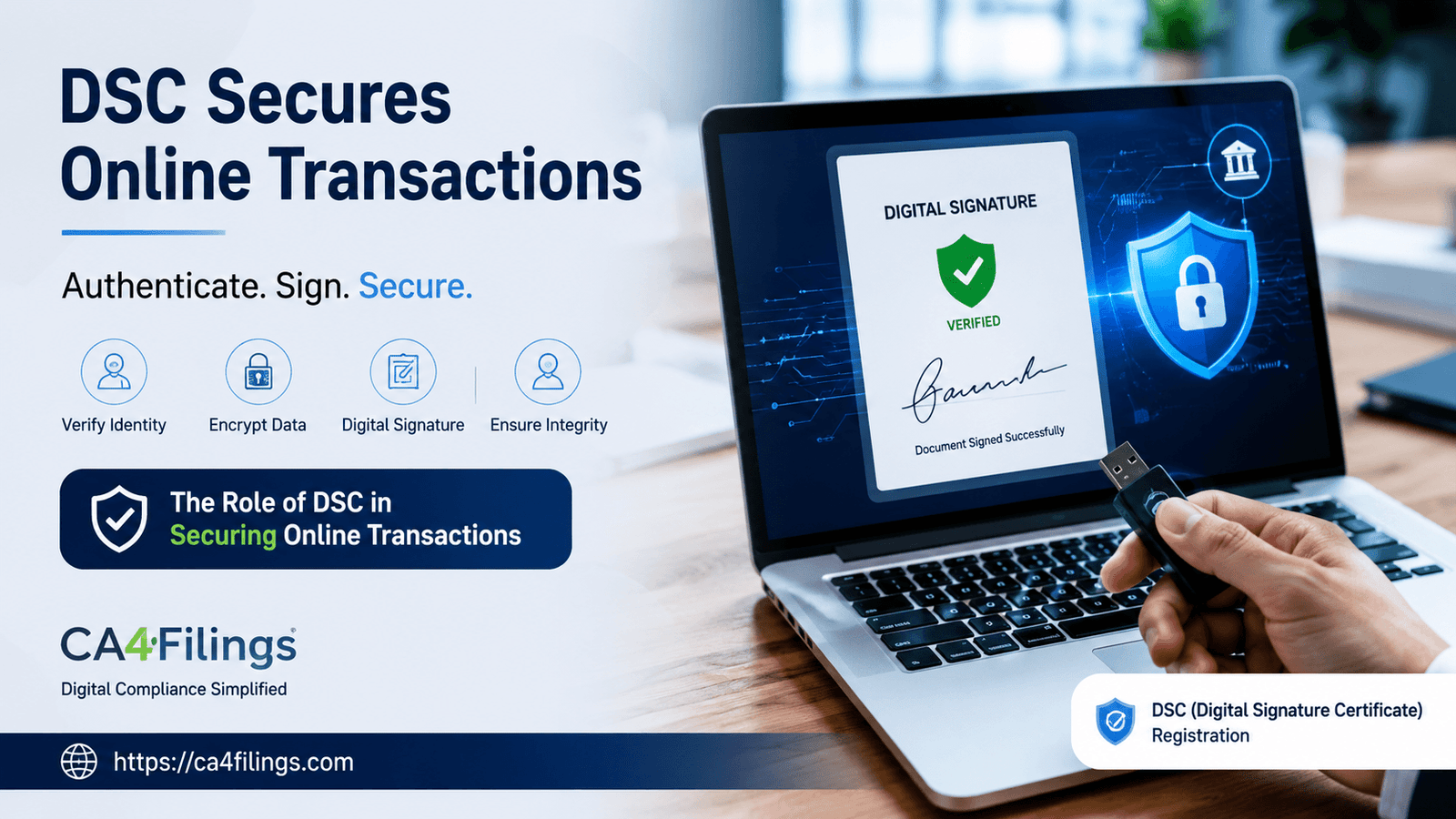
In today’s digital-first business environment, online transactions have become a part of everyday operations. From filing GST returns and signing contracts to submitting MCA forms and participating in e-tenders, businesses now rely heavily on digital platforms. However, with convenience comes the challenge of data security, authenticity, and fraud prevention. This is where understanding The Role of DSC in Securing Online Transactions becomes extremely important.
A Digital Signature Certificate (DSC) acts as a secure digital identity that verifies the authenticity of a person or organization online. Whether you are a startup founder, company director, freelancer, or established business owner, using a DSC ensures that your online documents and transactions remain protected from tampering and misuse.
If you are planning to obtain a DSC for business or compliance purposes, professional assistance for DSC (Digital Signature Certificate) Registration can help simplify the process and ensure quick approval.
Understanding The Role of DSC in Securing Online Transactions
Before discussing the importance of DSC, let us first understand what it actually means.
A Digital Signature Certificate is an electronic form of a signature issued by a licensed Certifying Authority in India. It is legally recognized under the Information Technology Act, 2000 and is widely used for authenticating digital documents.
Why DSC Matters in Online Transactions
The growing use of online platforms has increased the risk of:
- Identity theft
- Data tampering
- Unauthorized access
- Cyber fraud
- Fake document submissions
This is exactly where The Role of DSC in Securing Online Transactions becomes crucial. A DSC ensures that:
- The signer’s identity is verified
- The document has not been altered after signing
- The transaction remains encrypted and secure
- Legal authenticity is maintained
In simple words, DSC creates trust in the digital ecosystem.
How DSC Secures Online Transactions
Authentication of Identity
One of the primary functions of DSC is identity verification. When a person digitally signs a document using DSC, the recipient can confirm the signer’s authenticity.
For example:
- A company director filing ROC forms
- A taxpayer submitting income tax returns
- A vendor participating in government e-tenders
In all these cases, DSC confirms that the submission is genuine.
Data Integrity Protection
Another important aspect of The Role of DSC in Securing Online Transactions is maintaining data integrity.
Once a document is digitally signed:
- Any modification made afterward becomes detectable
- Unauthorized changes invalidate the signature
- The recipient gets assurance that the document is original
This is especially important for legal agreements, invoices, and compliance filings.
Encryption and Security
DSCs use encryption technology to protect sensitive information during transmission.
This means:
- Confidential business data remains secure
- Financial transactions stay protected
- Unauthorized users cannot access signed information
For businesses handling customer data or financial records, this level of protection is extremely valuable.
Types of Digital Signature Certificates in India
Understanding different DSC types helps businesses choose the right certificate.
Class 3 DSC
This is the most commonly used DSC today for:
- MCA filings
- GST filings
- Income tax filings
- eTendering
- eProcurement
It offers a higher level of security verification.
DGFT DSC
Used specifically for transactions related to the Directorate General of Foreign Trade.
Document Signer Certificate
This is mainly used by organizations that issue large volumes of documents electronically.
The Role of DSC in Securing Online Transactions for Businesses
Businesses today operate in a highly digital environment. Whether it is vendor management, taxation, or compliance filing, secure documentation is essential.
Secure MCA and ROC Filings
Company filings with the Ministry of Corporate Affairs require DSC authentication. This ensures:
- Only authorized directors can file forms
- Corporate records remain protected
- Compliance processes become transparent
Safer GST and Income Tax Filing
Tax filings involve highly sensitive financial information. DSC adds an extra security layer and reduces fraud risks.
Protection in e-Tendering
Government tenders and procurement processes require confidentiality and authenticity. DSC helps:
- Prevent fake bidding
- Ensure secure document submission
- Build trust in procurement systems
Secure Business Agreements
Many companies now execute agreements digitally. DSC helps validate contracts legally without physical signatures.
This practical application further highlights The Role of DSC in Securing Online Transactions across industries.
Benefits of Using DSC for Online Security
Legal Validity
Digital signatures are legally accepted under Indian law. This makes digitally signed documents admissible and enforceable.
Faster Transactions
Businesses can complete documentation instantly without printing or courier delays.
Reduced Paperwork
DSC supports paperless operations, reducing costs and improving efficiency.
Enhanced Trust
Clients, vendors, and government departments trust digitally signed documents more because of their authenticity.
Improved Compliance
Regulatory filings become smoother and more secure with DSC integration.
Real-World Example of DSC Usage
Consider a private limited company filing annual ROC returns.
Without DSC:
- Physical signatures would be needed
- Documents would require manual verification
- Filing delays could occur
With DSC:
- Directors can sign forms digitally
- Filing becomes faster and secure
- MCA immediately verifies authenticity
This practical example clearly demonstrates The Role of DSC in Securing Online Transactions in modern business operations.
Common Mistakes Businesses Should Avoid
Even though DSC is highly secure, businesses must use it responsibly.
Sharing DSC Tokens
Never share your DSC token or password with unauthorized individuals.
Ignoring Renewal Dates
DSCs have validity periods. Expired certificates can disrupt filings and transactions.
Using Unverified Systems
Always use trusted systems and secure internet connections while signing documents digitally.
Improper Storage
Store DSC tokens safely to prevent misuse or theft.
How to Obtain a DSC in India
The process of getting a DSC is relatively simple when handled correctly.
Step-by-Step Process
Step 1: Choose the Right DSC Type
Select based on your business or professional requirement.
Step 2: Submit Required Documents
Usually includes:
- PAN card
- Aadhaar card
- Mobile number
- Email ID
- Photograph
Step 3: Complete Verification
Video verification or OTP authentication may be required.
Step 4: Receive DSC Token
After approval, the DSC is issued securely.
Professional guidance can help avoid delays and document rejection.
Future of Digital Signatures in India
India’s digital economy is growing rapidly. Government initiatives like:
- Digital India
- eGovernance
- Online tax systems
- Paperless compliance frameworks
have increased the importance of DSC adoption.
In the coming years, The Role of DSC in Securing Online Transactions will become even more critical due to:
- Rising cyber threats
- Increased digital documentation
- Remote business operations
- Online contract execution
Businesses that adopt secure digital practices early will gain a significant advantage.
FAQs
Is a DSC legally valid in India?
Yes, Digital Signature Certificates are legally recognized under the Information Technology Act, 2000.
Who needs a DSC?
Company directors, business owners, professionals, taxpayers, and individuals participating in e-tendering commonly require DSCs.
How long is a DSC valid?
Most DSCs are valid for 1 to 3 years depending on the certificate type.
Can a DSC be used for GST filing?
Yes, DSC is widely used for GST filing, especially for companies and LLPs.
Is DSC mandatory for MCA filings?
Yes, directors and authorized signatories generally need DSC for MCA and ROC filings.
As businesses increasingly shift toward digital operations, ensuring transaction security has become a top priority. Understanding The Role of DSC in Securing Online Transactions helps businesses protect sensitive data, maintain authenticity, and comply with legal requirements efficiently.
A Digital Signature Certificate is no longer just a compliance tool—it is an essential security mechanism for modern business operations. From tax filings and corporate compliance to contracts and e-tendering, DSC plays a major role in building trust in the digital ecosystem.
At CA4Filings, we help businesses and professionals obtain DSCs quickly and efficiently with complete expert support. If you are planning to secure your digital transactions and streamline compliance processes, our experienced team is here to assist you at every step.
Latest Updates
ca4filings.com Services























-registration.png)