The Impact of DSC on Digital Transformation in Businesses
Discover The Impact of DSC on Digital Transformation in Businesses and how digital signatures simplify compliance, security, and online operations.
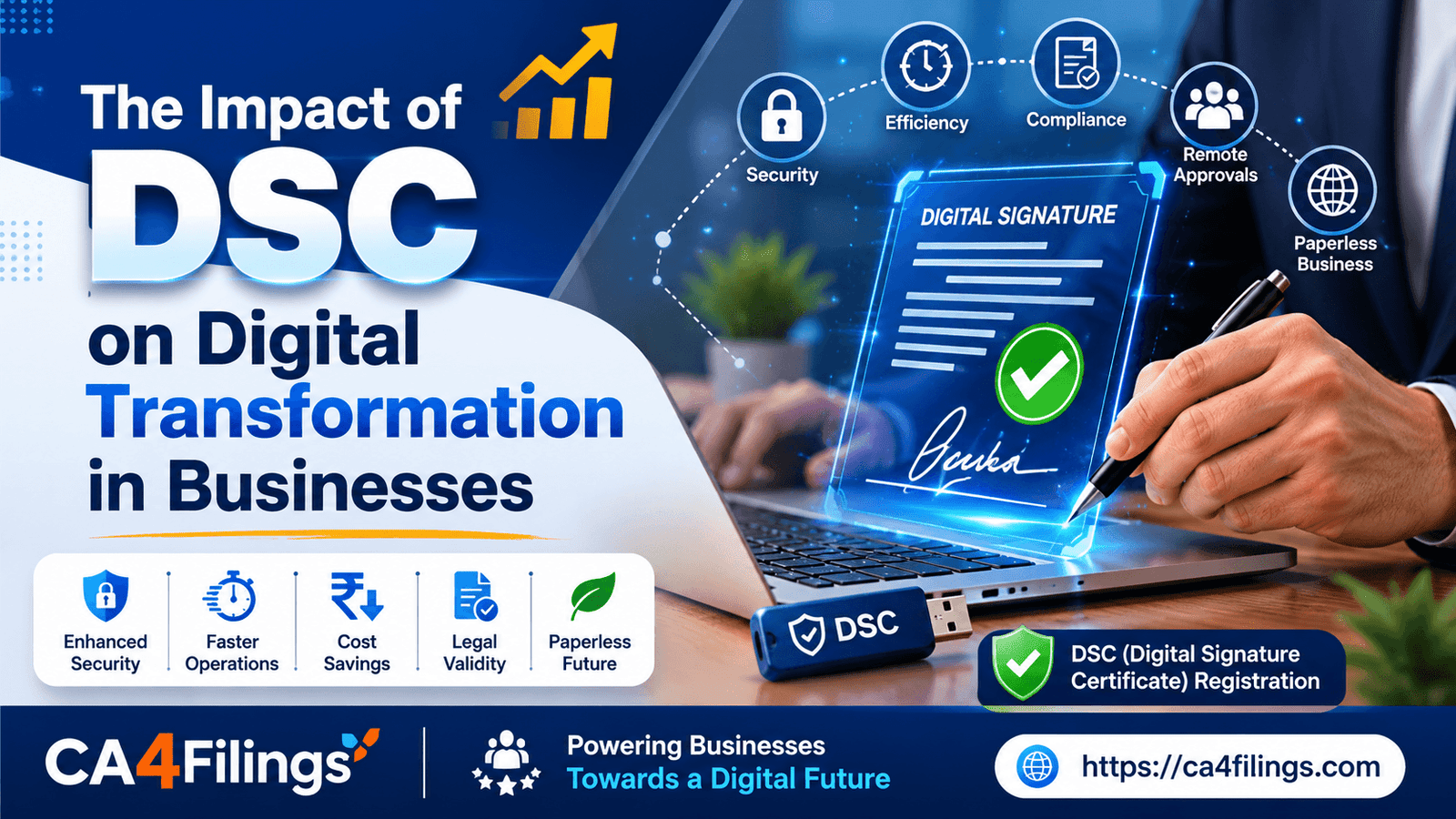
In today’s fast-moving digital economy, businesses are rapidly shifting from traditional paper-based processes to smart online systems. One of the most important tools supporting this transition is the Digital Signature Certificate (DSC). Understanding The Impact of DSC on Digital Transformation in Businesses is essential for companies looking to improve efficiency, security, and compliance in a digital-first environment.
From filing GST returns and signing contracts to participating in government tenders, DSC has become a critical requirement for businesses across India. At CA4Filings, we have seen how companies of all sizes are using digital signatures to streamline operations and build trust in online transactions. Businesses looking for hassle-free compliance solutions can also explore our DSC (Digital Signature Certificate) Registration service for quick and secure assistance.
Understanding DSC and Its Role in Digital Business Operations
A Digital Signature Certificate is an electronic form of a signature used to authenticate digital documents. It ensures that the information shared online is secure, genuine, and tamper-proof.
In simple terms, DSC acts as a digital identity for individuals and organizations. It is widely used for:
- MCA filings
- Income Tax filings
- GST compliance
- eTendering
- eProcurement
- Signing online agreements
- Company registrations
The growing adoption of digital processes clearly shows The Impact of DSC on Digital Transformation in Businesses across industries in India.
The Impact of DSC on Digital Transformation in Businesses
Digital transformation is not only about adopting technology; it is about making business processes faster, smarter, and more secure. Here is how DSC contributes significantly to this transformation.
Enhanced Security and Data Protection
Cybersecurity is a major concern for modern businesses. Traditional signatures and paper documents are vulnerable to forgery and tampering. DSC uses encryption technology to protect digital information.
Benefits include:
- Secure authentication
- Protection against unauthorized access
- Reduced risk of document manipulation
- Improved confidentiality
For example, when a company submits sensitive financial documents online using DSC, the receiver can verify the authenticity instantly. This demonstrates The Impact of DSC on Digital Transformation in Businesses by creating a safer digital ecosystem.
Faster Business Processes
One of the biggest advantages of DSC is speed. Businesses no longer need physical paperwork, courier services, or manual approvals.
With DSC, organizations can:
- Sign documents instantly
- Approve contracts remotely
- File compliance documents online
- Complete transactions faster
Imagine a startup in Mumbai closing a vendor agreement with a supplier in Delhi within minutes instead of days. This efficiency reflects The Impact of DSC on Digital Transformation in Businesses in practical terms.
Supporting Remote Work Culture
Remote and hybrid work models are now common in India. DSC enables employees, directors, and business owners to sign documents securely from any location.
This is especially useful for:
- Multi-location businesses
- Freelancers and consultants
- Remote teams
- International collaborations
Without digital signatures, remote approvals can become complicated and time-consuming. The growing work-from-home culture has further increased The Impact of DSC on Digital Transformation in Businesses.
How DSC Helps Businesses Stay Compliant
Regulatory compliance is a major responsibility for every business. Government departments in India now encourage or mandate digital filings.
MCA and ROC Filings
Companies registered under the Companies Act must use DSC for filing forms with the Ministry of Corporate Affairs (MCA).
Examples include:
- Annual returns
- Director KYC
- Incorporation forms
- Financial statements
This digital system has significantly reduced paperwork and processing delays.
Income Tax and GST Compliance
Businesses and professionals use DSC for:
- Income Tax Return filing
- GST applications
- GST return submissions
- Tax audits
These processes are now quicker and more transparent due to DSC integration.
eTendering and Government Contracts
Many government tenders require Class 3 DSC for participation. Businesses involved in infrastructure, IT services, manufacturing, and supply chain sectors rely heavily on digital signatures.
This highlights The Impact of DSC on Digital Transformation in Businesses by enabling seamless participation in digital procurement systems.
Cost Savings Through Digital Signatures
Businesses often underestimate the hidden costs of physical documentation. Traditional paperwork involves:
- Printing expenses
- Courier charges
- Storage costs
- Administrative manpower
- Delays in approvals
By adopting DSC, companies can reduce these expenses significantly.
Real-World Example
A mid-sized consultancy firm handling hundreds of client agreements every month can save thousands of rupees by shifting to digital signing processes.
The long-term financial benefits further prove The Impact of DSC on Digital Transformation in Businesses.
Environmental Benefits of DSC
Sustainability is becoming an important business goal. Digital signatures help organizations reduce paper consumption and support eco-friendly practices.
Businesses using DSC contribute to:
- Reduced paper waste
- Lower carbon emissions
- Minimal physical storage requirements
- Sustainable office operations
Going digital is not just about convenience; it also supports responsible business practices.
Industries Benefiting the Most from DSC
Almost every sector today uses DSC in some form. However, certain industries benefit more due to high documentation and compliance requirements.
Information Technology Sector
IT companies use DSC for:
- Software agreements
- Client contracts
- Vendor approvals
- Compliance filings
Banking and Financial Services
Banks and NBFCs rely on secure digital authentication for sensitive financial transactions.
Manufacturing and Infrastructure
These sectors actively participate in eTendering and government procurement systems where DSC is mandatory.
Startups and SMEs
Small businesses benefit from simplified compliance and reduced operational costs.
The widespread adoption across industries strongly reflects The Impact of DSC on Digital Transformation in Businesses in India.
Challenges Businesses May Face While Using DSC
Although DSC offers several benefits, businesses may encounter a few challenges during implementation.
Lack of Awareness
Many small businesses still do not fully understand how DSC works or where it is mandatory.
Technical Issues
Improper installation or outdated systems can create signing errors.
Expiry and Renewal Problems
DSCs come with validity periods. Missing renewal deadlines may disrupt important filings.
At CA4Filings, we regularly help clients manage DSC issuance, renewal, and technical support to avoid such complications.
Best Practices for Using DSC Effectively
To maximize The Impact of DSC on Digital Transformation in Businesses, companies should follow these best practices:
- Store DSC tokens securely
- Renew DSC before expiry
- Use authorized certifying authorities
- Restrict unauthorized access
- Train employees on DSC usage
- Maintain proper backup systems
Businesses that follow these practices can ensure smooth and secure digital operations.
Future of DSC in India’s Digital Economy
India is rapidly moving toward a paperless economy. Government initiatives like Digital India are encouraging businesses to adopt digital systems.
In the coming years, DSC usage is expected to grow further in:
- Online legal documentation
- Digital banking
- Cross-border trade
- Blockchain-based verification
- AI-driven compliance systems
The future clearly indicates a stronger and wider The Impact of DSC on Digital Transformation in Businesses.
Frequently Asked Questions (FAQs)
What is a Digital Signature Certificate (DSC)?
A DSC is an electronic signature used to verify the identity of the signer and secure online transactions.
Is DSC mandatory for companies in India?
Yes, DSC is mandatory for many MCA filings, GST filings, Income Tax filings, and eTendering activities.
Which type of DSC is used for eTendering?
Class 3 DSC is generally required for eTendering and eProcurement participation.
How long is a DSC valid?
Most DSCs are valid for 1 to 3 years depending on the certificate type and provider.
Can DSC be used for signing contracts?
Yes, DSC can legally authenticate digital agreements and contracts in India.
There is no doubt that The Impact of DSC on Digital Transformation in Businesses is significant and growing rapidly. From improving security and compliance to reducing operational costs and enabling remote work, DSC has become an essential part of modern business operations.
As India continues its digital journey, businesses that adopt secure digital tools early will gain a competitive advantage. Whether you are a startup, SME, or large corporation, implementing DSC can simplify your processes and strengthen your digital presence.
At CA4Filings, we help businesses navigate digital compliance with expert guidance and reliable support. If you are planning to adopt digital signatures for your business operations, our team is ready to assist you with smooth and professional DSC solutions.
Latest Updates
ca4filings.com Services



























-registration.png)