Exploring the Relationship Between DSC and Cybersecurity
Exploring the Relationship Between DSC and Cybersecurity: Understand how DSC strengthens online security and protects digital transactions.
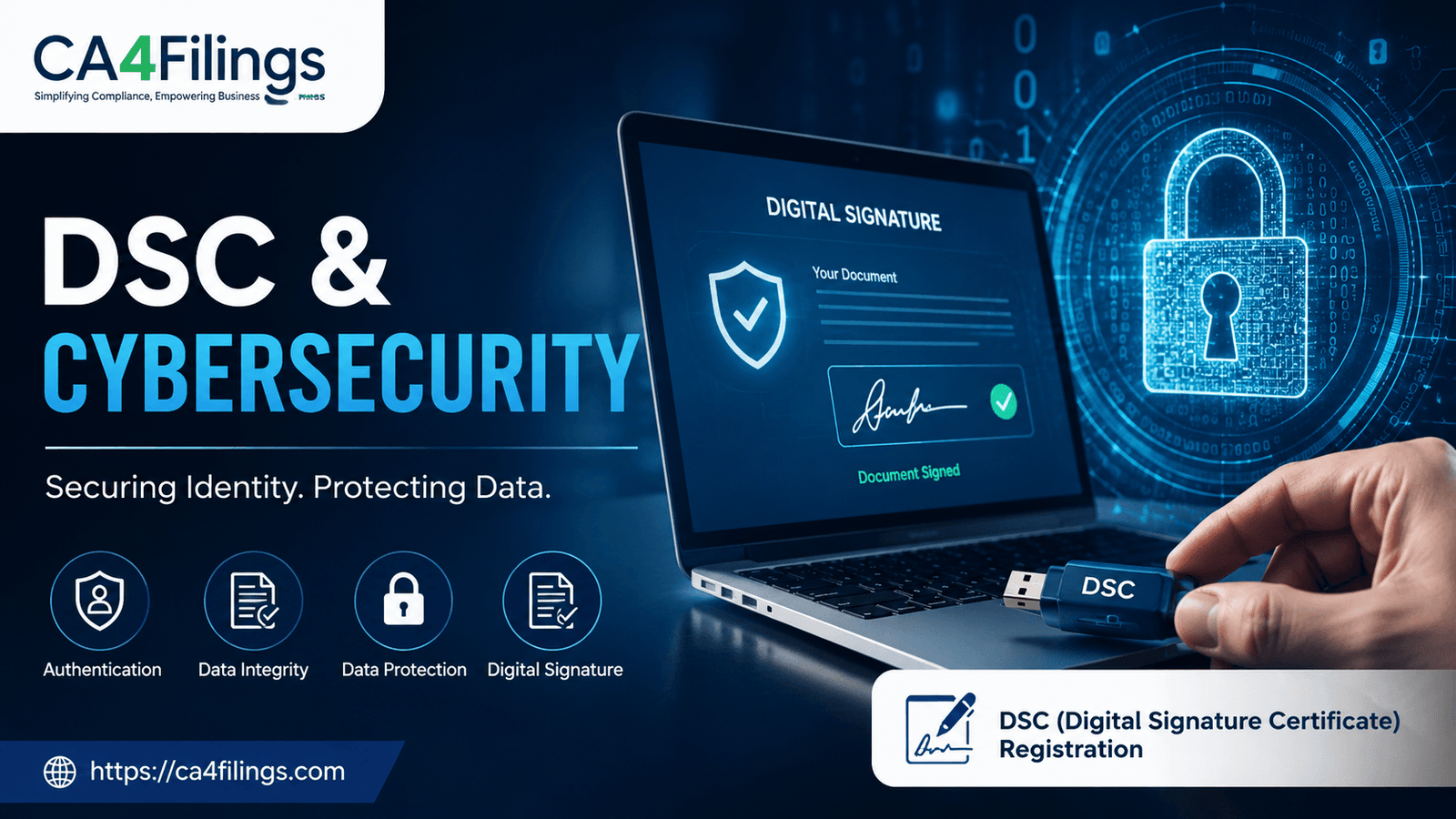
In today’s digital environment, businesses and individuals rely heavily on online transactions, digital documentation, and electronic communication. With this increasing dependence on technology comes a growing concern around cyber threats, identity theft, and data misuse. This is where Exploring the Relationship Between DSC and Cybersecurity becomes an important discussion for businesses operating in India.
At CA4Filings, we often guide businesses through digital compliance requirements and security practices. A Digital Signature Certificate (DSC) is no longer just a compliance requirement; it has become a practical security tool for safeguarding sensitive information and validating online transactions. Businesses filing ROC forms, GST applications, tenders, and income tax documents increasingly depend on DSCs to ensure authenticity and trust.
If you are planning to secure your digital operations, understanding the process of DSC (Digital Signature Certificate) Registration can help establish a secure foundation for online transactions and legal documentation.
Understanding DSC and Its Importance
A Digital Signature Certificate (DSC) is an electronic form of a signature used to verify the identity of an individual or organization during digital transactions. It works similarly to a handwritten signature but offers a much higher level of security.
A DSC generally contains:
- Name of the certificate holder
- Public key details
- Certificate validity period
- Issuing authority information
- Digital signature of the certifying authority
Unlike physical signatures, DSCs use encryption technology, making them difficult to forge or manipulate.
Exploring the Relationship Between DSC and Cybersecurity: Understanding the Connection
When discussing Exploring the Relationship Between DSC and Cybersecurity, it is important to understand that cybersecurity focuses on protecting systems, networks, and digital data from unauthorized access or attacks.
A DSC contributes directly to cybersecurity through several important mechanisms:
- Authentication
- Data integrity
- Confidentiality
- Non-repudiation
These elements collectively strengthen online security and reduce cyber risks.
Authentication: Verifying User Identity
One of the major cybersecurity challenges today is identity fraud. Cybercriminals often attempt to impersonate genuine users to gain access to confidential information.
DSCs help by authenticating the user's identity before allowing access to certain systems or transactions.
For example:
A company director filing annual ROC returns through the MCA portal uses a DSC. The portal verifies whether the DSC belongs to the authorized person before accepting the filing.
This process significantly reduces the chances of fraudulent submissions.
Data Integrity: Ensuring Information Remains Unchanged
Data tampering is a common cyber threat where unauthorized parties modify information during transmission.
DSCs create a digital fingerprint through cryptographic technology. If any document content changes after signing, the system immediately detects the alteration.
For example:
Suppose a supplier digitally signs an e-tender document. If someone modifies the pricing details after submission, the digital signature becomes invalid.
This protects business transactions from unauthorized changes.
Non-Repudiation: Preventing Denial of Actions
Non-repudiation means a person cannot deny having signed a document or completed a transaction.
This becomes important in legal disputes or business disagreements.
For example:
If a vendor digitally signs an agreement using a DSC, there is verifiable evidence linking the signature to that individual.
This creates accountability and strengthens trust between parties.
Key Cybersecurity Risks Businesses Face Today
Before further Exploring the Relationship Between DSC and Cybersecurity, businesses should understand the common cyber risks affecting organizations.
Some major threats include:
- Phishing attacks
- Identity theft
- Malware attacks
- Data breaches
- Email spoofing
- Unauthorized access
- Ransomware attacks
Many of these threats exploit weak authentication systems and poor verification processes.
DSCs help reduce these vulnerabilities by introducing stronger identity verification measures.
Exploring the Relationship Between DSC and Cybersecurity in Business Operations
Businesses across industries increasingly rely on DSCs to secure digital processes.
Government Filings and Compliance
Regulatory filings often involve sensitive financial and legal information.
Examples include:
- MCA filings
- GST applications
- Income tax submissions
- EPFO registrations
Using DSCs ensures that only authorized individuals submit these documents.
E-Tendering and Procurement
Government and private tenders involve confidential pricing and contractual information.
DSCs provide:
- Secure bid submissions
- Verified participant identities
- Protection against tampering
This reduces manipulation risks during procurement processes.
Secure Email Communication
Certain organizations use DSC-enabled email systems for transmitting confidential information.
Benefits include:
- Sender verification
- Reduced email fraud
- Protection from spoofing attacks
This is especially useful in industries dealing with legal, financial, or sensitive client information.
Practical Example of DSC Supporting Cybersecurity
Imagine a medium-sized manufacturing company submitting vendor contracts electronically.
Without a DSC:
- Documents may be altered
- Fake submissions may occur
- Signature forgery risks increase
With a DSC:
Step 1: The authorized manager digitally signs the agreement.
Step 2: Encryption secures the signature.
Step 3: The recipient verifies authenticity.
Step 4: Any modification immediately invalidates the document.
This creates a secure digital transaction environment.
Best Practices for Using DSC Securely
While Exploring the Relationship Between DSC and Cybersecurity, it is also important to understand that merely obtaining a DSC is not enough. Proper usage matters equally.
Businesses should follow these practices:
Keep DSC Credentials Confidential
Never share:
- Passwords
- Tokens
- Authentication credentials
Treat DSC credentials like banking passwords.
Renew Certificates Before Expiry
Expired certificates can interrupt compliance activities and create security issues.
Track validity dates and renew on time.
Store DSC Tokens Securely
USB tokens containing DSC information should be stored securely to avoid misuse.
Use Strong System Security
Combine DSC usage with:
- Antivirus software
- Firewalls
- Multi-factor authentication
- Regular software updates
Cybersecurity works best through layered protection.
Exploring the Relationship Between DSC and Cybersecurity: Future Trends
As businesses continue digitizing operations, the role of DSCs is expected to grow further.
Future developments may include:
- Wider integration with cloud systems
- Enhanced encryption technologies
- AI-based threat detection
- Stronger identity verification systems
Government initiatives promoting Digital India are also increasing the adoption of secure electronic processes.
Organizations that proactively strengthen cybersecurity today are likely to experience better operational reliability in the future.
Frequently Asked Questions (FAQs)
1. What is a Digital Signature Certificate?
A Digital Signature Certificate is an electronic signature that verifies a person's identity and secures digital transactions.
2. How does a DSC improve cybersecurity?
A DSC improves cybersecurity through authentication, data integrity, encryption, and non-repudiation mechanisms.
3. Is DSC legally valid in India?
Yes. DSCs are legally recognized under the Information Technology Act, 2000.
4. Can a DSC prevent cyberattacks completely?
No. A DSC strengthens security significantly but should be used alongside other cybersecurity measures such as firewalls and antivirus systems.
5. Who requires a DSC?
DSCs are commonly required by:
- Company directors
- Business owners
- Professionals
- Tender participants
- Individuals filing regulatory documents
Exploring the Relationship Between DSC and Cybersecurity clearly shows that Digital Signature Certificates are more than compliance tools. They play a significant role in securing digital transactions, protecting sensitive information, and reducing cyber risks in modern business operations.
As cyber threats continue evolving, businesses must adopt practical security measures rather than reacting after incidents occur. At CA4Filings, we help businesses simplify compliance while ensuring stronger digital security practices. If you are looking for expert assistance with DSC registration and related services, connect with CA4Filings and build a safer digital future with confidence.
Latest Updates
ca4filings.com Services



























-registration.png)