The Practical Blueprint to register an llp for Family Owned Capital Funds
Planning to register an llp for your family wealth? Discover the practical blueprint for structuring your family-owned capital funds with CA4Filings today.
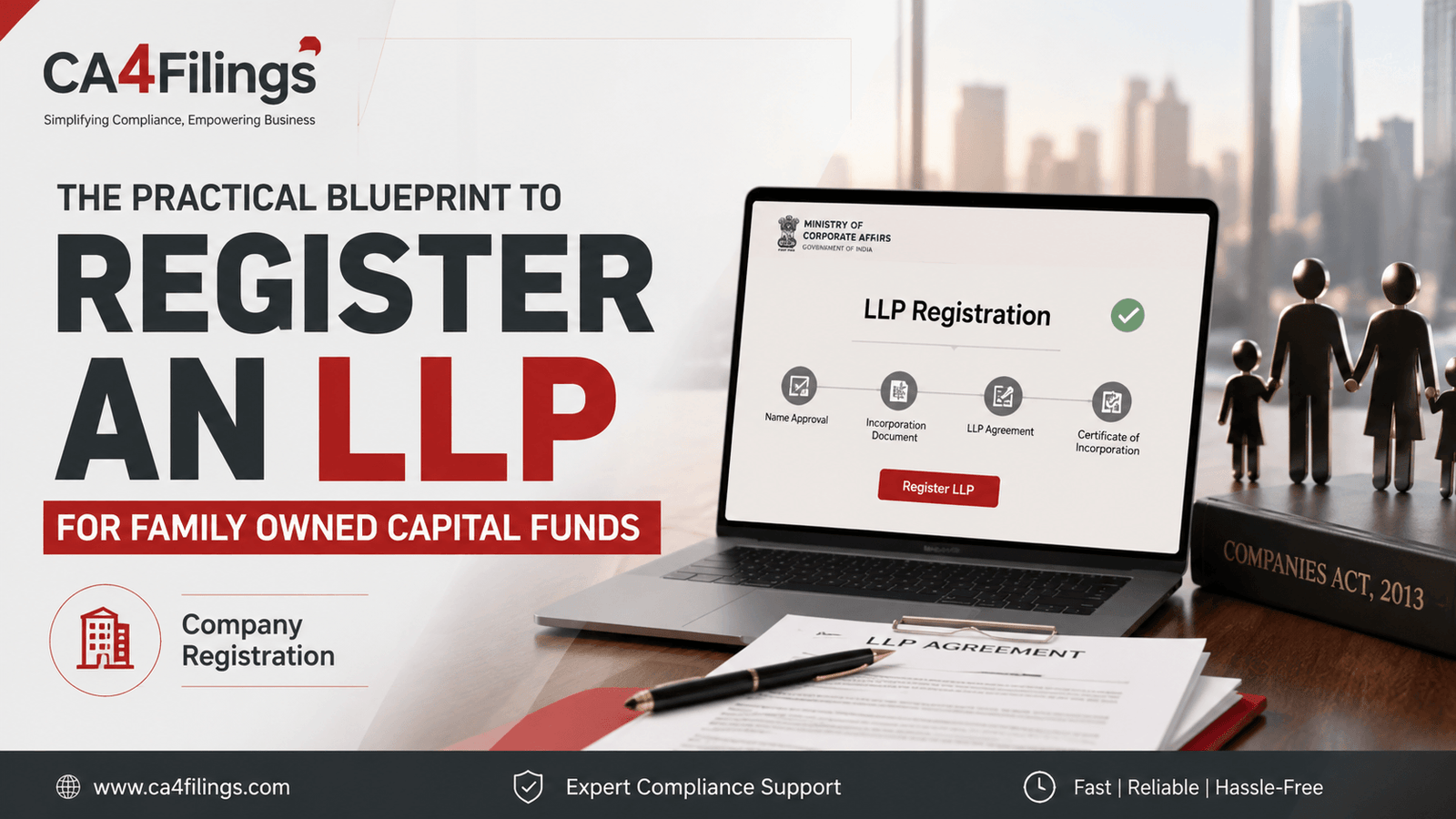
Managing family wealth is about much more than just accumulating assets; it is about preservation, seamless succession, and strategic growth. Many families reach a point where they need a formal structure to manage their collective investments, and this is exactly where the decision to register an llp becomes a game-changer. At CA4Filings, we often see families struggling with fragmented investments and tax inefficiencies. If you are looking for a streamlined approach to professionalize your holdings, our Company Registration services can provide the foundational support you need to transition your family wealth into a robust, compliant, and scalable structure.
When you register an llp (Limited Liability Partnership) for your family office, you aren't just creating a legal entity; you are building an ecosystem for long-term prosperity. Let’s dive into the practical blueprint to make this happen.
Why Choose an LLP for Family Capital Funds?
In the Indian context, families often operate through individuals or HUFs. While these have their place, they lack the professional edge required for modern private wealth management. An LLP offers a perfect hybrid—the flexibility of a partnership combined with the limited liability protections of a company.
Structural Asset Safety: By pooling assets into an LLP, you create a distinct legal firewall, protecting personal assets from potential liabilities arising from business activities.
Multi Generational Control: An LLP allows you to define clear roles for current and future generations, ensuring that decision-making power remains centralized or shared as per your family charter.
Tax Efficiency: Unlike a private limited company, an LLP is not subject to Dividend Distribution Tax (DDT), providing a smoother path for wealth distribution among family members.
The Practical Steps to Register an LLP
Deciding to register an llp is the first step, but the execution requires precision. Here is the operational roadmap we follow at CA4Filings.
1. Pre-Registration Strategy
Before you hit the portal, you must define the scope of your investment pooling vehicles.
Drafting the LLP Agreement: This is the heart of your entity. It defines how partners contribute capital, how profits are shared, and how exit strategies work.
Designated Partners: Identify the family members who will serve as designated partners. They carry the legal responsibility for compliance.
2. Name Approval and Documentation
The name of your family fund should reflect its legacy. You will need to check the availability on the MCA portal. Once cleared, we move to obtaining the Designated Partner Identification Number (DPIN) and Digital Signature Certificates (DSCs) for all partners.
3. Filing and Incorporation
Once the paperwork is in order, the actual process to register an llp involves filing the FiLLiP (Form for Incorporation of Limited Liability Partnership) with the Registrar of Companies. This document contains the details of your partners, registered office, and capital contribution.
Optimizing Asset Allocation Through Your LLP
Once your entity is registered, the real work begins. An LLP is an excellent vehicle for asset allocation across diverse portfolios, including equity, real estate, and private debt.
Because the LLP acts as a single point of entry for your investments, it simplifies the bookkeeping and auditing process significantly. Instead of tracking multiple individual accounts, the family office handles one set of books. This transparency is crucial when you have family members across different age groups or those who may not be actively involved in day-to-day management but are beneficiaries of the fund.
Maintaining Compliance for Your Family Fund
Many families register an llp but fail to maintain the ongoing compliance, which can lead to hefty penalties. As your partners at CA4Filings, we ensure you don’t fall into this trap.
Annual Returns: Filing Form 11 annually, which includes details of partners and the business.
Statement of Accounts: Filing Form 8, detailing your solvency and financial position.
KYC Updates: Ensuring all designated partners keep their KYC records updated with the ROC.
Frequently Asked Questions
Can an LLP be used solely for investment purposes?
Yes, provided your LLP agreement is drafted to include "investment" as a main object. It is a common structure for family offices and private investment pools.
What is the primary benefit to register an llp over a private limited company?
The main benefit is compliance ease and taxation. LLPs have fewer procedural requirements (like board meetings) and are not subject to the same dividend tax structures as private limited companies.
Can family members who are minors be partners?
Minors can be admitted to the benefits of an LLP with the consent of all partners, but they cannot be designated partners.
How long does the process take to register an llp?
With CA4Filings, once your documentation is complete, the incorporation process typically takes 10 to 15 working days, depending on the speed of government approvals.
Partner with CA4Filings for Your Family Legacy
Taking the step to register an llp is a significant milestone in your family’s financial journey. It requires a balance of legal foresight and accounting precision. At CA4Filings, we don’t just file forms; we act as your strategic consultants to ensure your family capital is structured for growth and protected for the next generation.
Don't navigate the complexities of corporate law alone. Reach out to the experts at CA4Filings today, and let us help you build the structure that secures your family's future.
Latest Updates
ca4filings.com Services




























-registration.png)