The Legal Checklist: Startup Registration for Mobile App Developers
Startup registration for mobile app developers made simple: understand company setup, app compliance, privacy, taxes, contracts and legal protection.
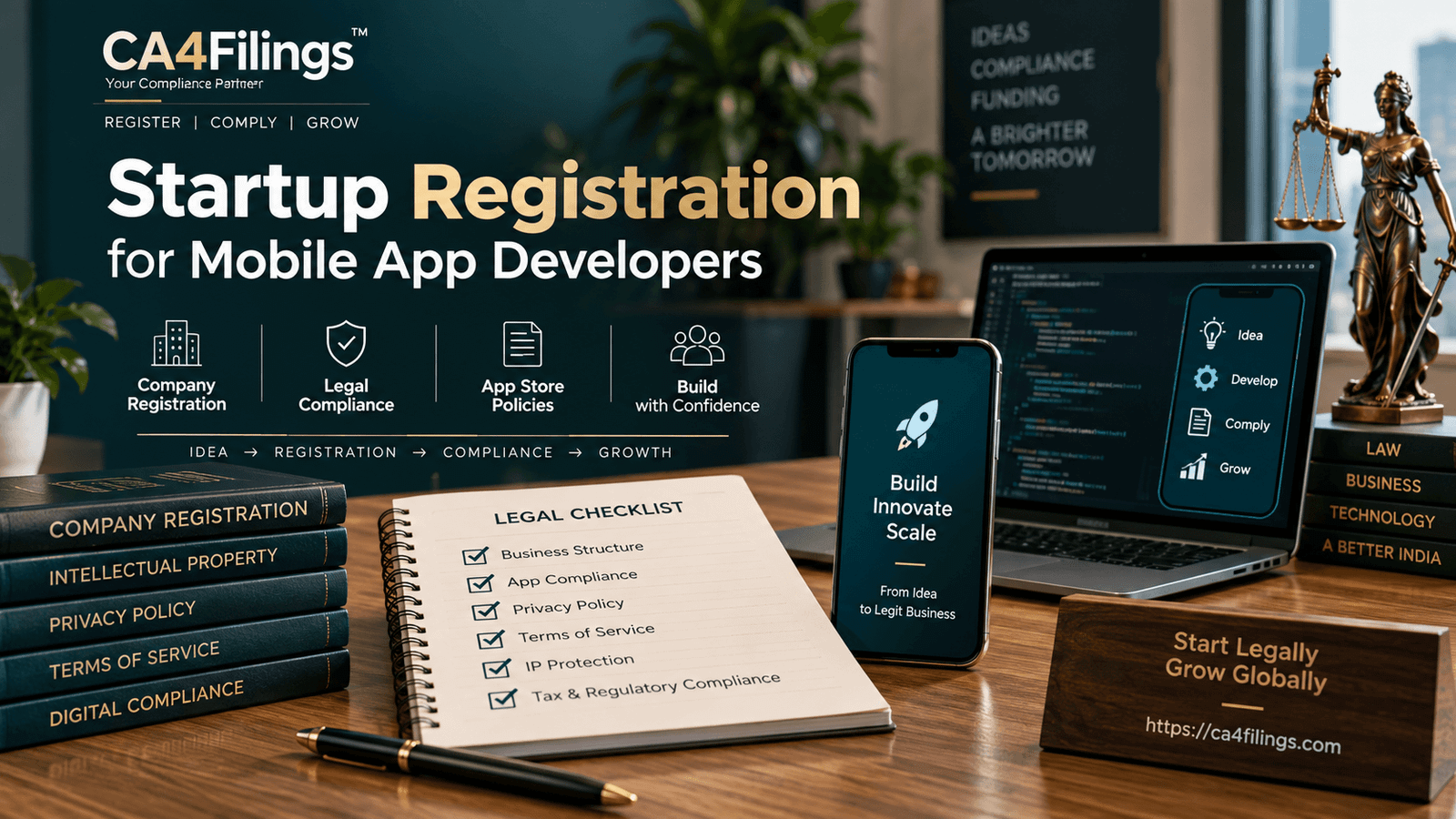
Why Startup Registration Matters for Mobile App Developers
Many developers initially work as individuals or small teams. That may be sufficient while testing an idea, but things change once the app starts generating revenue, collecting user information or attracting investors.
A properly completed startup registration can help you:
- Establish a separate legal identity for the business.
- Open a business bank account.
- Enter contracts with clients, vendors and employees.
- Build credibility with customers and investors.
- Maintain proper accounting and tax records.
- Protect business assets and intellectual property.
- Create a structured platform for future funding or expansion.
For example, suppose two developers create a healthcare appointment application. Initially, they may operate informally. Once hospitals start signing contracts, the founders may need a formal entity, documented ownership rights, commercial agreements and appropriate data protection measures. This is where startup registration becomes much more important.
Startup Registration: Choose the Right Developer Entity
The first major decision is selecting the appropriate developer entity. The choice depends on factors such as the number of founders, investment plans, liability concerns, compliance requirements and expected scale.
Common structures include:
Private Limited Company
A private limited company is often considered by technology startups that intend to raise external investment or build a scalable business. It provides a separate legal identity and a structured ownership framework through shares.
For developers planning to bring in angel investors, venture capital or strategic partners, this structure may offer a practical foundation.
Limited Liability Partnership
An LLP can be suitable where founders want limited liability with a comparatively flexible operating structure. It may work well for certain technology service businesses and smaller development teams.
Limited Liability Protection
Mobile applications can create commercial and legal risks. A user may raise a complaint, a client may dispute a contract, or a software-related issue may result in financial loss. Choosing an appropriate business structure can help separate the business's liabilities from the founders' personal affairs, subject to applicable law.
Startup Registration and Intellectual Property Protection
Your application is more than its source code. It may contain a brand name, logo, user interface, original graphics, written content, databases and proprietary technology.
During startup registration, founders should also consider who owns these assets.
Maintain proper documentation covering:
- Source-code ownership.
- Copyright ownership.
- Trademark rights.
- Logo and brand ownership.
- Developer and employee agreements.
- Freelancer intellectual property assignments.
- Third-party software licences.
- Ownership of databases and original content.
A common mistake is assuming that paying a freelancer automatically transfers every intellectual property right to the startup. Written agreements should clearly establish ownership and permitted usage.
App Store Compliance Should Be Part of the Legal Checklist
Completing startup registration does not automatically make an application legally ready for publication. Your app must also satisfy the requirements of the platform where it is distributed.
App store compliance may involve requirements concerning:
- User-generated content.
- Payments and subscriptions.
- Data collection.
- Age restrictions.
- Advertising.
- Intellectual property.
- Account deletion.
- Prohibited or restricted content.
Developers should review the current requirements of the relevant app marketplace before launch. A technically excellent application can still face rejection if its business model, disclosures or user-facing policies do not meet platform requirements.
Privacy Policy: A Must-Check Document
Most modern applications collect some form of information, such as names, email addresses, phone numbers, device information, location data or payment-related information.
Therefore, a privacy policy should clearly explain what information is collected, why it is collected, how it is used, whether it is shared and how users can exercise applicable rights.
The policy should accurately reflect the application's actual behaviour.
For example, if an app requests location permission but the privacy policy does not properly explain the purpose of collecting location data, the business may create unnecessary compliance concerns.
Do not copy a generic privacy policy from another website and assume the job is complete. The document should correspond to your app's actual data practices.
Prepare an End User License Agreement
An end user license agreement, commonly called an EULA, establishes the legal relationship between the application provider and the person using the software.
Depending on the application, an EULA may address:
- Permitted use of the application.
- Restrictions on copying or modifying software.
- Intellectual property rights.
- User responsibilities.
- Software updates.
- Warranty limitations.
- Termination or suspension.
- Applicable legal provisions.
For paid applications, subscription-based platforms and enterprise software, having appropriate contractual documentation can become particularly important.
Draft Clear Terms of Service
The terms of service should explain the rules governing the use of your platform.
These terms can cover account creation, prohibited activities, payments, subscriptions, refunds, user-generated content, termination, dispute handling and other relevant business conditions.
Consider a food-delivery application. Its terms may need to address restaurant listings, customer accounts, payments, cancellations and responsibilities of different users. A financial app, gaming platform or healthcare application may require a very different set of terms.
The key principle is simple: your legal documents should reflect what your application actually does.
Protect Your Startup From Digital Liability
Mobile businesses face a category of risks that traditional businesses may not encounter in the same way. Data breaches, unauthorised access, copyright complaints, misleading advertisements, payment disputes and service interruptions can all create digital liability.
During startup registration and business planning, founders should consider:
- Who owns the application and source code?
- Who controls customer data?
- What happens if the application suffers a security incident?
- Are third-party APIs and software properly licensed?
- Are developers and contractors bound by confidentiality obligations?
- Are customer complaints handled through a documented process?
- Are important business agreements available in writing?
These questions can help identify risks before they become expensive problems.
Startup Registration: Step-by-Step Checklist
A practical legal roadmap for mobile app developers can look like this:
Step 1: Decide the Business Structure
Evaluate whether a private limited company, LLP or another structure is appropriate for your business model.
Step 2: Complete Startup Registration
Register the chosen entity and obtain the relevant statutory registrations and identification numbers applicable to the business.
Step 3: Open a Business Bank Account
Keep business transactions separate from personal finances and maintain proper financial records from the beginning.
Step 4: Organise Intellectual Property
Document ownership of source code, branding, designs, content and other intellectual property.
Step 5: Prepare Legal Documents
Depending on your application, consider a privacy policy, EULA, terms of service, founder agreements, employment agreements and vendor contracts.
Step 6: Review App Store Requirements
Check the latest platform-specific rules relating to payments, privacy, subscriptions, content and account management.
Step 7: Review Tax and Accounting Requirements
Identify applicable GST, income-tax, TDS, bookkeeping and invoicing requirements based on the nature and scale of your business.
Step 8: Maintain Ongoing Compliance
Startup registration is not the end of the process. Annual filings, accounting records, tax returns and other applicable compliance requirements must be managed regularly.
Common Mistakes Mobile App Founders Should Avoid
Some legal problems arise because founders focus heavily on development and postpone compliance.
Avoid these common mistakes:
- Operating commercially without deciding on an appropriate business structure.
- Using personal bank accounts for substantial business transactions.
- Copying another company's privacy policy.
- Ignoring intellectual property ownership.
- Hiring freelancers without written agreements.
- Using third-party code without checking licence conditions.
- Launching an app without reviewing app store compliance.
- Failing to maintain accounting and tax records.
- Treating startup registration as a one-time formality.
A little planning at the beginning can prevent significant complications later.
FAQs About Startup Registration for Mobile App Developers
Is startup registration mandatory for every mobile app?
Not necessarily. The legal requirements depend on how the application is operated, the business structure selected, revenue model and other circumstances. However, formal business registration can become important when founders are entering commercial contracts, hiring employees, seeking investment or operating at scale.
Should I register a company before launching my app?
It depends on your business model and launch plans. If the app is only being tested as a prototype, founders may have different requirements than a business preparing for commercial operations. Professional advice can help determine the appropriate timing.
Does startup registration protect my app's source code?
Business registration and intellectual property protection are different matters. Registering a business does not automatically give copyright protection to every element of your application. Ownership and intellectual property rights should be documented separately.
Do mobile apps need a privacy policy?
If an application collects or processes user information, a suitable privacy policy is generally an important compliance document. Its contents should accurately describe the application's real data practices and applicable legal obligations.
Can CA4Filings help with startup registration?
Yes. CA4Filings can assist entrepreneurs in understanding business structure, registration requirements, taxation, accounting and ongoing compliance so that founders can focus on developing and growing their applications.
Complete Your Startup Registration Before Scaling
For a mobile app developer, startup registration is not simply about obtaining a certificate. It is about creating a proper legal and financial foundation for the technology business you are building.
From selecting the right developer entity and protecting intellectual property to preparing a privacy policy, end user license agreement and terms of service, every element plays a role in reducing business risk. App store compliance and digital liability should also be considered before the application reaches a large user base.
At CA4Filings, we help entrepreneurs approach startup registration with practical, business-focused guidance. If you are ready to turn your mobile application into a properly structured business, connect with CA4Filings for professional assistance with registration, taxation and ongoing compliance.
Latest Updates
ca4filings.com Services
















-registration.png)