How to Register a Company in 2026: A Complete Step-by-Step Guide
Are you wondering how to register company in India? Get a comprehensive 2026 guide on the incorporation process, legal requirements, and expert tips.
Embarking on a new business venture is an exciting milestone. As an experienced Chartered Accountant, I have guided countless entrepreneurs through the maze of regulatory requirements to turn their vision into a legitimate corporate entity. One of the most frequently asked questions I receive is how to register company structures in India effectively and legally.
In 2026, the process is more streamlined than ever, thanks to the Ministry of Corporate Affairs' digitized platform. Navigating the Company Registration process requires a clear understanding of your chosen legal structure, as this choice impacts your taxation, corporate compliance, and future ability to scale. Whether you are looking at LLC formation (often referred to as Private Limited in the Indian context) or other models, this guide is designed to simplify the journey for you.
Understanding the Legal Landscape in 2026
Before diving into the paperwork, you must decide on the right entity. For most startups aiming for scalability and funding, a Private Limited Company is the gold standard. It provides limited liability protection, separating your personal assets from business risks.
Once your entity is registered, you’ll be issued a Corporate Identification Number (CIN), along with your Employer Identification Number (often processed alongside PAN and TAN). These aren't just numbers; they are the pillars of your professional identity.
Step-by-Step Guide: How to Register Company
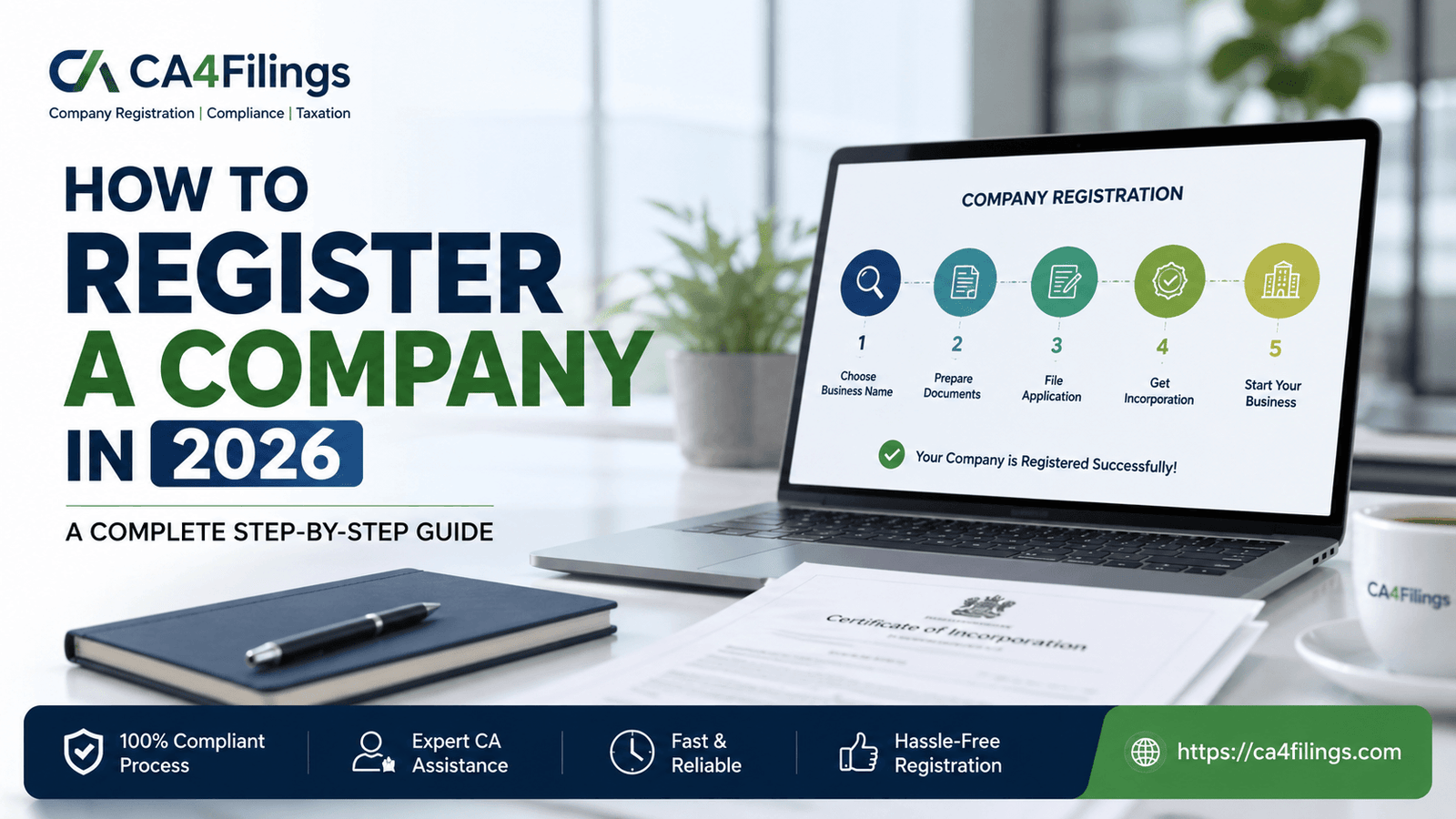
The incorporation process is now unified under the SPICe+ (Simplified Proforma for Incorporating Company Electronically) form. Here is how you can navigate it:
1. Obtain Digital Signature Certificates (DSC)
Everything is digital in 2026. Every director must have a Class 3 Digital Signature Certificate. This acts as your digital identity and is mandatory for signing the electronic forms on the MCA portal.
2. Apply for Director Identification Number (DIN)
The DIN is a unique identification number for any person intending to be a director. The beauty of the current system is that you no longer need a separate application; you can apply for up to three DINs directly within the SPICe+ form.
3. Reserve Your Company Name
Your name is your brand. Use Part A of the SPICe+ form to reserve your desired name.
Pro Tip: Always keep three name options ready in order of preference. Ensure the name isn't already trademarked or identical to an existing company to avoid rejection.
4. File the SPICe+ Form (Part B)
This is the core of the business registration process. You will provide:
Details of the company and its business activity.
Registered office address proof (e.g., utility bill, NOC from the owner).
Details of directors and shareholders.
Capital structure of the company.
5. Draft MOA and AOA
The Memorandum of Association (MOA) and Articles of Association (AOA) are your company’s charter documents. They define your business objectives and internal management rules. While standard templates exist, I always recommend having a professional review these to avoid startup legalities pitfalls later.
6. Certificate of Incorporation
Once the Registrar of Companies (ROC) verifies your documents, you will receive your Certificate of Incorporation. This is your company's "birth certificate," confirming it is now a recognized legal entity.
Essential Tips for Success
Consistency is Key: Ensure the details (like name and address) on your identity proofs match exactly with your PAN card records. Even minor discrepancies lead to delays.
Don't Rush the Registered Office: You must have a physical address for the office. If you are using a virtual or co-working space, ensure you have the correct documentation, including the lease agreement and a utility bill.
Plan for Post-Incorporation: Registration is just the start. You must appoint an auditor within 30 days and hold your first board meeting promptly. Staying on top of corporate compliance is what keeps your business healthy in the long run.
Frequently Asked Questions
What is the typical cost of the process?
Costs vary based on authorized capital and professional fees. In 2026, government fees are highly transparent, but keep in mind that opting for professional assistance ensures error-free filing.
How long does it take to register a company?
With all documents in order, the average timeline is about 7–10 working days.
Do I need a GST registration immediately?
Not necessarily. You should apply for GST only when your business operations require it, such as when you cross the turnover threshold or need to conduct interstate trade.
Can a foreign national be a director?
Yes, but they must comply with specific KYC requirements, including an apostilled or notarized passport and address proof.
What happens if my name application is rejected?
It’s common. You are usually given one opportunity to resubmit, so don't be discouraged. Just refine your choices based on the feedback provided by the ROC.
Knowing how to register company is the first step toward building a legacy. While the process is digital and accessible, the complexity of legal compliance means having an expert by your side can save you weeks of stress and potential rework.
At CA4Filings, we specialize in making the incorporation journey smooth, transparent, and efficient for entrepreneurs. Don't let paperwork hold back your growth—let our team of experts handle the technicalities while you focus on your business strategy.
Latest Updates
ca4filings.com Services




























-registration.png)