How to File Annual Form 11 and Form 8 After llp registration
Struggling with post-incorporation compliance? Learn how to file Form 11 and Form 8 after your LLP registration to avoid penalties and stay compliant.
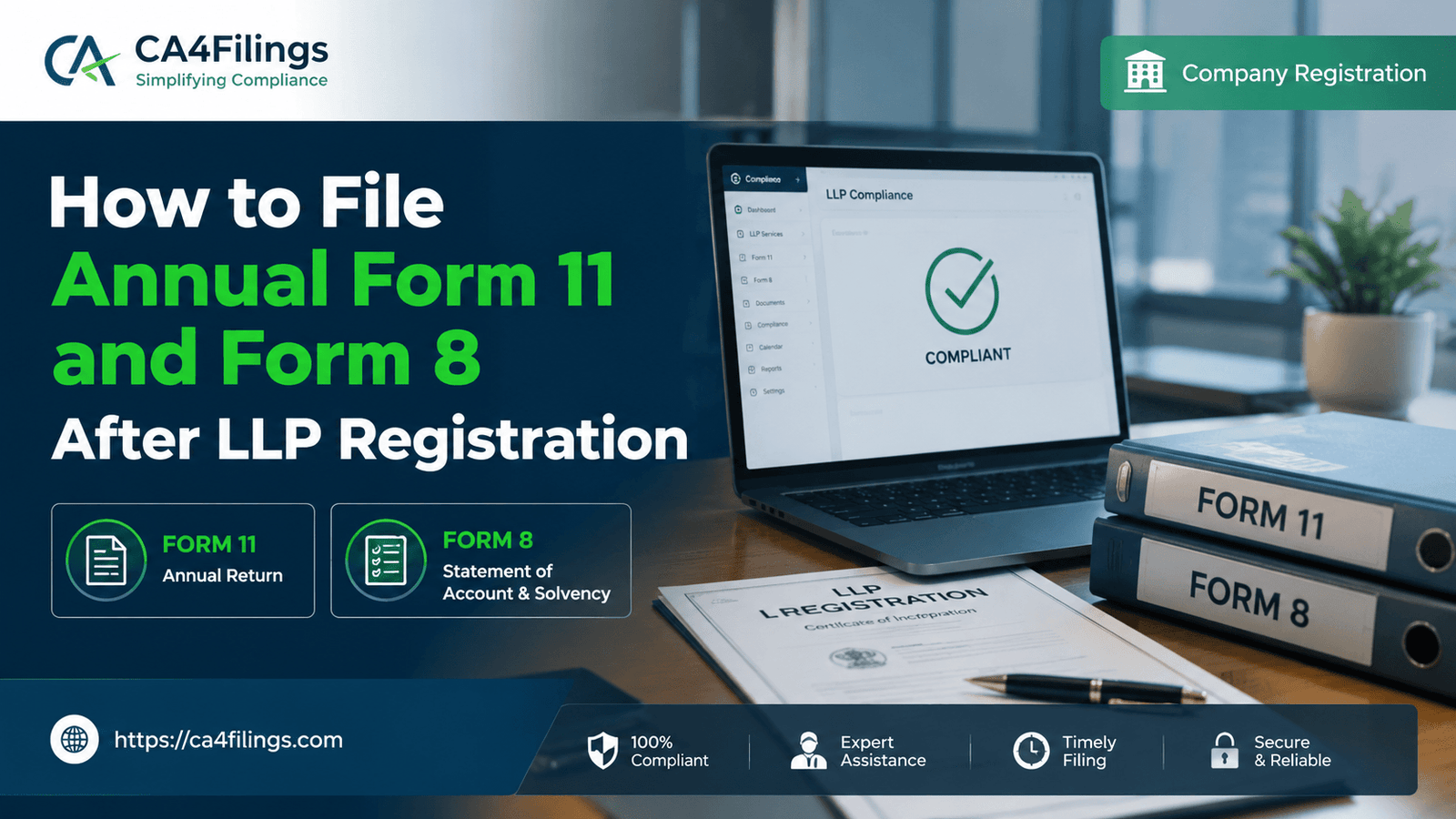
So, you’ve finally completed your llp registration and your dream business is officially live. Congratulations! As a Chartered Accountant at CA4Filings, I’ve seen many entrepreneurs celebrate their incorporation, only to feel overwhelmed by the paperwork that follows. While the joy of starting a business is immense, the real work—maintaining compliance—is what keeps your entity healthy and legally sound. If you are also considering expanding your corporate structure, you might want to look into Company Registration to understand your future growth options better.
Once your llp registration is done, the Ministry of Corporate Affairs (MCA) expects you to fulfill two major annual obligations: Form 11 and Form 8. Many business owners assume that if they haven’t done any business, they don’t need to file anything. Let me clarify: in the eyes of the law, an LLP is a separate legal entity. Even if your turnover is zero, you must file these forms to stay compliant and avoid heavy fines.
Understanding the Two Pillars of LLP Compliance
Think of annual returns reporting as your business’s health check-up. The government needs to know who is running the show and whether your financials are in order.
Form 11: The Annual Return
Form 11 is essentially the "structural" report of your LLP. It’s a snapshot of your entity as of March 31st each year. It includes:
Details of partners and designated partners.
Total contribution received from all partners.
Changes in management or partner structure during the year.
Information on other entities where your partners might hold positions.
This form must be filed within 60 days of the end of the financial year. Since the financial year in India ends on March 31, your deadline for Form 11 is May 30 every year.
Form 8: The Statement of Accounts and Solvency
If Form 11 is about the "who," Form 8 is about the "how much." It focuses on your financial health and solvency declarations. You are essentially declaring to the government that your LLP is capable of paying its debts. This form includes:
Balance Sheet.
Income and Expenditure Statement.
Disclosures under the MSME Act.
Because this requires careful preparation of your books, the government gives you more time. The deadline for Form 8 is October 30 every year.
Why Keeping Up with Compliance Due Dates Matters
In my experience at CA4Filings, the biggest mistake new business owners make is ignoring the compliance calendar. When you finish your llp registration, you are entering a long-term commitment to transparency. Missing these deadlines isn’t just a simple oversight; it carries significant financial consequences.
The law is strict: for every day of delay, there is a penalty of ₹100 per form. There is no upper cap on this penalty. I have seen cases where small, dormant LLPs ended up paying thousands of rupees in penalties simply because they didn't file a "NIL" return on time.
Step-by-Step Guide to Filing
After your llp registration, the actual filing process is quite straightforward if you have your documents ready.
Preparation: Gather your balance sheet, profit and loss statement, and partner contribution details.
Digital Signatures (DSC): Ensure your designated partners have their Digital Signature Certificates updated and ready.
Certification: Check if your LLP requires certification by a practicing professional (like a CS or CA). This is mandatory if your contribution exceeds ₹50 lakh or your annual turnover crosses ₹5 crore.
Pre-scrutiny: Use the pre-check tool on the MCA portal. It’s a great way to catch errors before you hit the final submit button.
Final Submission: Upload the forms on the MCA portal and ensure you get your Acknowledgment Receipt.
Frequently Asked Questions (FAQs)
1. Do I need to file these forms even if my business had no transactions?
Yes! Every LLP, regardless of whether it is active or dormant, must file annual returns. Failure to do so leads to the same penalties as an active business.
2. What happens if I miss the compliance due dates?
You will be liable for a penalty of ₹100 per day for each form. Repeated non-compliance can lead to the "strike-off" of your LLP, meaning your business will be dissolved by the government.
3. Can I revise Form 11 or Form 8 after filing?
No. Once filed, these forms cannot be revised. This is why at CA4Filings, we always suggest a final review of the data before hitting the upload button.
4. Is an audit mandatory for all LLPs?
No, audit is not mandatory for all. It is only required if your annual turnover exceeds ₹40 lakh or your capital contribution exceeds ₹25 lakh.
5. Why is the "contribution" amount important in my filings?
The total contribution reflected in your annual filings must match the records submitted at the time of your initial llp registration. Any mismatch can lead to scrutiny from the ROC.
Stay Compliant with CA4Filings
Managing annual compliance shouldn’t be a burden that takes your focus away from growing your business. At CA4Filings, we specialize in helping businesses navigate the complexities of post-incorporation requirements. Whether it’s preparing your statement of accounts or ensuring your solvency declarations are perfect, our expert team is here to handle the paperwork for you.
Latest Updates
ca4filings.com Services

























-registration.png)