Can You Convert an Existing Proprietorship Into llp registration directly?
Considering LLP registration for your sole proprietorship? Discover the expert process, tax benefits, and how CA4Filings ensures a smooth business transition.
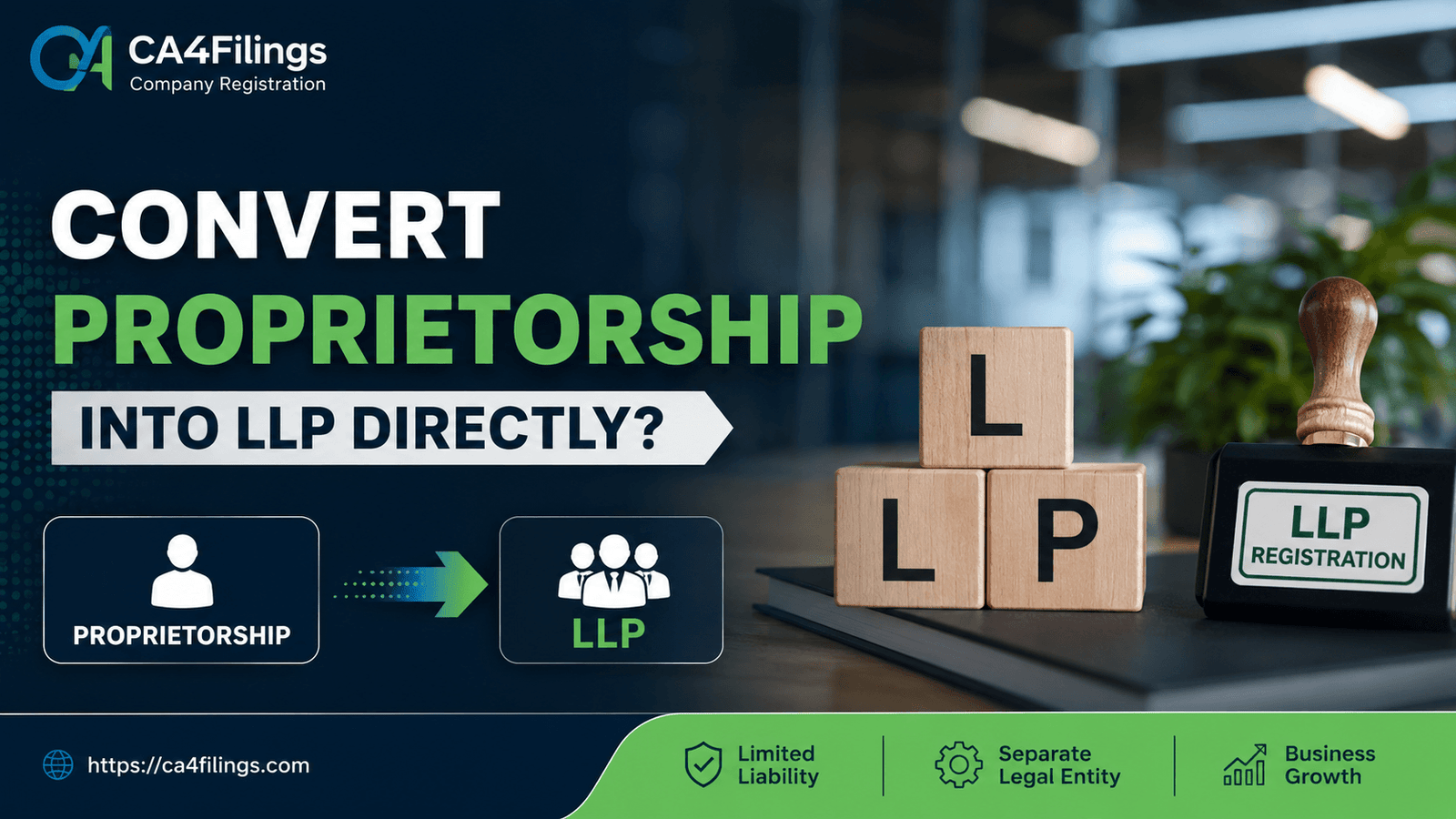
Many sole proprietors reach a turning point where their business outgrows its original structure. When liability concerns rise or you need a more formal framework to scale, you might wonder if you can simply jump into a new setup. We often hear from clients at CA4Filings who are looking for ways to streamline their growth, and a common query involves the transition from a proprietorship to a corporate entity. If you are exploring formal Company Registration options, it is essential to understand that moving toward an llp registration is a strategic decision that offers limited liability benefits while retaining the flexibility of a partnership.
Unlike a private limited company, which requires an entirely new incorporation process, converting an existing business into an LLP is a structured process governed by the Limited Liability Partnership Act, 2008. Let’s dive into how you can make this transition seamless.
Understanding the Shift to LLP Registration
A proprietorship is tied directly to the individual, meaning your personal assets are at risk if the business faces liabilities. An llp registration creates a separate legal entity. This is not just a change in paperwork; it is a change in the legal personality of your business.
When you decide to undergo llp registration, you are effectively transitioning from an "unregulated" business model to a "regulated" one. This provides credibility with banks, vendors, and potential investors. The primary advantage is the protection of your personal assets, ensuring that your business debts stay within the entity itself.
The Process of Conversion and Asset Migration Paths
You cannot simply "convert" a proprietorship into an LLP via a single form on the MCA portal because, legally, a proprietorship is not a registered body. Instead, the process involves a strategic asset migration path.
Forming the LLP: You must first incorporate an LLP with at least two partners (you and one other person).
Asset and Liability Transfer: Once the llp registration is complete, you draft a formal agreement to transfer all assets and liabilities from the proprietorship to the newly formed LLP.
Closing the Proprietorship: Post-transfer, the sole proprietorship business is effectively shut down, and its operations are fully absorbed by the LLP.
This migration path ensures that your business legacy continuation remains intact. You keep your trade name, your goodwill, and your client relationships while enjoying the benefits of limited liability.
Key Considerations for Tax Neutral Structuring
One of the most frequent questions we handle at CA4Filings is whether this move will trigger massive tax bills. When handled correctly, this can be a tax neutral structuring exercise. Under Section 47(xiiib) of the Income Tax Act, the transfer of assets from a sole proprietorship to an LLP can be exempt from capital gains tax if specific conditions are met:
All assets and liabilities of the sole proprietorship immediately before the succession must become the assets and liabilities of the LLP.
The sole proprietor must receive at least 50% of the capital contribution in the LLP for a period of at least five years.
No other consideration (other than an interest in the LLP) should be received by the proprietor.
Operational Hurdles: Vendor Contracts and Identity Updates
One of the most tedious parts of llp registration is the administrative aftermath. You have to handle identity updates across all platforms. Since the PAN and GSTIN of a proprietorship are linked to the individual, the LLP will require a brand-new PAN and GSTIN.
Vendor Contracts Transfer: Since the entity has changed, you must formally notify all your suppliers and clients. This often involves executing a "novation agreement" or an addendum to existing contracts to transfer rights and obligations from your individual name to the LLP’s name.
Banking: You will need to close the old proprietorship current account and open a new one in the name of the LLP.
Why Choose LLP Registration?
The decision to go for llp registration is usually driven by the need for credibility and security. While a proprietorship is easy to start, it is difficult to scale when dealing with large corporate clients who prefer contracting with entities that offer limited liability. By choosing an LLP, you maintain a lean management structure without the rigid compliance requirements of a private limited company.
Frequently Asked Questions
Is LLP registration mandatory for small businesses?
No, it is not mandatory. However, as your turnover grows and your liability exposure increases, an llp registration becomes a logical step for risk management.
Can I keep the same trade name after LLP registration?
Yes, usually you can continue using the same brand name, provided it is available and does not violate trademark laws.
How long does the transition process take?
The incorporation of the LLP generally takes 7–10 days. The subsequent transfer of contracts and tax registrations depends on the complexity of your existing agreements.
Will I lose my past business experience?
Absolutely not. You can showcase the years of operation of your proprietorship to clients even after you complete your llp registration, as the business operations and legacy are essentially being carried forward.
Let CA4Filings Handle Your Transition
Navigating the legal and tax complexities of business restructuring requires an expert eye. You don't want to get stuck in a web of compliance errors or face unnecessary tax liabilities. At CA4Filings, we specialize in making the transition process smooth, ensuring that your llp registration is handled with the highest level of professional care.
From drafting your partnership agreement to ensuring your asset migration paths are tax-efficient, we are here to support your growth. Don’t let administrative hurdles hold you back from scaling your business.
Latest Updates
ca4filings.com Services



























-registration.png)