Breaking Down the Annual Compliance After One Person Company Registration
Confused about post-compliance for your business? Learn everything you need to know about annual compliance after one person company registration here.
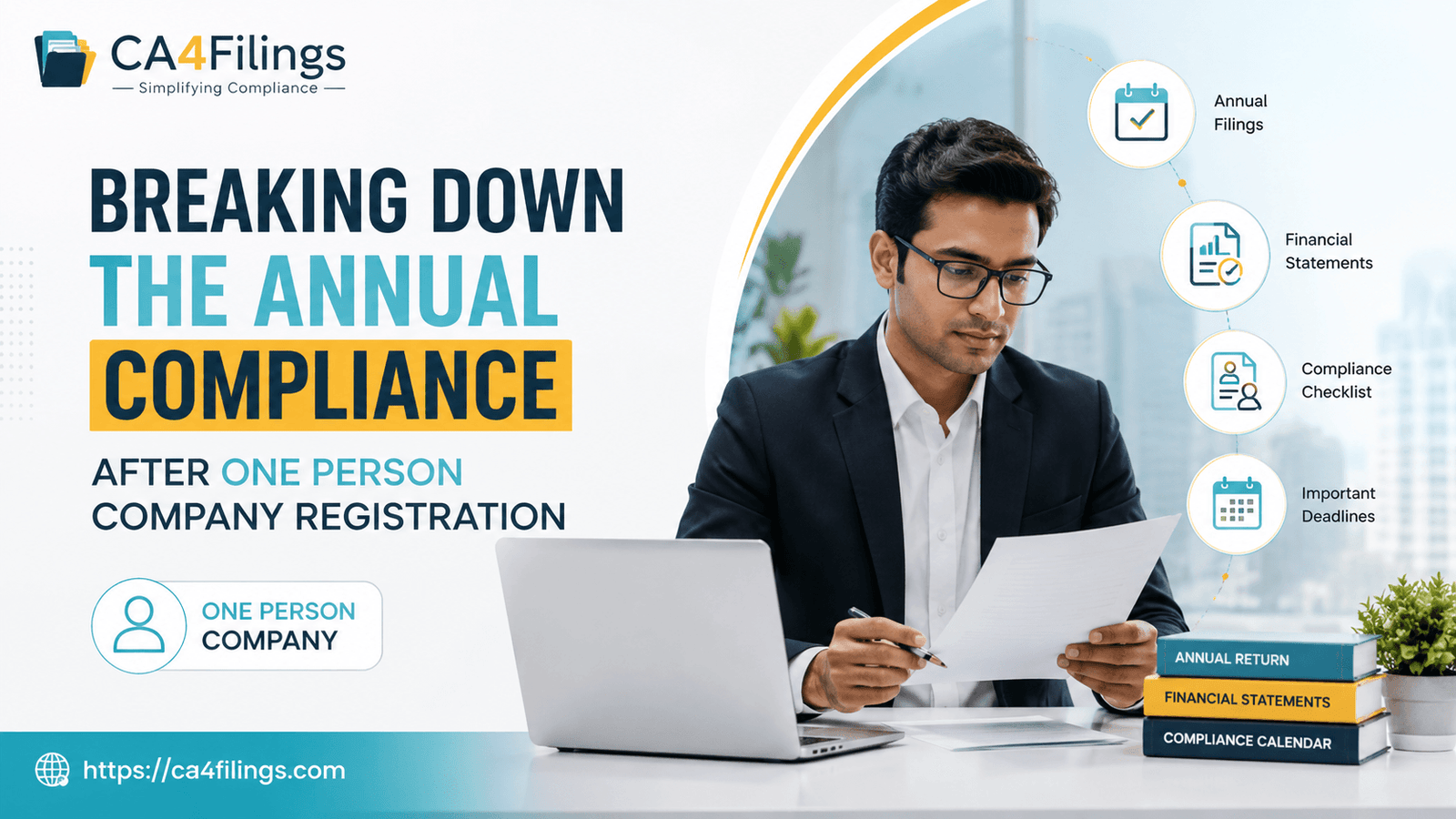
So, you’ve finally taken the leap and completed your one person company registration. Congratulations! Stepping into the world of entrepreneurship as a solo founder is an exciting milestone, and if you are still exploring options or helping a friend, you might want to revisit our Company Registration services to ensure everything is set up perfectly from the start. However, many business owners make the mistake of thinking that once the certificate of incorporation is in hand, the paperwork is over. As a Chartered Accountant here at CA4Filings, I see this all the time: the "easy" part is done, but the real journey of maintaining your corporate status through one person company registration compliance has just begun.
Running a One Person Company (OPC) is fantastic because it gives you the legal protection of a private limited company with fewer hassles. But don’t let the word "one" fool you into thinking the compliance burden is non-existent. The Ministry of Corporate Affairs (MCA) expects every entity, regardless of size, to follow strict norms.
The Reality of Annual Statutory Compliance
Many entrepreneurs come to us feeling overwhelmed by the terminology. In simple terms, annual statutory compliance is essentially the corporate version of filing your taxes. It is the process of reporting your company’s financial health and operational activities to the government each year.
Since you opted for one person company registration, you enjoy several small company exemptions that larger entities do not. For instance, you don't need to hold Annual General Meetings (AGM) in the traditional sense, and your filing requirements are slightly more streamlined. Nevertheless, skipping these filings can lead to heavy penalties and, in extreme cases, the striking off of your company name from the Registrar of Companies (ROC) database.
Essential Filing Obligations for Your OPC
When we talk about your annual to-do list, there are three primary pillars you must focus on. Think of these as the backbone of your business's legal existence.
1. Financial Statements (AOC-4)
Every year, you must prepare your Balance Sheet, Profit and Loss Account, and the Director’s Report. These documents provide a snapshot of your business activity. You are required to file these with the ROC in form AOC-4. Even if your business hasn’t made a single rupee in profit, the filing must be done.
2. Annual Returns (MGT-7A)
Form MGT-7A is specific to OPCs and Small Companies. This form captures the details of your shareholding, directors, and any changes that occurred during the financial year.
3. Maintaining Proper Records
While you are a solo operator, you are still a company. You must maintain:
Board Resolutions: Even if you are the only director, you must pass and record resolutions for major decisions (like opening a bank account or approving expenses).
Bookkeeping for Solos: Keep your receipts and invoices organized from day one. Good bookkeeping is the difference between a smooth audit and a stressful one.
The Role of Audits and Compliance
A common question we get at CA4Filings is: "Do I really need an audit if I’m the only one involved" The answer is a resounding yes.
Statutory audits are mandatory for all companies. You will need a practicing Chartered Accountant to review your books and prepare the auditor reports. These reports verify that your financial statements reflect a true and fair view of your business. This isn't just about keeping the government happy; it’s about maintaining credibility. If you ever plan to seek a business loan or invite investors in the future, having clean, audited financial records will be your greatest asset.
Practical Tips for Managing Compliance
Set Reminders: Compliance dates are fixed. Don't wait until the last week of September.
Separate Finances: Never mix your personal bank account with your business account. This is the cardinal sin of one person company registration compliance.
Partner with Experts: We understand that you want to focus on growing your business, not decoding government forms. At CA4Filings, we handle the heavy lifting of compliance so you can focus on scaling your revenue.
Frequently Asked Questions
Is an audit mandatory after one person company registration?
Yes, every company incorporated under the Companies Act must appoint a statutory auditor and have its financial statements audited, regardless of turnover.
What happens if I miss my filing deadline?
Missing a deadline triggers additional fees per day of delay. These penalties can grow quite rapidly, and the ROC may even issue show-cause notices to the director.
Can I file these documents myself?
While the MCA portal is accessible to everyone, company law compliance involves technical forms and legal requirements. Most business owners prefer professional assistance to avoid errors that could lead to scrutiny.
Are there any exemptions for a new OPC?
OPCs do benefit from certain small company exemptions, such as not having to prepare a Cash Flow Statement or hold physical AGMs, but the requirement for annual filings remains mandatory.
Partner with CA4Filings for Peace of Mind
Navigating the post-registration landscape doesn't have to be a headache. At CA4Filings, we pride ourselves on being the backbone for solo entrepreneurs who want to keep their business clean, compliant, and ready for growth. Whether it’s managing your bookkeeping for solos, filing your annual returns, or drafting those essential board resolutions, we have the expertise to keep you on the right side of the law.
Latest Updates
ca4filings.com Services
























-registration.png)