The Connection Between NGO Darpan and Sustainable Development Goals (SDGs)
The Connection Between NGO Darpan and Sustainable Development Goals (SDGs): Understand how NGO Darpan supports growth and impact.
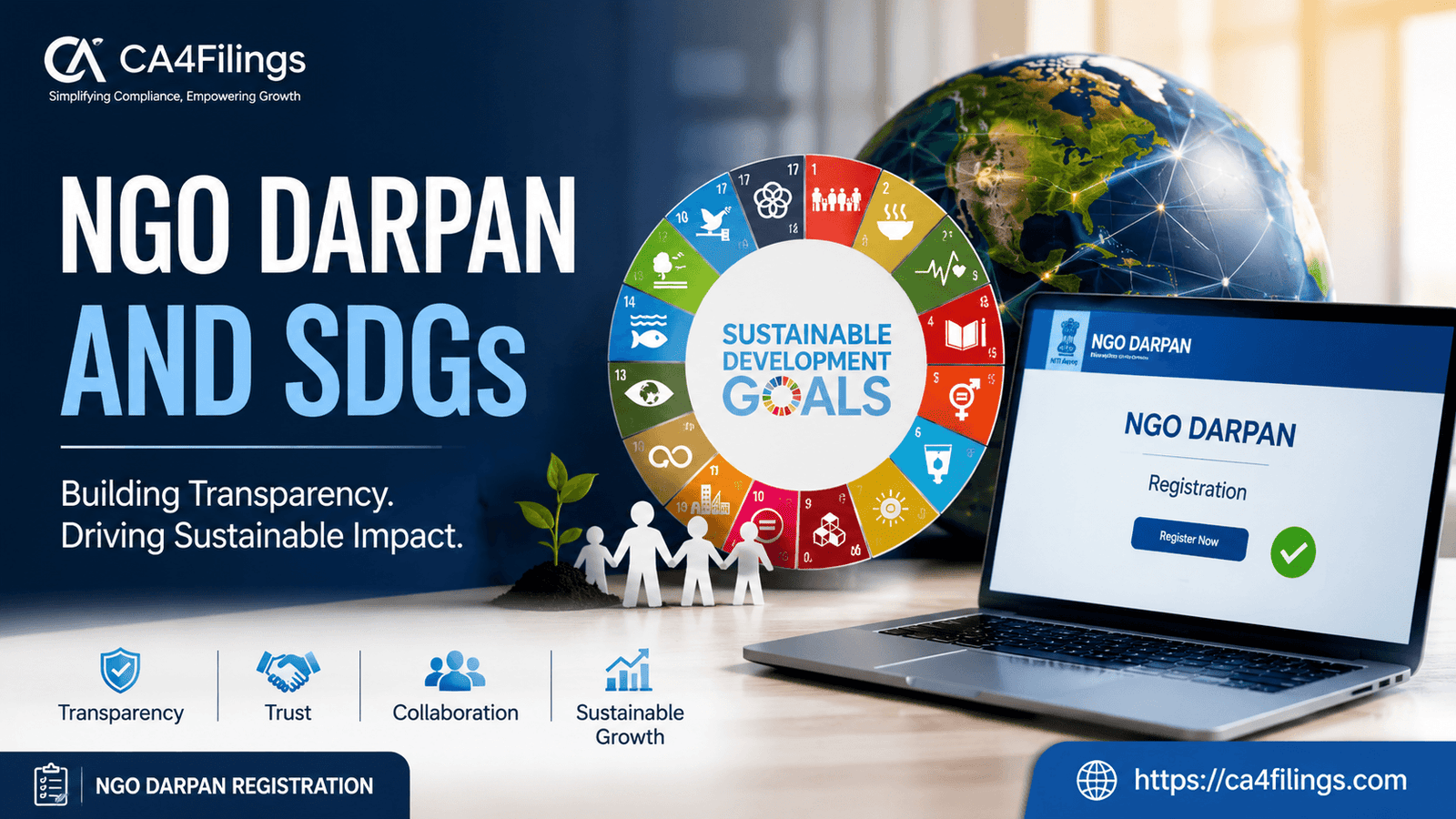
India has always had a strong culture of social service and community welfare. Over the years, non-governmental organizations (NGOs) have become a driving force behind social change by working in areas such as education, healthcare, poverty reduction, women empowerment, and environmental protection. However, with increasing focus on transparency and measurable impact, NGOs today are expected to align their work with larger development frameworks.
This is where The Connection Between NGO Darpan and Sustainable Development Goals (SDGs) becomes highly relevant. NGO Darpan has emerged as an important platform that helps NGOs establish credibility, maintain transparency, and contribute effectively toward national and global development objectives.
For organizations looking to strengthen compliance and improve recognition, completing NGO Darpan Registration is often one of the initial steps toward structured growth and better opportunities.
At CA4Filings, we regularly guide NGOs and charitable organizations that want to create a meaningful social impact while staying legally compliant.
Understanding NGO Darpan
NGO Darpan is an online portal developed by the Government of India in association with NITI Aayog. It acts as a centralized database where NGOs and voluntary organizations can register and create a unique identity.
The main purpose of NGO Darpan includes:
- Improving transparency in NGO operations
- Building trust among stakeholders
- Facilitating interaction between NGOs and government departments
- Supporting grant and funding opportunities
- Maintaining accurate NGO information
Through this portal, NGOs can showcase their activities, organizational structure, and social contributions.
Understanding Sustainable Development Goals (SDGs)
Before understanding The Connection Between NGO Darpan and Sustainable Development Goals (SDGs), it is important to know what SDGs actually are.
The Sustainable Development Goals were introduced by the United Nations in 2015 as a global action plan to achieve sustainable progress by 2030.
The 17 SDGs include:
- No Poverty
- Zero Hunger
- Good Health and Well-being
- Quality Education
- Gender Equality
- Clean Water and Sanitation
- Affordable and Clean Energy
- Decent Work and Economic Growth
- Industry, Innovation and Infrastructure
- Reduced Inequalities
- Sustainable Cities and Communities
- Responsible Consumption and Production
- Climate Action
- Life Below Water
- Life on Land
- Peace, Justice and Strong Institutions
- Partnerships for the Goals
India has actively integrated these goals into national policies and development programs.
The Connection Between NGO Darpan and Sustainable Development Goals (SDGs)
Understanding The Connection Between NGO Darpan and Sustainable Development Goals (SDGs) helps NGOs identify how their individual activities contribute to larger societal goals.
NGOs may work in local communities, but their impact often supports national and global objectives. NGO Darpan creates a structured framework through which these contributions become visible and measurable.
Transparency Creates Better Development Outcomes
Transparency is a critical requirement for sustainable development.
For example:
A charitable trust conducting free education classes in rural Uttar Pradesh may directly support the goal of quality education. However, if there is no proper documentation or registration, assessing the scale and effectiveness of its work becomes difficult.
NGO Darpan solves this challenge by maintaining verified records of:
- NGO activities
- Management details
- Areas of operation
- Projects undertaken
- Funding information
This transparency strengthens accountability and improves impact assessment.
Better Government Collaboration
One of the strongest aspects of The Connection Between NGO Darpan and Sustainable Development Goals (SDGs) is collaboration.
Government agencies frequently work with NGOs to implement welfare programs at the grassroots level.
Examples include:
- Rural sanitation initiatives
- Women empowerment programs
- Child nutrition projects
- Skill development schemes
- Environmental awareness campaigns
Registered organizations often find it easier to participate in such initiatives because they become visible on a recognized platform.
How NGO Darpan Supports Specific SDGs
SDG 1: No Poverty
Many NGOs work to reduce poverty through:
- Vocational training
- Employment programs
- Self-help groups
- Financial literacy initiatives
NGO Darpan helps create visibility for such efforts.
SDG 3: Good Health and Well-being
Healthcare NGOs conduct activities such as:
- Free medical camps
- Vaccination drives
- Maternal healthcare support
- Mental health awareness
When these activities are documented effectively, government agencies and funding bodies can identify high-performing organizations.
SDG 4: Quality Education
Education-based NGOs often work in:
- Rural schools
- Digital education
- Scholarships
- Skill development
A structured database helps these organizations establish credibility.
SDG 5: Gender Equality
Women's empowerment programs directly contribute to gender equality goals.
Examples include:
- Skill development for women
- Entrepreneurship support
- Awareness programs
- Safety initiatives
SDG 13: Climate Action
Environmental NGOs play a major role through:
- Tree plantation campaigns
- Waste management initiatives
- Water conservation projects
- Climate awareness programs
The impact of such initiatives becomes more visible through proper registration and reporting.
Why NGOs Should Align Their Activities with SDGs
Many organizations focus only on immediate social needs. While that approach helps communities, alignment with SDGs provides broader advantages.
Benefits include:
- Improved funding opportunities
- Better project planning
- Increased credibility
- Easier impact measurement
- Greater government collaboration
- International recognition
At CA4Filings, we often advise NGOs to map their activities against relevant SDGs while planning future projects.
Step-by-Step Approach for NGOs to Strengthen SDG Contribution
Step 1: Identify Your Core Objective
Determine the primary mission of your NGO.
Examples:
- Education
- Healthcare
- Environment
- Poverty reduction
Step 2: Match Activities with Relevant SDGs
Identify which SDGs relate to your projects.
For instance:
If an NGO provides clean drinking water facilities, it aligns with Clean Water and Sanitation goals.
Step 3: Maintain Proper Documentation
Maintain records of:
- Beneficiary details
- Project reports
- Financial records
- Outcomes achieved
Step 4: Focus on Compliance
Compliance helps organizations operate smoothly and build trust.
Step 5: Measure Social Impact
Track measurable indicators such as:
- Number of beneficiaries
- Improvement in literacy rates
- Employment generated
- Healthcare outreach
Practical Example of NGO Impact
Consider a non-profit organization working in villages across India by conducting vocational training for women.
Direct outcomes may include:
- Improved employment opportunities
- Better household income
- Financial independence
- Enhanced social participation
Indirectly, this single initiative contributes to:
- No Poverty
- Gender Equality
- Decent Work and Economic Growth
- Reduced Inequalities
This example clearly demonstrates The Connection Between NGO Darpan and Sustainable Development Goals (SDGs) in practical terms.
FAQs
1. Is NGO Darpan registration mandatory for all NGOs?
No, it may not be mandatory for every NGO, but it is highly beneficial, especially for organizations seeking government grants and credibility.
2. How does NGO Darpan support SDGs?
NGO Darpan improves transparency, visibility, and collaboration, helping NGOs contribute effectively toward development goals.
3. Can small NGOs contribute to SDGs?
Yes. Even small NGOs working at the local level can create significant impact when their activities align with sustainable development objectives.
4. Does NGO Darpan help in funding opportunities?
Yes, many government departments and agencies prefer working with registered and transparent organizations.
5. Why should NGOs measure their social impact?
Measuring impact helps organizations understand effectiveness, improve planning, and attract stakeholders.
Understanding The Connection Between NGO Darpan and Sustainable Development Goals (SDGs) is becoming increasingly important for NGOs that want to create long-term and measurable impact. NGO Darpan is not just a registration platform; it serves as a bridge connecting grassroots efforts with broader national and international development goals.
Organizations that focus on transparency, compliance, and strategic alignment with SDGs are more likely to grow sustainably and attract meaningful opportunities.
At CA4Filings, we help NGOs navigate registration requirements, compliance procedures, and documentation processes with practical guidance. If your organization wants to build credibility and strengthen its contribution toward sustainable development, connect with CA4Filings and take the next step with confidence.
Latest Updates
ca4filings.com Services














-registration.png)