Exploring the Role of Third-Party Tools in GST Return Filing
Exploring the Role of Third-Party Tools in GST Return Filing helps businesses simplify compliance, reduce errors, and save time.
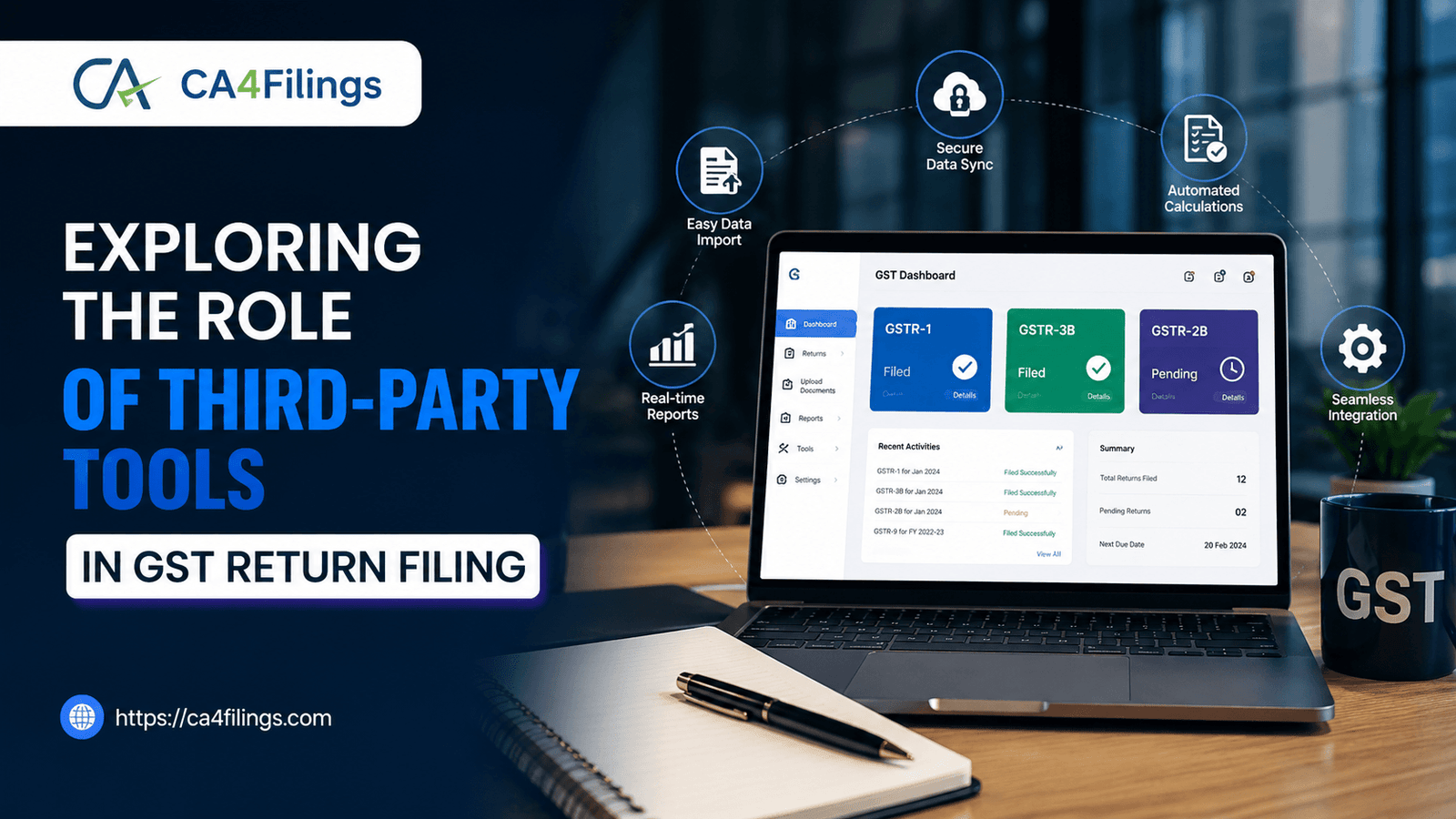
GST compliance has become an integral part of running a business in India. Whether you are a small trader, startup founder, freelancer, or large enterprise, timely and accurate GST return filing is essential to avoid penalties and maintain smooth business operations. Over the years, businesses have increasingly started Exploring the Role of Third-Party Tools in GST Return Filing to make the compliance process faster, smarter, and more efficient.
At CA4Filings, we regularly interact with businesses that struggle with invoice mismatches, data reconciliation, filing deadlines, and portal-related issues. This is where technology-driven GST solutions and third-party software tools have become highly valuable. Businesses looking for reliable assistance with GST Return Filing often benefit from combining expert professional guidance with modern automation tools.
Understanding GST Return Filing Challenges
Before Exploring the Role of Third-Party Tools in GST Return Filing, it is important to understand the common challenges businesses face during GST compliance.
Frequent Errors in Manual Filing
Many businesses still rely on spreadsheets or manual entries for GST returns. This can lead to:
- Incorrect invoice entries
- Mismatch in Input Tax Credit (ITC)
- Wrong GSTIN details
- Missed filing deadlines
- Duplicate invoices
Even a small error can trigger notices from the GST department.
Complex Return Types
GST compliance involves multiple returns such as:
- GSTR-1
- GSTR-3B
- GSTR-9
- GSTR-9C
Managing these returns manually becomes difficult, especially for businesses handling high transaction volumes.
Portal-Related Difficulties
The GST portal may occasionally experience:
- Slow processing
- Technical glitches
- Data upload issues
- Session timeouts
These challenges increase the importance of Exploring the Role of Third-Party Tools in GST Return Filing for smoother operations.
What Are Third-Party GST Filing Tools?
Third-party GST tools are software applications designed to simplify GST compliance and return filing. These tools integrate with accounting systems and automate several compliance-related tasks.
They help businesses in:
- Invoice management
- GST reconciliation
- Return preparation
- Automated calculations
- Error detection
- Bulk data uploads
Popular examples include cloud-based GST software, ERP integrations, reconciliation platforms, and accounting tools with GST modules.
Exploring the Role of Third-Party Tools in GST Return Filing for Businesses
Businesses across India are increasingly Exploring the Role of Third-Party Tools in GST Return Filing because these tools significantly reduce compliance stress.
Automated Data Entry
One of the biggest advantages is automation. Instead of manually entering invoice details, businesses can directly import data from:
- Tally
- Busy
- Zoho Books
- QuickBooks
- ERP systems
This reduces human errors and saves considerable time.
Faster GST Reconciliation
GST reconciliation is one of the most time-consuming tasks for businesses. Third-party tools automatically compare purchase data with GSTR-2B and highlight mismatches.
This helps businesses:
- Claim accurate ITC
- Avoid notices
- Improve vendor compliance tracking
Real-Time Compliance Monitoring
When Exploring the Role of Third-Party Tools in GST Return Filing, real-time compliance tracking becomes a major benefit.
Most tools provide dashboards showing:
- Pending returns
- Filing due dates
- Tax liabilities
- ITC summaries
- Error alerts
This helps businesses stay proactive rather than reactive.
Key Benefits of Third-Party GST Tools
Improved Accuracy
Automation reduces the chances of manual mistakes. Proper validation checks ensure:
- Correct GSTIN formats
- Accurate tax calculations
- Invoice consistency
Time Savings
Businesses handling hundreds of invoices every month can save significant time using automated GST tools.
Instead of spending days on compliance, teams can focus on business growth.
Better Record Management
Third-party platforms maintain organized digital records of:
- Invoices
- Returns
- Reconciliation reports
- Audit documents
This becomes extremely useful during GST audits or departmental scrutiny.
Easy Multi-Location Management
For businesses operating in multiple states, Exploring the Role of Third-Party Tools in GST Return Filing becomes even more important.
These tools help manage:
- Multiple GST registrations
- Branch-wise returns
- Consolidated reports
Features to Look for in GST Filing Software
Not all GST tools offer the same level of efficiency. Businesses should carefully evaluate software before implementation.
GST Portal Integration
The software should seamlessly connect with the GST portal for:
- Return uploads
- Data synchronization
- Filing status tracking
Reconciliation Capabilities
A strong reconciliation engine helps identify:
- Missing invoices
- ITC mismatches
- Vendor filing issues
Data Security
Since GST software handles sensitive financial data, security is critical.
Look for:
- Cloud encryption
- Backup support
- User access controls
User-Friendly Interface
Many business owners prefer simple software that does not require technical expertise.
An easy dashboard and simplified workflow improve operational efficiency.
Real-World Example of GST Tool Usage
Let us consider a medium-sized wholesale business in Delhi managing over 2,000 invoices monthly.
Initially, the business handled GST manually using spreadsheets. Common problems included:
- Delayed filings
- ITC mismatches
- Vendor reconciliation issues
After Exploring the Role of Third-Party Tools in GST Return Filing and implementing a GST automation platform, the business experienced:
- 70% reduction in filing time
- Improved ITC accuracy
- Better vendor coordination
- Reduced notices from authorities
This practical shift highlights how technology can improve GST compliance efficiency.
Common Mistakes Businesses Should Avoid
While third-party tools are beneficial, businesses must still remain careful.
Blindly Relying on Automation
Software simplifies work, but professional review remains important. Businesses should always verify final returns before submission.
Ignoring Vendor Compliance
Even advanced tools cannot fully prevent ITC issues if vendors fail to file returns properly.
Regular vendor follow-up is still necessary.
Choosing Cheap or Unverified Software
Low-cost tools may compromise:
- Data security
- Accuracy
- Technical support
Businesses should invest in reliable and reputed GST software providers.
Why Professional Guidance Still Matters
Many businesses assume software alone can handle GST compliance completely. However, GST laws frequently change, and interpretation issues may arise.
Professional CA support remains essential for:
- Complex reconciliations
- GST notices
- Annual returns
- GST audits
- Litigation matters
At CA4Filings, we help businesses combine technology with expert compliance support for smoother GST management.
Exploring the Future of GST Automation
The future of GST compliance is becoming increasingly technology-driven. Businesses Exploring the Role of Third-Party Tools in GST Return Filing today are preparing themselves for a more automated compliance environment tomorrow.
Emerging trends include:
- AI-based reconciliation
- Automated compliance alerts
- Smart tax analytics
- E-invoicing integration
- Real-time tax reporting
As GST systems evolve, businesses adopting digital compliance tools early will gain operational advantages.
FAQs on Exploring the Role of Third-Party Tools in GST Return Filing
Are third-party GST filing tools safe to use?
Yes, reputed GST software providers use encryption and security protocols to protect financial data. Businesses should always choose trusted platforms.
Can small businesses benefit from GST automation tools?
Absolutely. Even small businesses can save time, reduce filing errors, and improve compliance efficiency using GST tools.
Do GST tools completely replace Chartered Accountants?
No. Software helps automate routine work, but professional expertise is still required for legal interpretation, audits, and complex tax matters.
What is the biggest advantage of Exploring the Role of Third-Party Tools in GST Return Filing?
The biggest advantage is improved accuracy and reduced compliance burden through automation and reconciliation support.
Can third-party tools help with GST notices?
These tools help maintain proper records and accurate filings, which can reduce the chances of notices. However, professional assistance may still be required for notice handling.
Exploring the Role of Third-Party Tools in GST Return Filing is no longer optional for modern businesses aiming for efficient compliance management. With increasing transaction volumes, stricter regulations, and evolving GST requirements, businesses need technology-backed solutions to stay compliant and competitive.
Third-party GST tools help automate processes, improve reconciliation, reduce errors, and save valuable time. However, combining the right software with professional guidance delivers the best results.
At CA4Filings, we help businesses simplify GST compliance through expert support, practical advice, and efficient filing solutions tailored to business needs. Whether you are a startup, trader, manufacturer, or service provider, our experienced professionals are here to ensure your GST compliance remains smooth, accurate, and stress-free.
Latest Updates
ca4filings.com Services























-registration.png)