FSSAI Guidelines for Packaging and Labeling of Food Products
Understand FSSAI Guidelines for Packaging and Labeling of Food Products, mandatory rules, labeling norms, and compliance tips for food businesses.
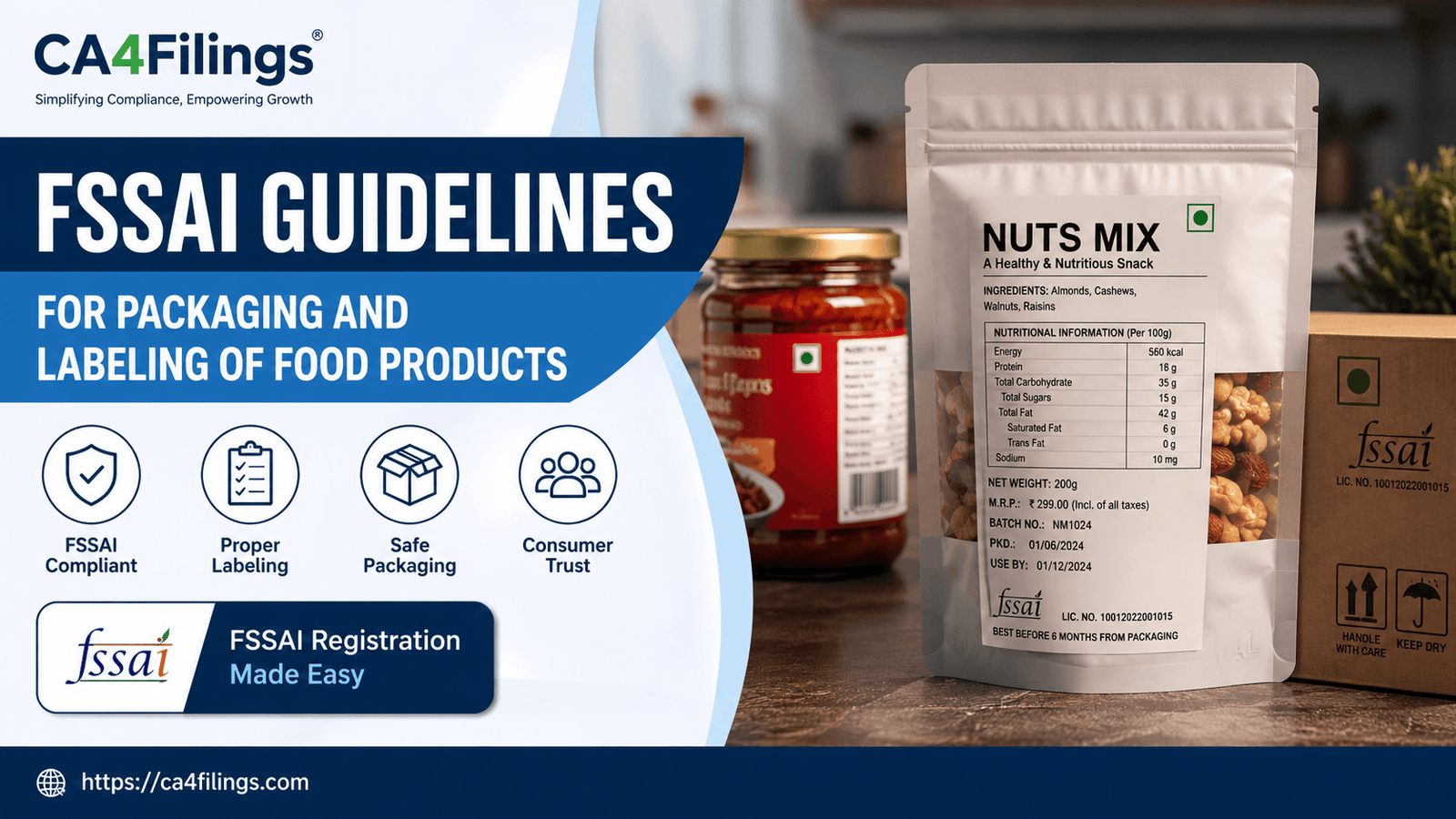
If you are running a food business in India, complying with the FSSAI Guidelines for Packaging and Labeling of Food Products is not just a legal formality—it is an essential step to build consumer trust and avoid penalties. Whether you manufacture packaged snacks, dairy items, beverages, spices, or sell food online, proper packaging and labeling play a major role in your business compliance.
At CA4Filings, we often see food business owners focusing only on product quality while overlooking labeling requirements. However, even a good product can face legal issues if the packaging does not meet FSSAI standards. Along with obtaining proper FSAAI Registration, understanding packaging and labeling rules is equally important for smooth business operations.
In this article, we will explain the FSSAI Guidelines for Packaging and Labeling of Food Products in simple language so that manufacturers, traders, startups, and food entrepreneurs can easily understand and implement them.
What Are FSSAI Guidelines for Packaging and Labeling of Food Products?
The FSSAI Guidelines for Packaging and Labeling of Food Products are regulations issued by the Food Safety and Standards Authority of India (FSSAI) under the Food Safety and Standards Act, 2006.
These guidelines ensure that:
- Food products are safe for consumption
- Consumers receive accurate product information
- Packaging materials do not contaminate food
- Labels clearly disclose ingredients and nutritional details
- Misleading claims are avoided
Every food business operator (FBO) involved in manufacturing, packing, storage, distribution, or sale of food products must follow these rules.
Importance of FSSAI Guidelines for Packaging and Labeling of Food Products
The FSSAI Guidelines for Packaging and Labeling of Food Products are important for both businesses and consumers.
For Consumers
These guidelines help consumers:
- Understand what they are consuming
- Check expiry dates and ingredients
- Identify allergens
- Compare nutritional values
- Avoid misleading advertisements
For Businesses
Following the FSSAI Guidelines for Packaging and Labeling of Food Products helps businesses:
- Avoid legal penalties
- Build customer trust
- Improve product credibility
- Expand into retail chains and e-commerce platforms
- Meet export and compliance standards
For example, many online marketplaces now require clear FSSAI-compliant labels before listing food products.
Key Packaging Requirements Under FSSAI
Food-Grade Packaging Materials
One of the most important parts of the FSSAI Guidelines for Packaging and Labeling of Food Products is the use of safe and food-grade packaging material.
Packaging materials must:
- Not release harmful chemicals into food
- Protect food from contamination
- Maintain product freshness
- Be durable during transportation and storage
Commonly approved packaging materials include:
- Food-grade plastic
- Glass containers
- Aluminum foil
- Paperboard cartons
- Metal containers
For instance, acidic food products should not be stored in unsuitable metallic containers as they may react chemically.
Tamper-Proof Packaging
FSSAI recommends tamper-evident packaging, especially for:
- Dairy products
- Bottled beverages
- Online food delivery items
- Processed packaged foods
Tamper-proof seals improve consumer confidence and reduce contamination risks.
Hygienic Packaging Practices
Businesses must ensure:
- Packaging areas remain clean and sanitized
- Employees maintain hygiene standards
- Machinery is regularly cleaned
- Packaging is done in pest-free environments
Failure to maintain hygiene can lead to product recalls and penalties under the FSSAI Guidelines for Packaging and Labeling of Food Products.
Mandatory Labeling Requirements Under FSSAI
The labeling section of the FSSAI Guidelines for Packaging and Labeling of Food Products is extremely detailed. Every packaged food product sold in India must contain mandatory information.
Name of the Food Product
The label must clearly mention the product name.
Example:
- “Masala Oats”
- “Mixed Fruit Jam”
- “Roasted Salted Peanuts”
The name should not mislead consumers.
List of Ingredients
Ingredients must be listed in descending order by weight or volume.
Example:
- Wheat Flour
- Sugar
- Palm Oil
- Cocoa Powder
This requirement under the FSSAI Guidelines for Packaging and Labeling of Food Products helps consumers identify product contents easily.
Nutritional Information
The label must include:
- Energy value
- Protein
- Carbohydrates
- Sugar
- Fat
- Saturated fat
- Trans fat
- Sodium
This information is generally shown per 100g or 100ml.
Vegetarian or Non-Vegetarian Symbol
FSSAI mandates:
- Green symbol for vegetarian products
- Brown symbol for non-vegetarian products
The symbol must be clearly visible on the packaging.
Manufacturer Details
The label must contain:
- Manufacturer’s name
- Full address
- Customer care details
This helps consumers contact the company in case of complaints or feedback.
FSSAI License Number
Under the FSSAI Guidelines for Packaging and Labeling of Food Products, every food package must display:
- 14-digit FSSAI License or Registration Number
This number confirms that the business is authorized to operate legally.
Net Quantity
The exact quantity of the product must be mentioned, such as:
- 500g
- 1 litre
- 250ml
Incorrect quantity declarations can attract penalties.
Date Marking and Expiry Information
Labels must mention:
- Manufacturing date
- Best before date
- Expiry date
Consumers rely heavily on this information while purchasing packaged food.
Special Labeling Requirements
Allergen Declaration
The FSSAI Guidelines for Packaging and Labeling of Food Products require businesses to disclose allergens such as:
- Milk
- Nuts
- Soy
- Gluten
- Eggs
Example:
“Contains Milk and Tree Nuts.”
This is especially important for consumer safety.
Claims and Advertisements
Food businesses cannot make false claims such as:
- “100% cure for diabetes”
- “Instant weight loss”
- “Chemical-free” without proof
Misleading labels can result in legal action by FSSAI authorities.
Imported Food Products
Imported food items must also comply with the FSSAI Guidelines for Packaging and Labeling of Food Products before entering the Indian market.
Additional requirements may include:
- Importer details
- Country of origin
- Re-labeling if necessary
Common Mistakes Businesses Should Avoid
Many food businesses unknowingly violate the FSSAI Guidelines for Packaging and Labeling of Food Products due to lack of awareness.
Here are common mistakes:
- Missing FSSAI license number
- Incorrect font size on labels
- Incomplete ingredient list
- Misleading health claims
- Wrong nutritional values
- Non-compliant packaging materials
- Missing allergen declarations
Even small labeling errors can lead to notices, penalties, or product seizures.
Penalties for Non-Compliance
Failure to comply with the FSSAI Guidelines for Packaging and Labeling of Food Products may result in:
- Monetary penalties
- Product recalls
- Suspension of license
- Legal prosecution
- Damage to brand reputation
For startups and small businesses, such issues can significantly impact business growth.
Practical Tips for Food Businesses
At CA4Filings, we advise food businesses to follow these practical steps:
Conduct Regular Label Reviews
Regulations change periodically. Review packaging designs regularly to ensure compliance.
Work With Professionals
Consult compliance experts before printing labels in bulk.
Maintain Proper Documentation
Keep records of:
- Packaging material suppliers
- Lab reports
- Nutritional analysis
- Label approvals
Train Staff
Educate employees about hygiene and packaging compliance standards.
FAQs on FSSAI Guidelines for Packaging and Labeling of Food Products
Is FSSAI labeling mandatory for homemade food businesses?
Yes. Even homemade food businesses selling packaged food products must follow the FSSAI Guidelines for Packaging and Labeling of Food Products.
Can I sell food products without an FSSAI license number on the label?
No. Displaying the FSSAI license or registration number is mandatory.
Are nutritional details compulsory for all packaged foods?
In most cases, yes. Nutritional labeling is an important requirement under the FSSAI Guidelines for Packaging and Labeling of Food Products.
What happens if my food label contains incorrect information?
FSSAI may impose penalties, issue notices, or suspend your license for false or misleading information.
Do online food sellers also need compliant labels?
Yes. Food products sold through e-commerce platforms must comply with the FSSAI Guidelines for Packaging and Labeling of Food Products.
Understanding and following the FSSAI Guidelines for Packaging and Labeling of Food Products is essential for every food business in India. Proper labeling not only ensures legal compliance but also builds customer confidence and strengthens your brand reputation.
From displaying nutritional information to using food-safe packaging materials, every detail matters under FSSAI regulations. Businesses that proactively comply with these standards avoid unnecessary legal complications and gain better market credibility.
At CA4Filings, we help food businesses simplify compliance processes, obtain FSSAI registration, and understand regulatory requirements with practical guidance. If you are planning to launch or expand your food business, our experts can help you stay fully compliant with the latest FSSAI regulations.
Latest Updates
ca4filings.com Services



























-registration.png)