Hosting Workshops on 12A and 80G Registration: Best Practices for NGOs
Hosting Workshops on 12A and 80G Registration: Best Practices for NGOs – practical tips, compliance guidance, and expert advice.
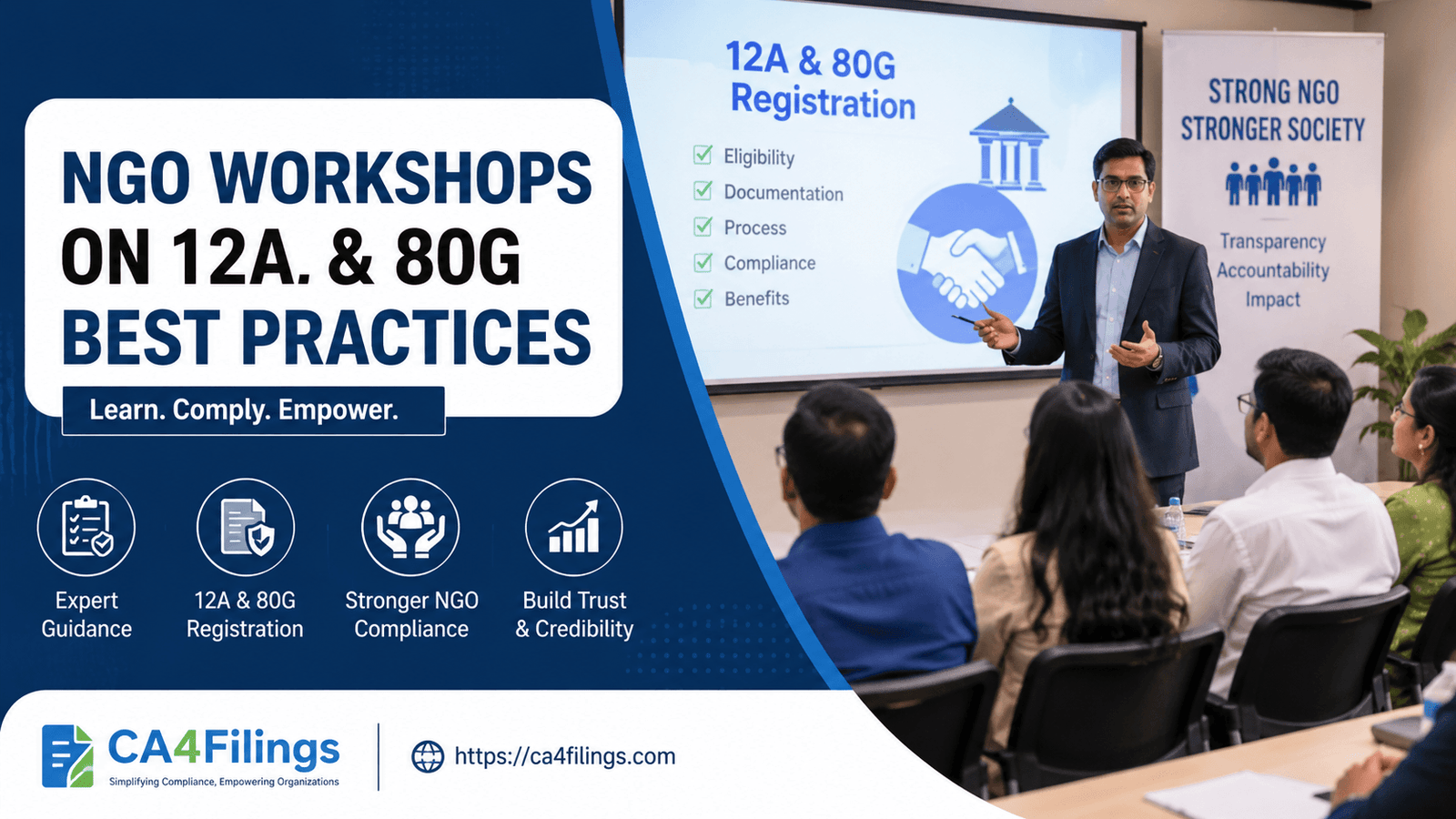
For NGOs in India, financial transparency and legal compliance are not just regulatory requirements; they also build credibility among donors and stakeholders. One of the most important aspects of NGO compliance is understanding tax exemptions and donor benefits under the Income Tax Act. That is why Hosting Workshops on 12A and 80G Registration: Best Practices for NGOs has become increasingly relevant for organizations looking to educate teams, trustees, and volunteers.
At CA4Filings, we regularly observe that many NGOs struggle with registration procedures because of a lack of practical knowledge. Understanding the process through educational sessions and workshops can simplify compliance and reduce future challenges. If your organization is planning to begin the process of 12A and 80G Registration, conducting well-structured workshops can help create awareness and improve understanding among key stakeholders.
Why NGOs Need Workshops on Registration Compliance
NGOs often focus heavily on social causes and operational activities, while legal and taxation matters receive less attention. This gap can create issues during funding applications, audits, and donor communications.
Workshops help NGOs:
- Understand legal requirements clearly
- Reduce filing errors
- Improve donor confidence
- Train staff and volunteers
- Stay updated with regulatory changes
- Create standardized internal processes
For example, a charitable trust working in education may have strong community outreach but limited understanding of tax registrations. A workshop can help trustees understand how compliance affects long-term funding opportunities.
Hosting Workshops on 12A and 80G Registration: Best Practices for NGOs
Conducting a workshop requires more than simply gathering people in a room and presenting slides. The objective should be practical learning with real value.
Below are some important best practices.
Define Clear Workshop Objectives
Start by identifying the purpose of the workshop.
Ask questions such as:
- Is the workshop for newly established NGOs?
- Is it intended for existing trusts seeking renewal or updates?
- Is the goal awareness or detailed compliance training?
Clear objectives help determine the depth and structure of the session.
For instance:
A beginner-level workshop may focus on understanding eligibility and documentation requirements, while an advanced workshop can discuss compliance management and filing procedures.
Identify the Right Audience
Different groups have different information requirements.
Participants may include:
- NGO founders
- Trustees
- Finance teams
- Accountants
- Volunteers
- Administrative staff
A finance manager may need detailed tax compliance information, whereas volunteers may only require basic awareness.
Tailoring content according to participants increases engagement.
Structure the Workshop Effectively
A well-planned structure keeps participants interested and ensures knowledge retention.
Suggested Workshop Flow
Introduction Session
- Overview of NGO taxation
- Importance of registrations
- Benefits of compliance
Core Learning Session
- Eligibility criteria
- Required documentation
- Registration procedures
- Timelines and compliance requirements
Practical Session
- Case studies
- Application examples
- Common mistakes
Question and Answer Session
- Clarifying participant doubts
- Addressing practical challenges
Breaking the workshop into sections prevents information overload.
Hosting Workshops on 12A and 80G Registration: Best Practices for NGOs Through Real-Life Examples
People understand concepts better when examples are used.
Instead of explaining only technical rules, discuss real scenarios.
Example:
An NGO involved in rural healthcare received multiple donor contributions but faced challenges because proper registration procedures had not been completed. Due to documentation issues, donor confidence was affected.
After conducting internal awareness sessions and improving compliance procedures, the organization streamlined its registration process and strengthened donor relationships.
Real examples help participants understand the impact of compliance decisions.
Use Practical Documentation Exercises
One common issue faced by NGOs is incomplete paperwork.
Include exercises where participants review:
- Trust deeds
- Registration certificates
- PAN details
- Financial statements
- Activity reports
- Supporting documents
Hands-on activities create stronger understanding compared to theoretical explanations.
Technology Can Improve Workshop Delivery
Modern workshops do not need to be limited to physical locations.
NGOs can conduct:
- Online webinars
- Hybrid workshops
- Interactive training sessions
- Live Q&A discussions
Digital tools can also help with:
- Polls and quizzes
- Presentation sharing
- Attendance tracking
- Feedback collection
For NGOs operating across multiple states, online workshops significantly reduce costs.
Common Mistakes NGOs Should Address During Workshops
An effective session should educate participants about practical mistakes frequently seen in registration processes.
Documentation Errors
Missing or incorrect documents often delay applications.
Examples include:
- Incorrect PAN details
- Incomplete trust deeds
- Missing activity reports
- Financial statement discrepancies
Ignoring Compliance Timelines
Many NGOs fail to monitor filing deadlines.
Delayed actions can create unnecessary complications.
Poor Record Maintenance
Some organizations maintain limited documentation of their charitable activities.
Maintaining detailed records supports smoother registrations and future assessments.
Hosting Workshops on 12A and 80G Registration: Best Practices for NGOs for Long-Term Compliance
Workshops should not be treated as one-time events.
Compliance requirements continue to evolve, and NGOs need regular updates.
Organizations should consider:
- Quarterly knowledge sessions
- Annual compliance workshops
- Staff refresher training
- Expert consultation sessions
Continuous learning reduces risks and improves governance standards.
Tips for Making Workshops More Engaging
Participants retain information better when sessions are interactive.
Consider these practical approaches:
- Use visual presentations
- Include live examples
- Encourage discussions
- Conduct quizzes
- Share practical checklists
- Provide takeaway resources
Interactive learning creates better participation compared to one-way lectures.
FAQs
What is the purpose of conducting NGO registration workshops?
Workshops educate NGO teams about legal requirements, tax benefits, and documentation processes while reducing compliance mistakes.
Who should attend these workshops?
NGO founders, trustees, finance teams, volunteers, accountants, and administrative staff can benefit from attending.
How long should a workshop ideally be?
The duration depends on the complexity of topics, but most workshops can range from two hours to a full-day session.
Can online workshops be effective?
Yes. Online workshops provide flexibility, reduce costs, and allow NGOs from multiple locations to participate.
Why are practical examples important in workshops?
Practical examples help participants understand how compliance issues arise and how they can be solved effectively.
Hosting Workshops on 12A and 80G Registration: Best Practices for NGOs is an effective way to strengthen awareness, improve compliance standards, and create a strong foundation for sustainable growth. NGOs that invest in education and structured learning often find it easier to manage regulatory requirements and maintain donor trust.
At CA4Filings, we believe that compliance should not feel complicated. With the right guidance, practical knowledge, and expert support, NGOs can confidently navigate registration procedures and focus on their core mission of creating social impact.
If your NGO needs professional support for registrations, compliance guidance, or expert consultation, connect with CA4Filings today and take the next step toward building a legally strong and financially credible organization.
Latest Updates
ca4filings.com Services










-registration.png)