Understanding DIR-3 KYC: A Comprehensive Overview
Stay compliant with MCA regulations. Read our guide, Understanding DIR-3 KYC: A Comprehensive Overview, for the latest 2026 rules and filing tips.
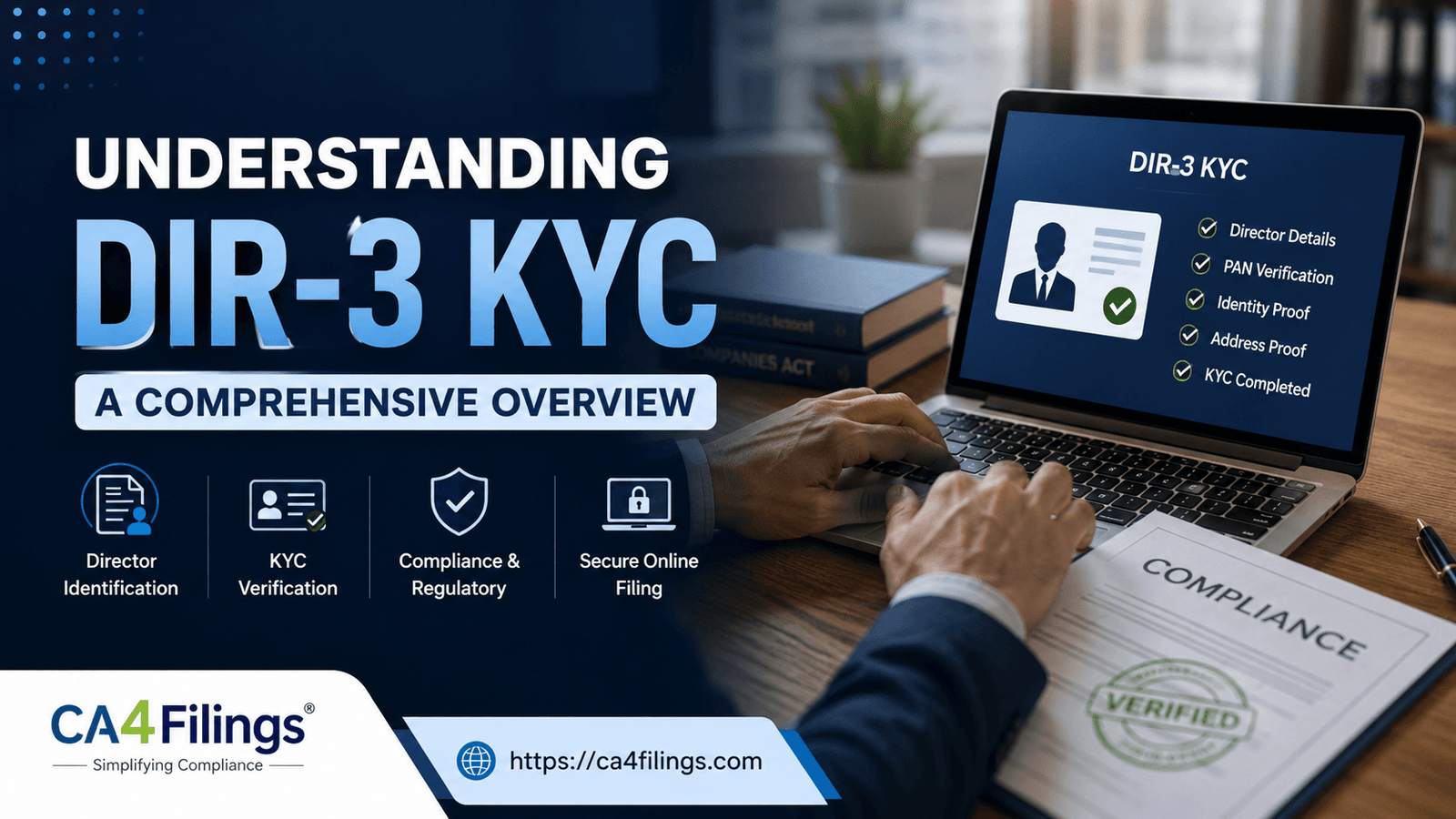
As a Chartered Accountant here at CA4Filings, I often see business owners getting anxious when they hear the word "compliance." However, keeping your corporate records clean is the foundation of a healthy business. If you currently hold a Director Identification Number (DIN), you are likely familiar with the importance of keeping your information current with the Ministry of Corporate Affairs (MCA). For those who need expert assistance, we simplify the DIR-3 KYC process to ensure you remain compliant without the stress. In this article, we provide Understanding DIR-3 KYC: A Comprehensive Overview to help you navigate the latest rules effectively.
What is DIR-3 KYC and Why Does It Matter?
At its core, Understanding DIR-3 KYC: A Comprehensive Overview is about recognizing the government’s need for an authenticated, real-time database of everyone who holds a DIN. Whether you are an active director, an independent director, or even if your DIN is currently not associated with any company, the MCA requires you to periodically verify your identity and contact particulars.
The primary objective behind this filing is to ensure transparency and prevent the misuse of DINs. By mandating this KYC process, the government ensures that the email IDs and mobile numbers linked to your DIN are personally yours and remain accessible, which is vital for receiving official communications and board notifications.
Key Changes: The Shift to a Tri-Annual Cycle
One of the most important aspects of Understanding DIR-3 KYC: A Comprehensive Overview in 2026 is the significant shift in frequency. Following recent amendments, the MCA has replaced the annual filing requirement with a more streamlined tri-annual cycle.
The New Normal: Instead of filing every single year, you are now generally required to file your KYC once every three financial years.
Event-Based Updates: While the routine filing is now less frequent, you are still obligated to update your details within 30 days if there is a change in your mobile number, email address, or residential address.
Efficiency: This change is a welcome move for directors, significantly reducing the administrative burden while maintaining the integrity of corporate data.
Step-by-Step Filing Process
To master Understanding DIR-3 KYC: A Comprehensive Overview, you should be familiar with the practical steps involved in the filing. While the process is designed to be user-friendly, precision is key.
Preparation: Gather your PAN, Aadhaar, and proof of your residential address. Ensure your contact details are active, as you will need them to receive OTPs for verification.
Accessing the Portal: Log in to the MCA portal using your credentials.
Form Submission: Fill out the web-based form. The system will pre-fill some data based on your existing records, but you must verify that every detail—especially your name and address—matches your official PAN and Aadhaar records exactly.
OTP Verification: This is a crucial security step. You will receive OTPs on both your registered mobile number and your email address.
Submission: Once verified and submitted, the system generates a Service Request Number (SRN). Always save this for your records!
Consequences of Non-Compliance
In our practice at CA4Filings, we often emphasize that complacency can be costly. If you fail to file your KYC within the prescribed timelines, your DIN will be marked as "Deactivated."
Operational Stagnation: A deactivated DIN means you cannot sign any documents or file any forms with the Registrar of Companies (ROC). This can literally bring your company’s secretarial compliance to a grinding halt.
Financial Penalty: To reactivate a deactivated DIN, you are required to pay a late fee of ₹5,000. It is a simple administrative oversight, but one that is entirely avoidable with timely action.
Frequently Asked Questions
Do I need to file if I am not currently a director in any company?
Yes. If you hold a valid DIN, you are required to comply with the KYC requirements regardless of your current directorship status.
Does the new 3-year cycle mean I never have to report changes?
Absolutely not. You must report changes to your mobile number, email, or residential address within 30 days of the change.
What documents do I need to keep ready?
Keep your PAN, Aadhaar, and a recent proof of your present residential address (like a utility bill or bank statement) handy.
Can I file the form myself?
The MCA portal is designed for ease, but many directors prefer professional assistance to avoid errors that could lead to form rejection. At CA4Filings, we handle the technicalities so you can focus on your business.
We hope this guide for Understanding DIR-3 KYC: A Comprehensive Overview has cleared up your doubts regarding the current compliance landscape. Staying compliant doesn't have to be a headache. With the right approach and a clear understanding of the 2026 rules, you can ensure your status as a director remains seamless and problem-free.
If you ever feel overwhelmed by the regulatory requirements or simply want the peace of mind that comes with expert oversight, reach out to us at CA4Filings. Our team is here to handle your compliance lifecycle, ensuring you never miss a deadline or face unnecessary penalties. Contact us today, and let’s keep your corporate records in perfect shape!
Latest Updates
ca4filings.com Services























-registration.png)